
A digital archive for your municipality
Even before Plexibits, this is where we learned to read Bulgarian handwriting in production.
A building permit from 1954. It exists — in a ledger, in a cabinet, in the archive. The staff who work with it say some requests take days to find. Not because anyone is careless, but because paper is made to keep things, not to search them.
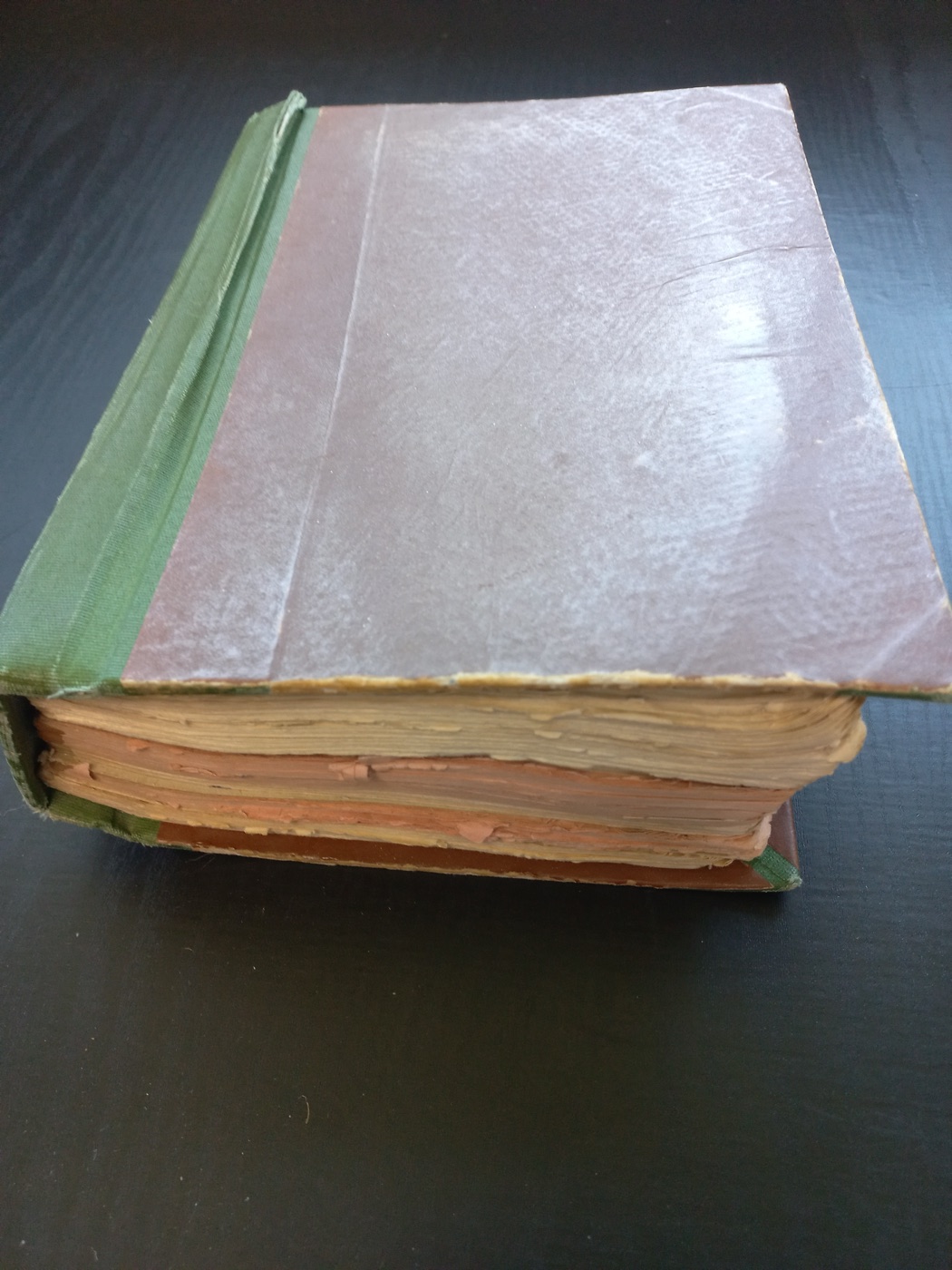
The book where it all starts. Photographed in the archive.
The digital archive turns this around: every page is scanned, read and searchable. Seconds, not days.
The archive is already running in Blagoevgrad Municipality and is ready for another municipality — or for a wider scope in Blagoevgrad itself.
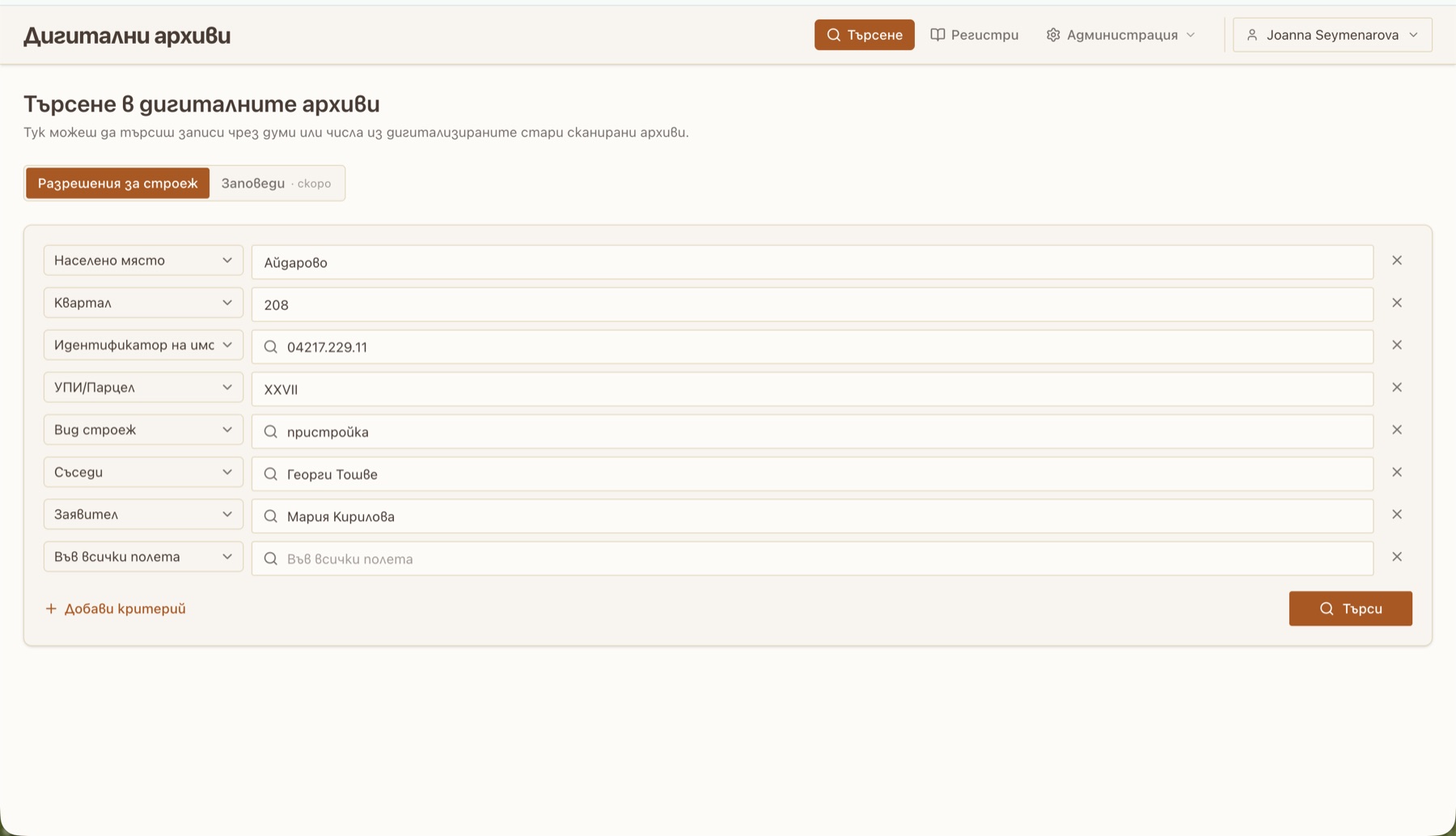
One query against 59,109 transcribed documents. Synthetic data.
How it works. The municipality scans nothing. We come and collect the ledgers in batches — and return them within days: a ledger is away for less time than a typical request for it takes. We scan and read the handwriting — not with an off-the-shelf tool, but with a pipeline we built ourselves for ledgers like these. And we tune the search for each batch: fields, indexes, the particular traps in digits and names. After that, staff work with the archive as they did with the ledgers: they search, or leaf through the pages on screen. Where the reading is wrong, they correct it themselves. And the municipality can export the entire content at any time: the archive is theirs, not ours.
Handwriting — where everyone stumbles. Anyone can read printed text today. The old ledgers are handwritten — dozens of hands, over decades — and a model on its own is not enough there. So our reading is bounded by rules that do not let it make things up:
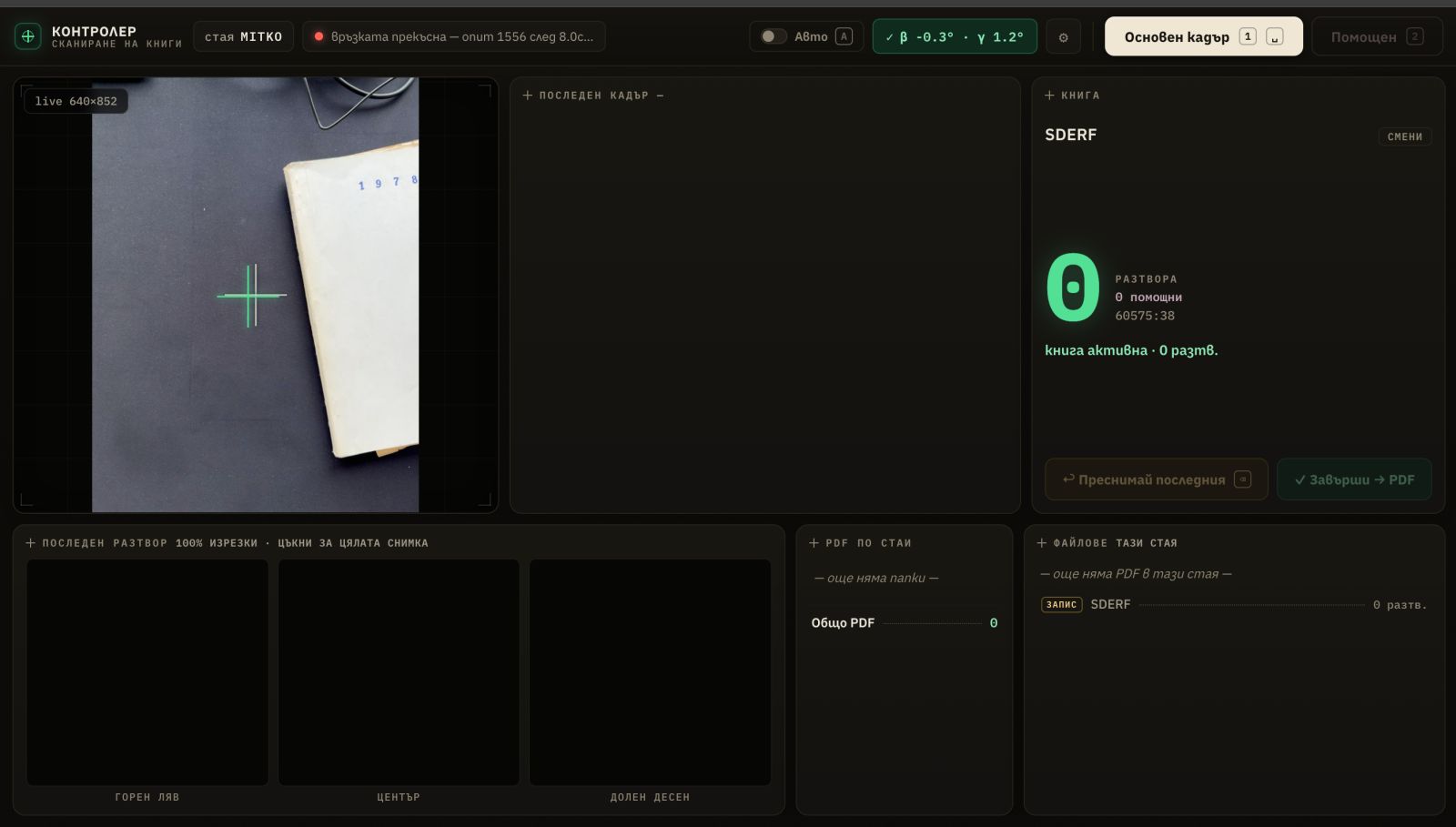
A screen from our own software.
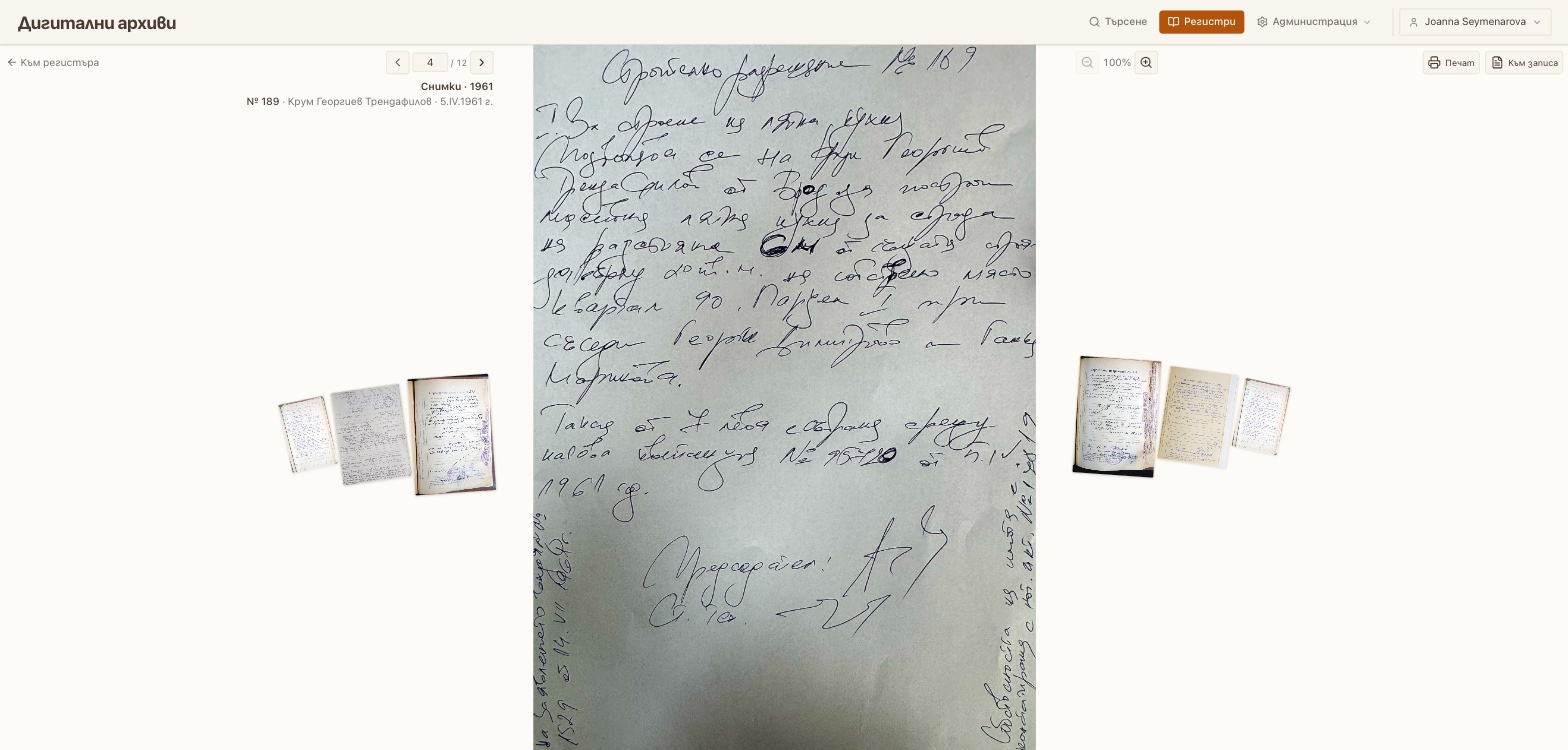
The 1961 register, open at our page — the pages turn on screen, as they do on paper. Synthetic data.
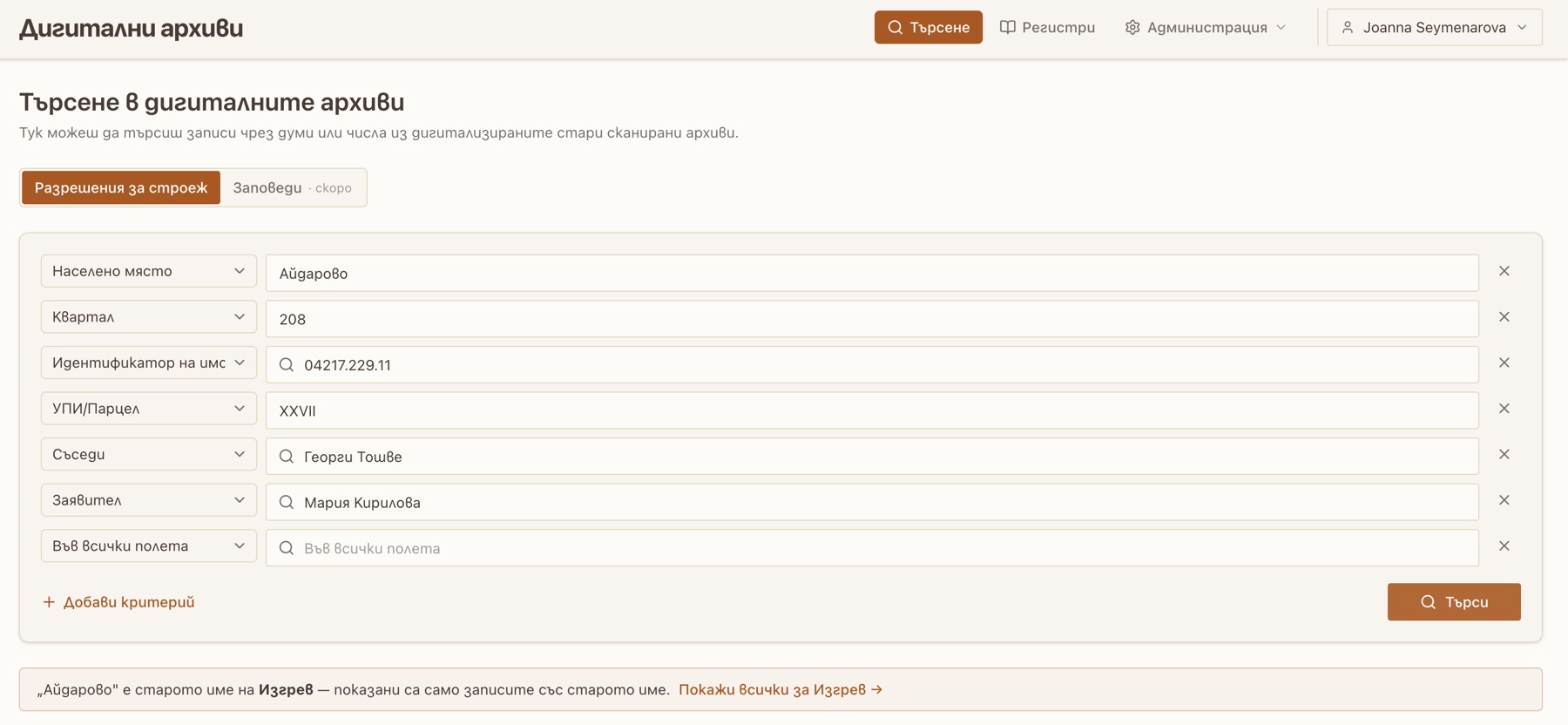
“Aydarovo” is the old name of Izgrev — the records under the old name are shown, with a way through to all records for Izgrev. Synthetic data.
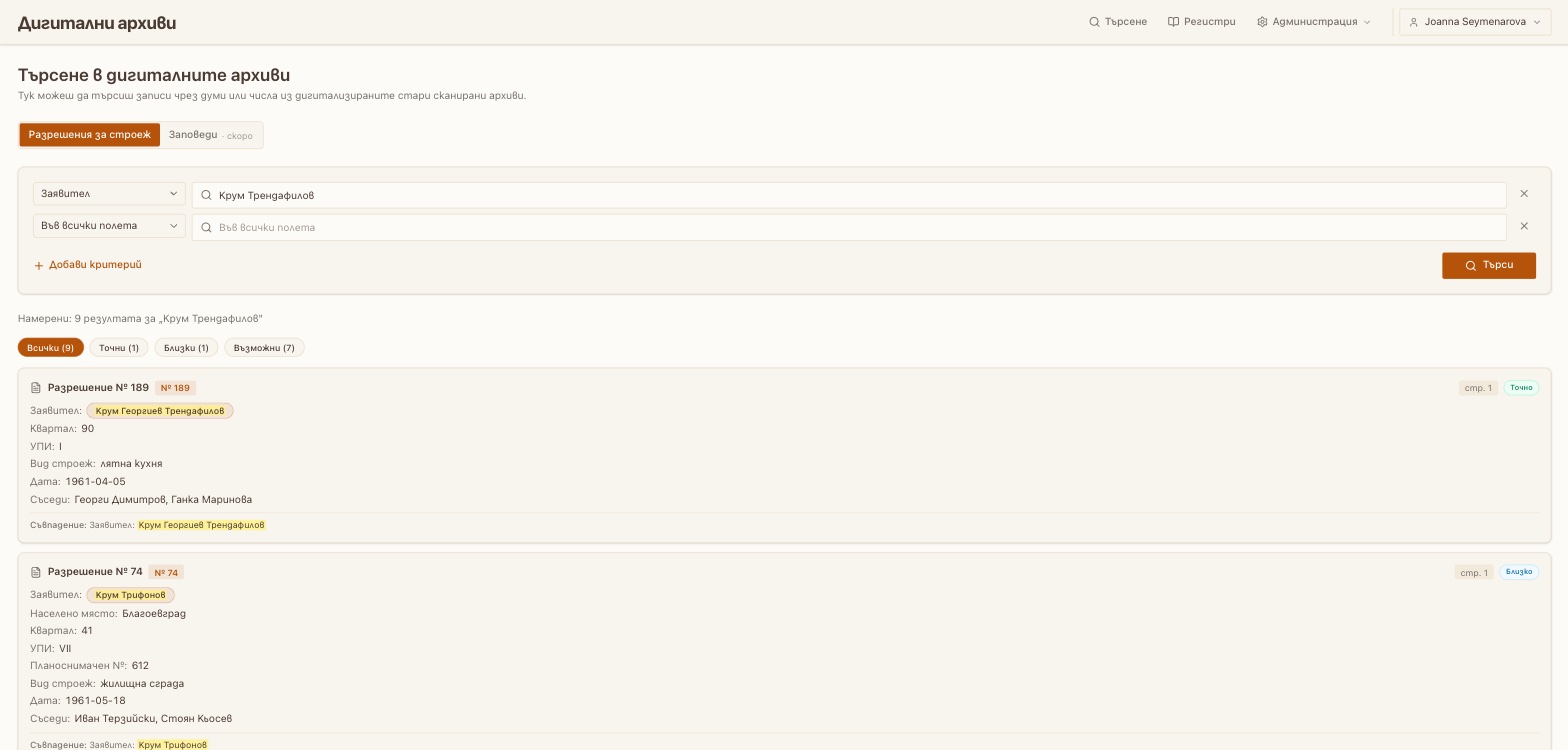
A search for “Krum Trendafilov” — 9 results: Exact (1) · Close (1) · Possible (7). Synthetic data.
Better empty than guessed.
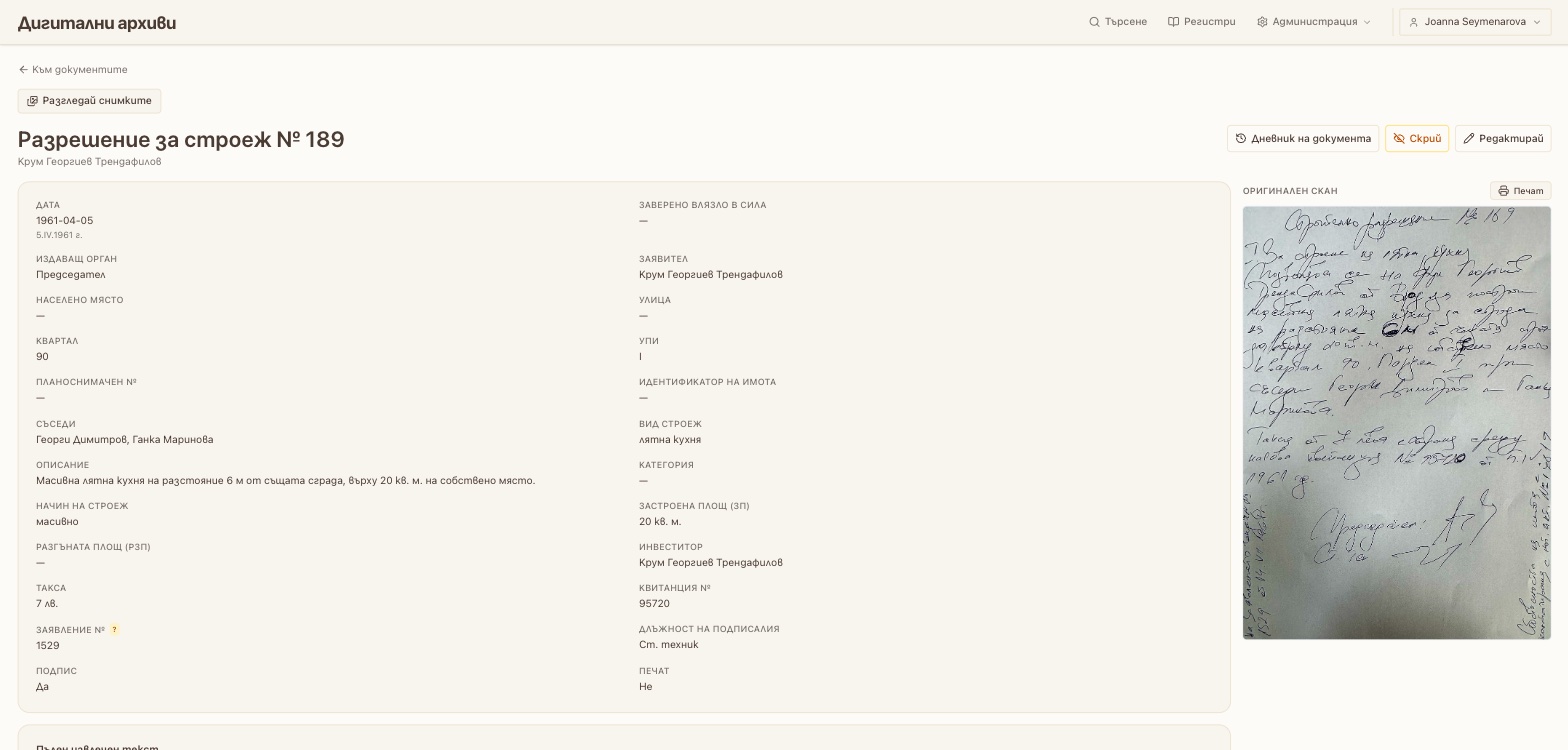
The sheet says "from Brod", and Brod is not in the municipality's catalogue — the field stays empty, while the raw text keeps "from Brod". Synthetic data.
Right now we are also building a handwriting classifier that learns each hand separately and passes what it has learned to the reading. It will not solve names on its own — that remains the job of matching across documents. But the machine reads everything else more accurately when it knows the hand that wrote it: both the letters and the digits.
The handwriting classifier and the hand from 1961
Handwritten Bulgarian is where off-the-shelf models fail. And we read it every day: municipal registers from the 1950s onwards, students' handwritten answers, archive ledgers. That is why we are building a handwriting classifier — a system that recognises whose hand it is and learns exactly how that hand writes, and what it learns is passed to the reading. An off-the-shelf model will never read like this, because it does not know the hand that is writing.
The same tool reads the mayor's orders and a seventh-grader's solution. Each project makes it sharper for the next one — and that is exactly why it cannot be copied: it is not an idea but an accumulation. It learns from work that only we have done.
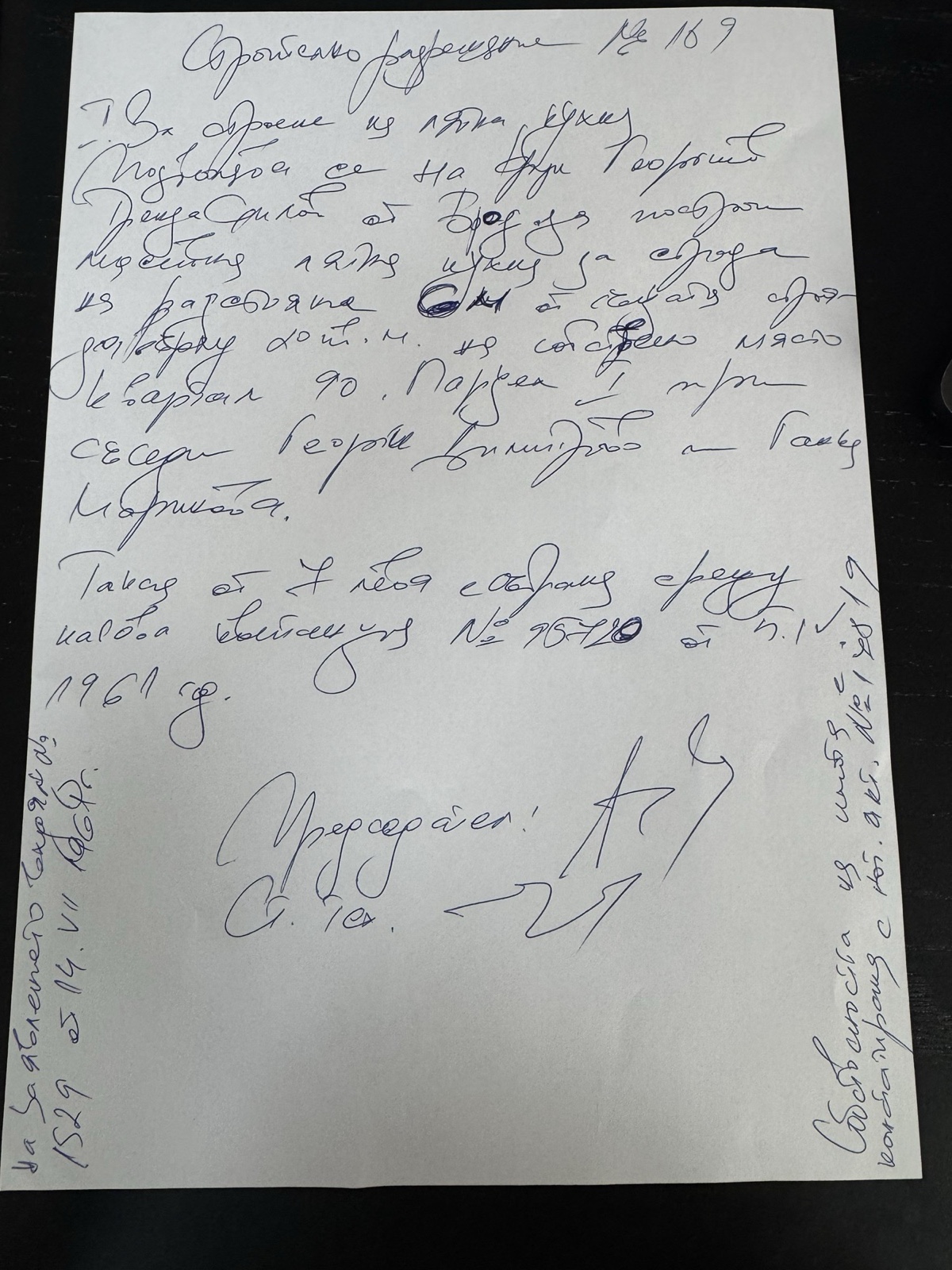
A building permit from 1961, written by hand — one of the hands the classifier learns.
On choosing a model: why one model, not several
The fashionable answer to uncertainty is to ask several models and take what they agree on. We tested it on Bulgarian handwriting and measured that it makes things worse: the models make the same mistakes, so the second one does not catch the first one's error, it confirms it. We use one model and invest in it.
In Blagoevgrad, today. The municipal archive holds 26,092 building permits — from the 1950s to the present — and 33,017 mayoral orders. All of them are transcribed and uploaded, and staff search them every day.
And the new documents. For Blagoevgrad Municipality we also built the issuing: the municipality creates its documents directly in our system. A new permit is not printed, scanned or recognised — it is digital from its first line.
- 26,092
- building permits
- 33,017
- mayoral orders
Blagoevgrad Municipality.
How we won Blagoevgrad. We built the whole platform before we had a contract — a working system, not a presentation. The municipality chose a smaller version of it: the full one was too big a change at once for a process that had run for decades, and that is sensible caution, not delay. The full version is coming step by step. And building a whole product to test and prove an idea is rational precisely under the new rules we work by: ideas are now tested by building them.
Who supports it. The contract with Blagoevgrad Municipality explicitly names two companies: Mentorano, the sole developer, and Erida, for support and compliance.
For every municipality. 265 municipalities have archives like this one. The ledgers differ everywhere — columns, fields, handwriting, stamps — so the system adapts to your ledgers, not the other way round. How far to go — search only, or a new process — is for the municipality to decide, step by step.
Screenshots from the full platform: the register log and the new entry
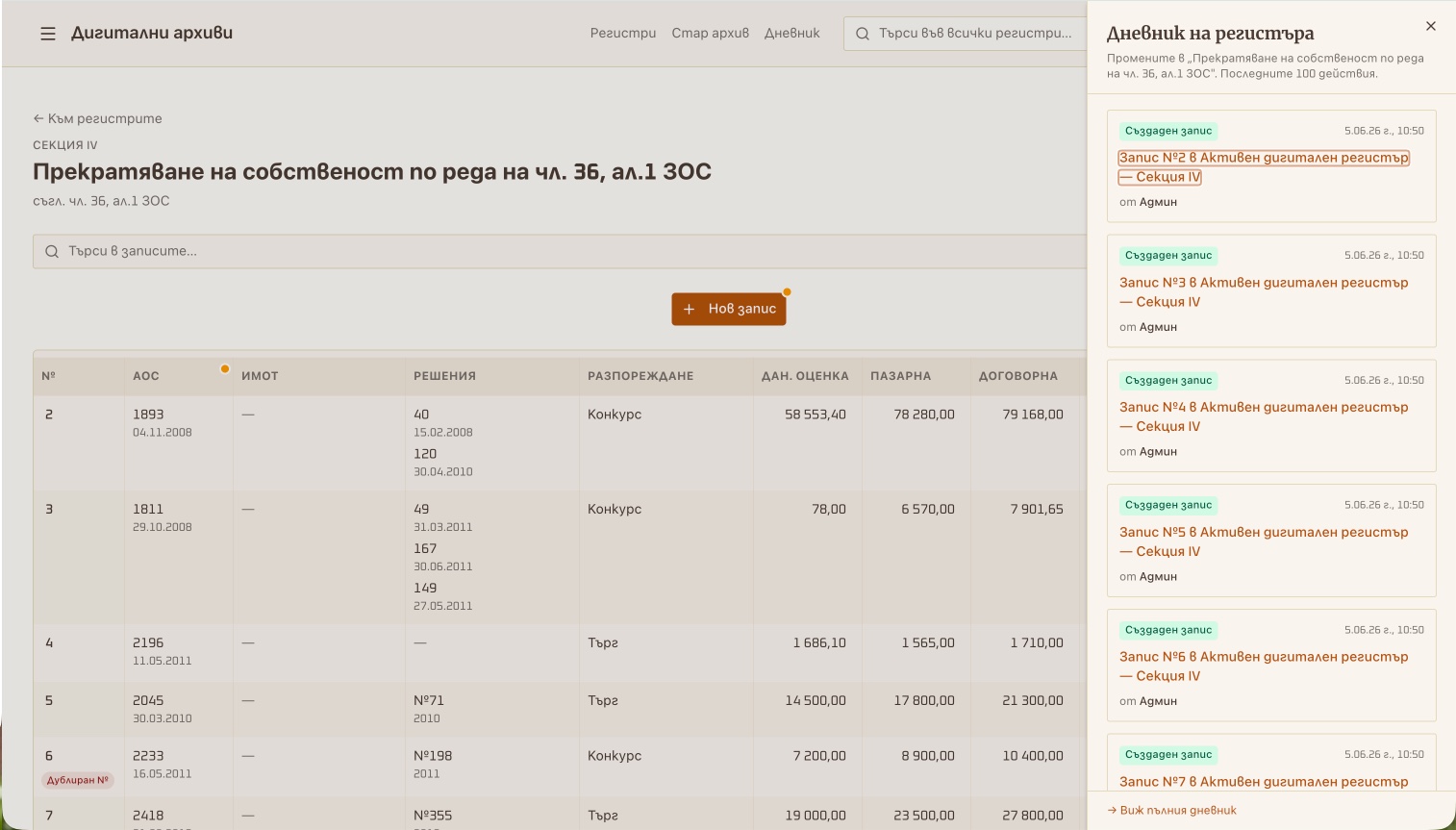
Every action in the register stays on record — what, when and by whom. Synthetic data.
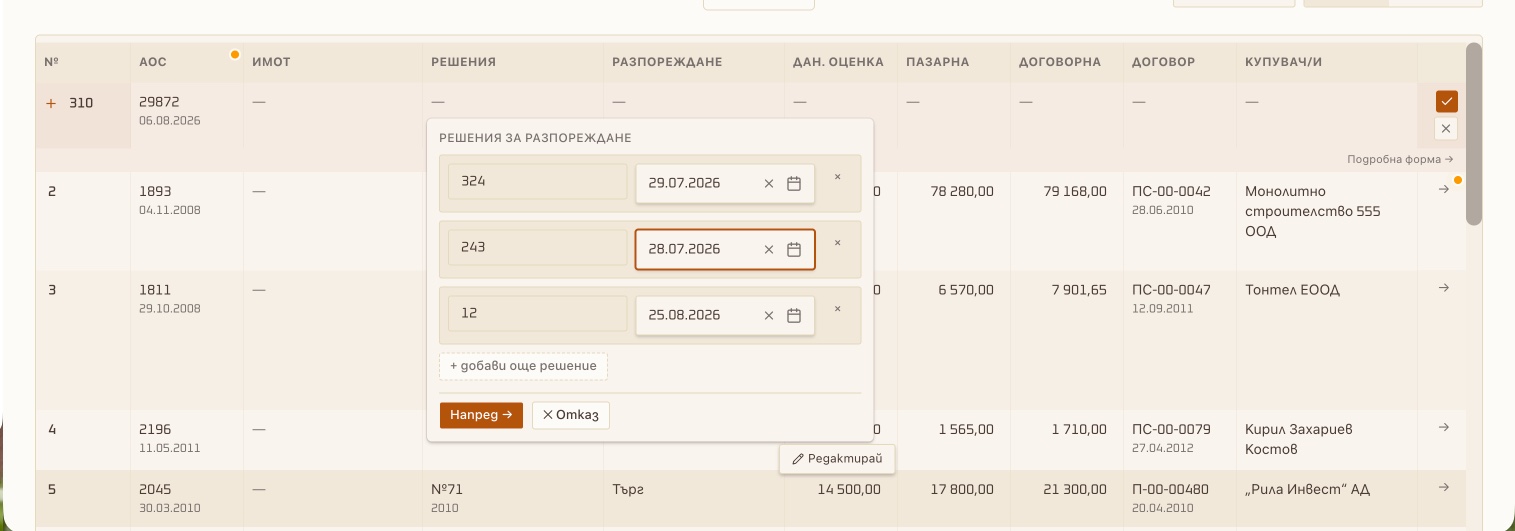
A new entry is filled in on its own row, cell by cell — without leaving the list. Synthetic data.
Write to us — it starts with the first batch of ledgers.
Not only archives
We have delivered other work for the public sector too.
Reuse — replacing 100,000 school laptops
The system through which 2,200 schools are replacing ~100,000 school laptops under a national programme: the school places the request, the service centre scans, and the handover reports and invoices are generated automatically.
BG Mentor — 1,030 schools and mentors
The platform that connected 1,030 schools with their approved mentors under a Ministry of Education (MES) project — with an audit trail for every action.
Archives are not a side business — it is the same craft: unstructured reality turned into structured, searchable knowledge.