
Plexibits
From the textbook — to real life.
A virtual world for grades 1–4
Sign in with a nickname · pre-release version
The film
The film for teachers: one walk through the city with Mila, and what it means for a lesson in class. 7:56, with sound.
The rule we build by
Children learn from what they do themselves, not from what they watch. So Mila does not watch someone else cross the road. She stops at the kerb, looks both ways and crosses on her own.
Learned in class → applied here.
The city and its people
Mila is eight and in grade 2: brave and kind, always the first to help. Running beside her is Aro, the St Bernard puppy with the little red bag, the dog of Lipa Street.
The city has streets with traffic lights, a roundabout, a square with a fountain and 26 buildings. Children meet its people on their missions: in the park, on the square, in the lab, at the market stall.
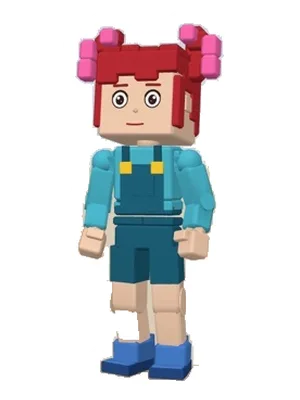 Mila
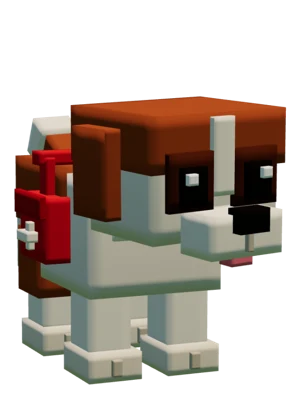 Aro
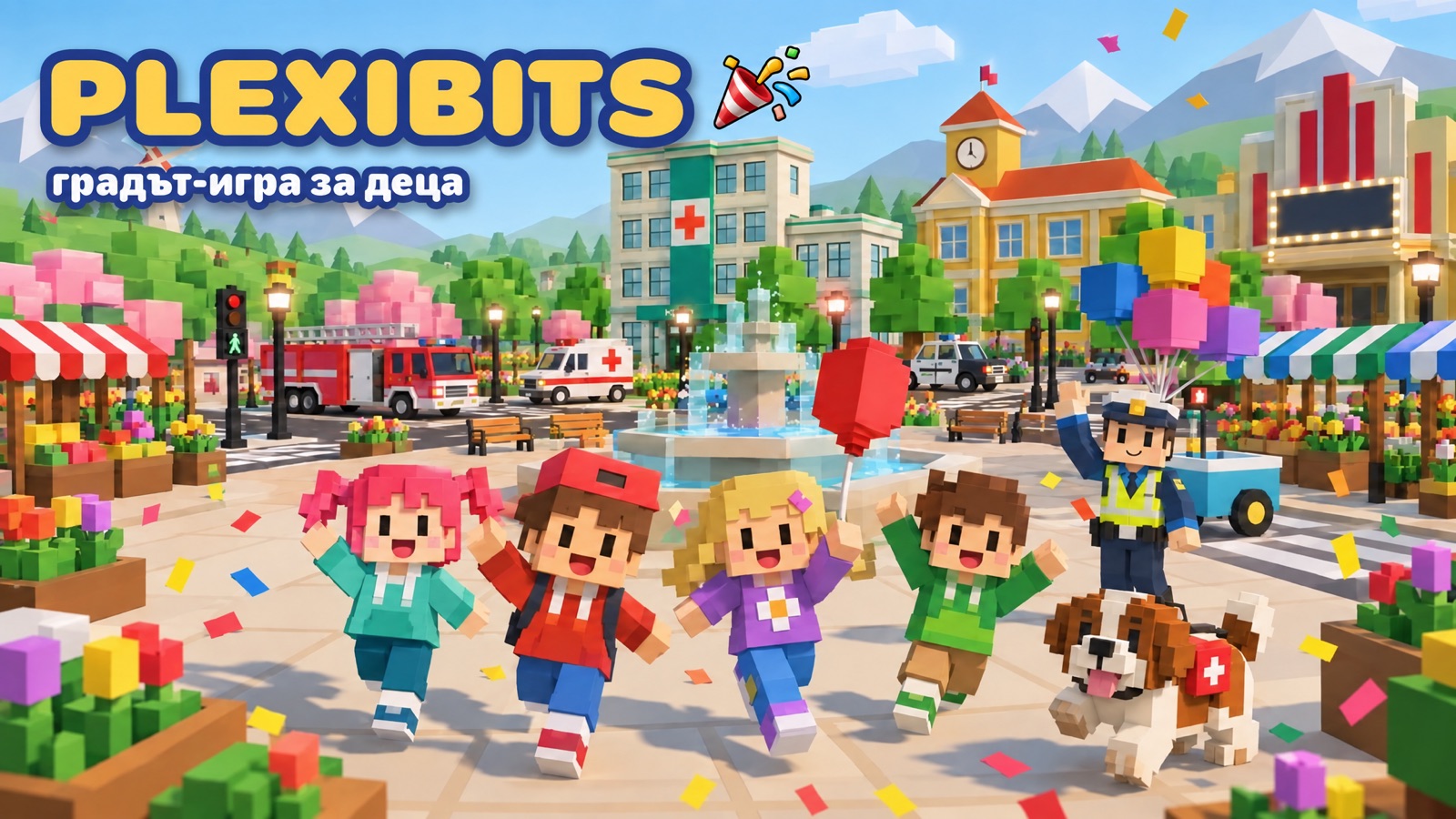
The game's poster.
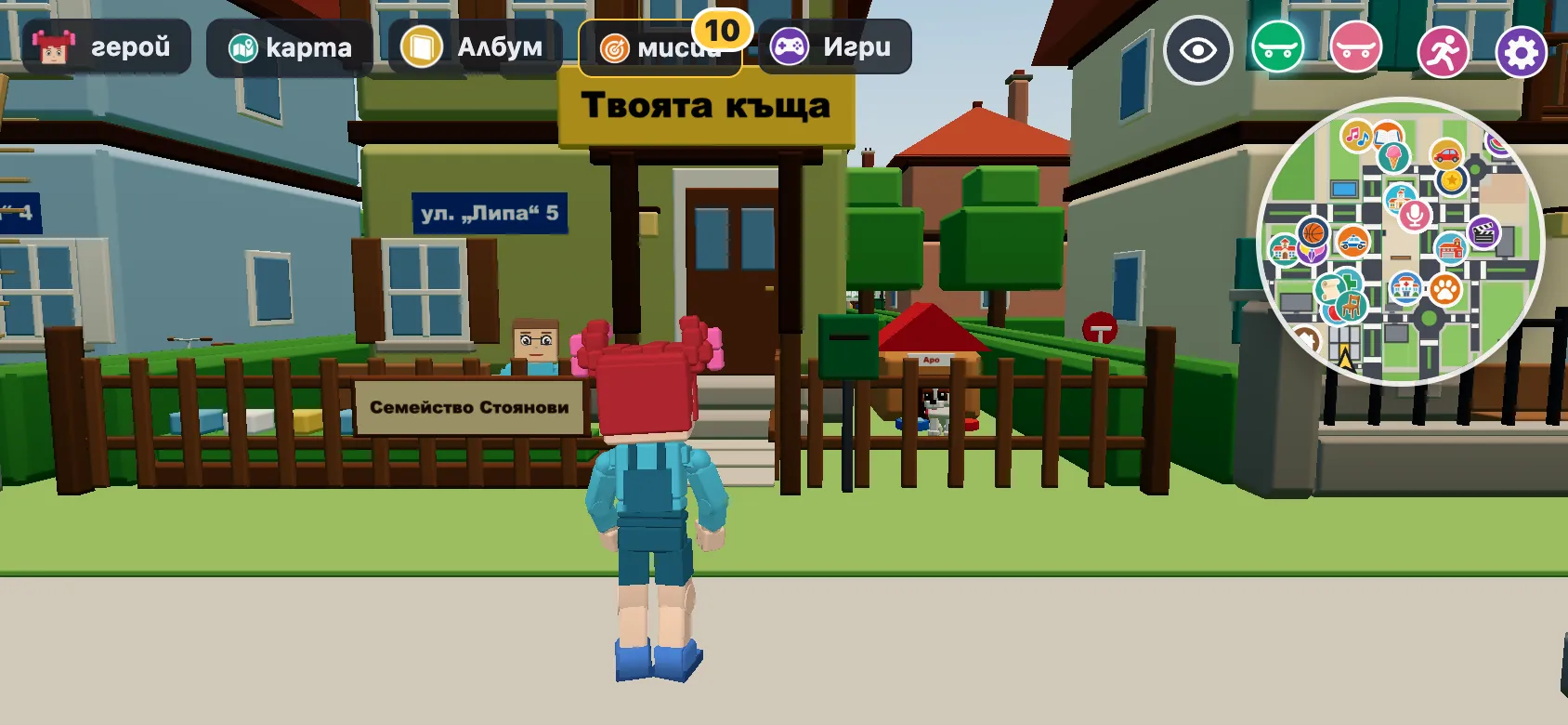
Mila outside "Your house" on Lipa Street. Every mission starts here.
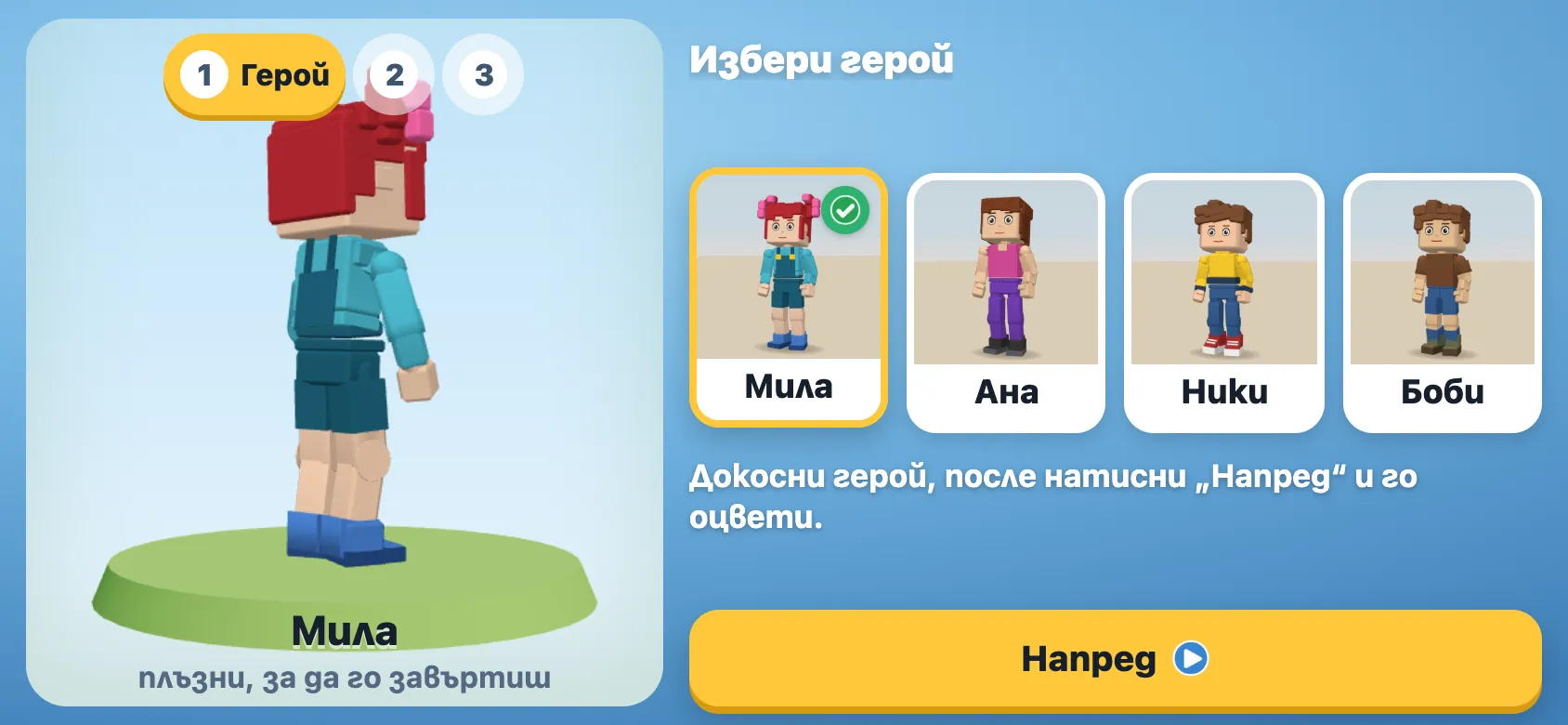
At the start, each child picks a hero. Mila is the first.
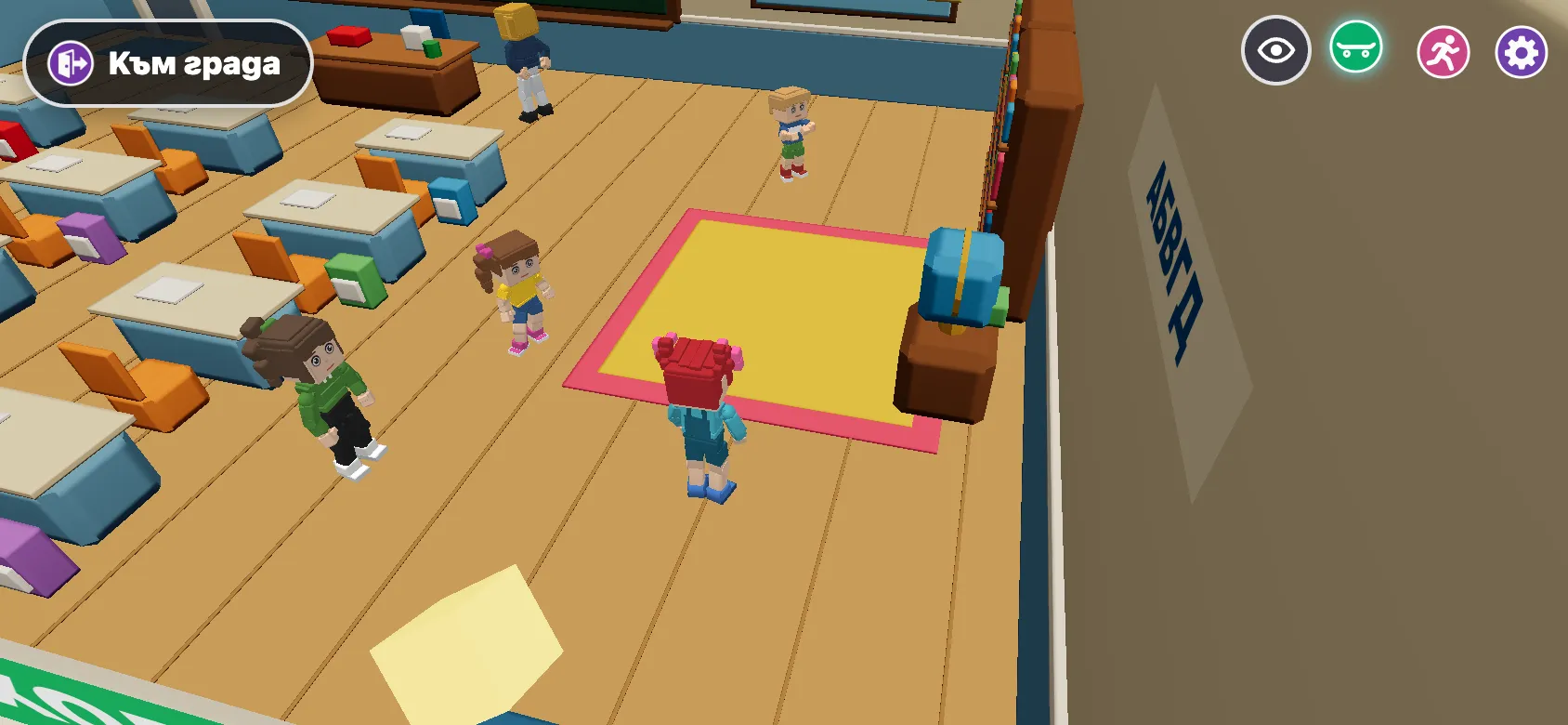
Inside the school.
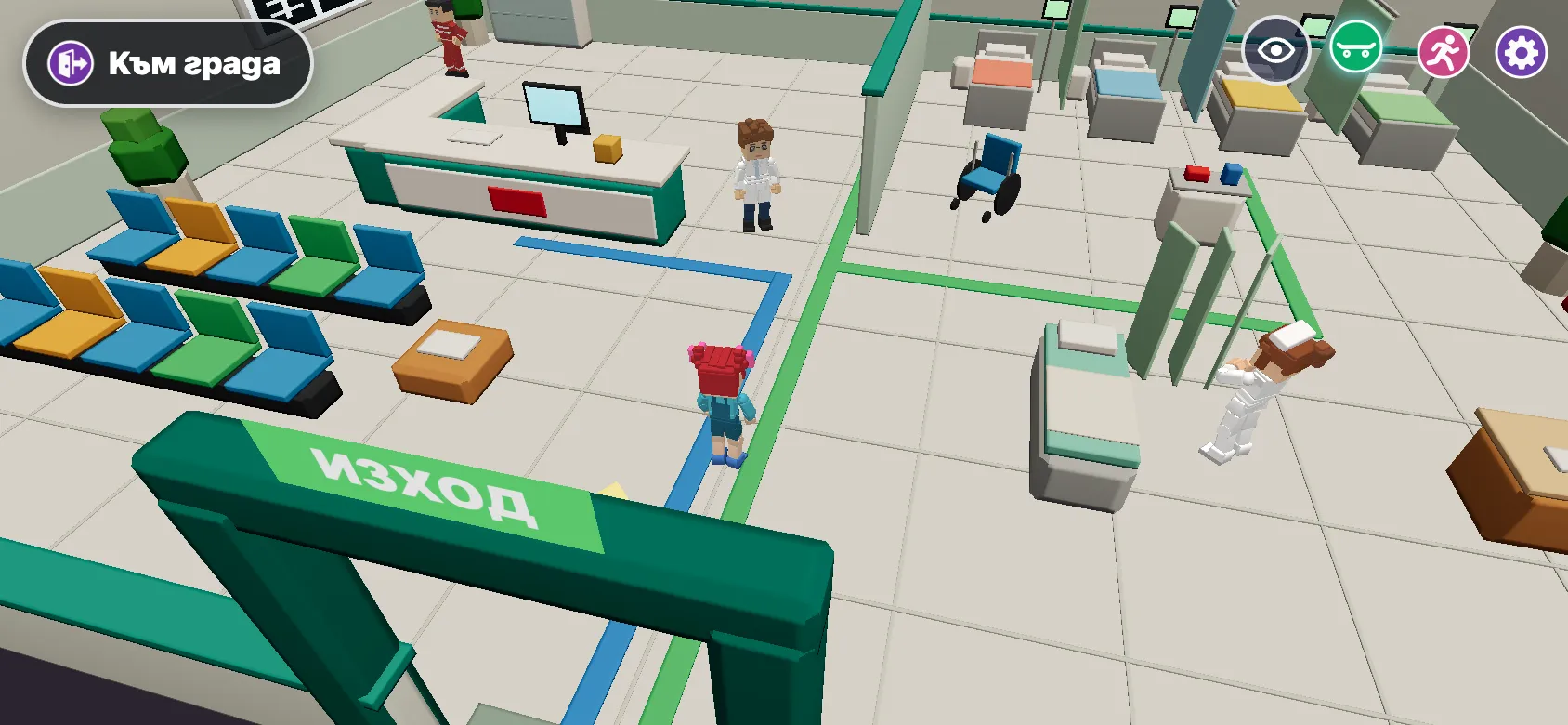
The hospital and its waiting room.
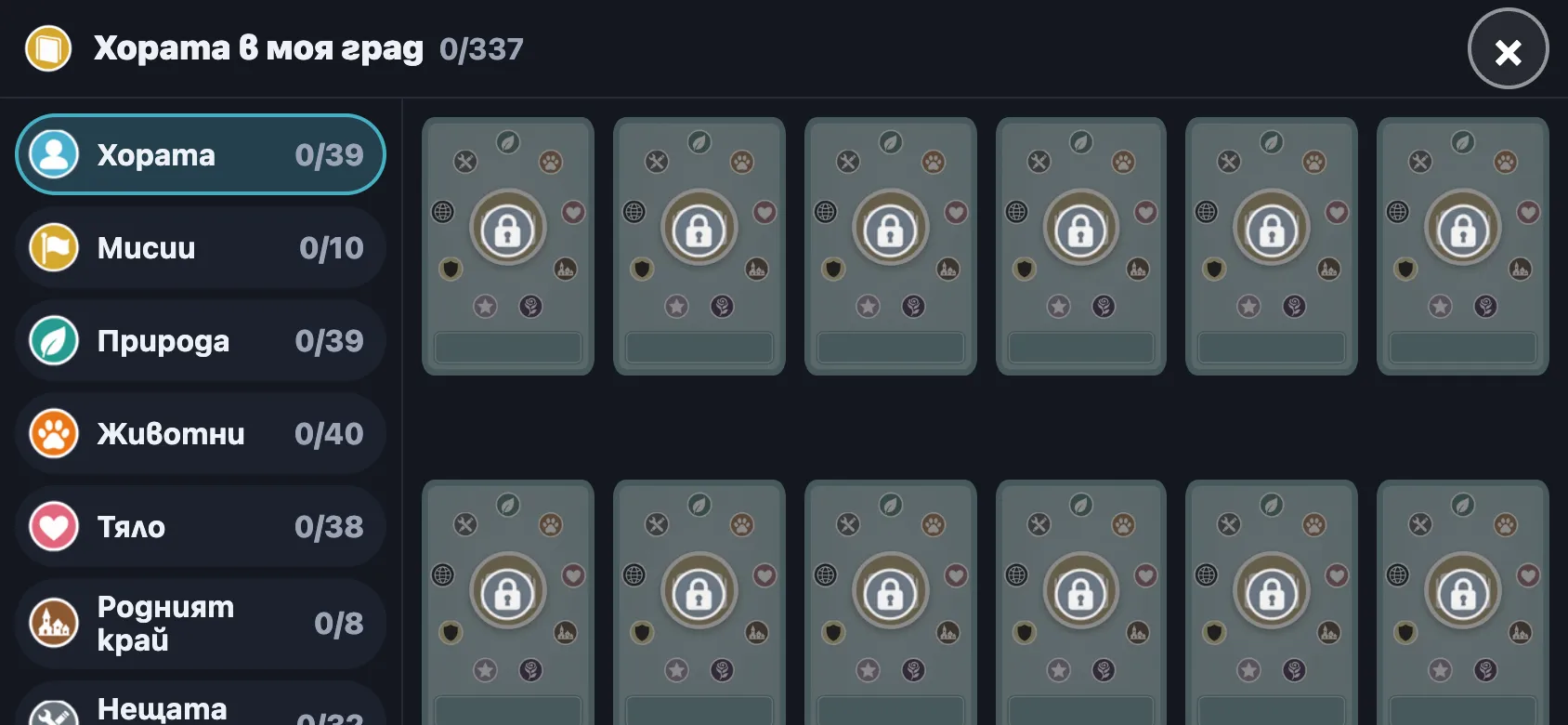
The "People in My City" album. Its cards are unlocked around the city.
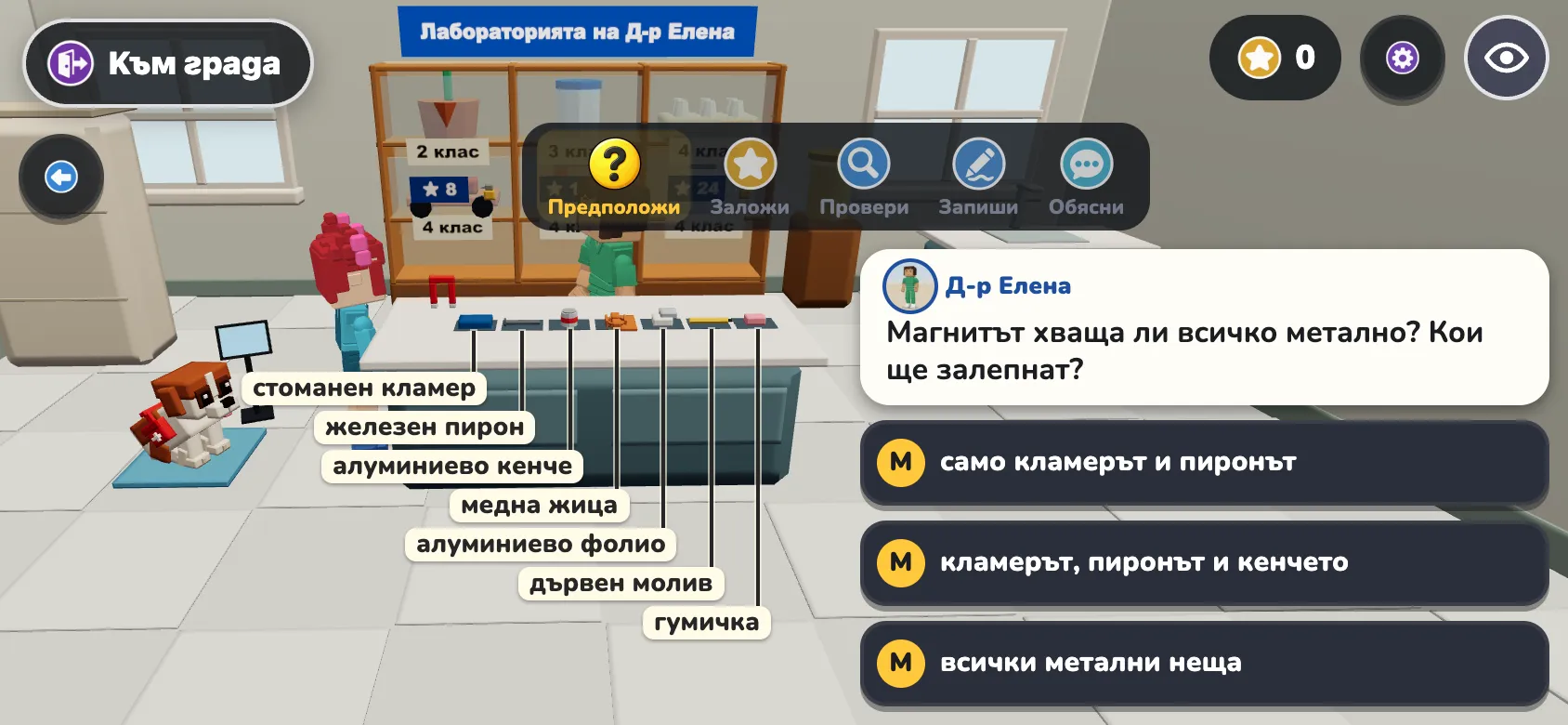
Dr Elena's lab: "Does a magnet pick up everything made of metal?"
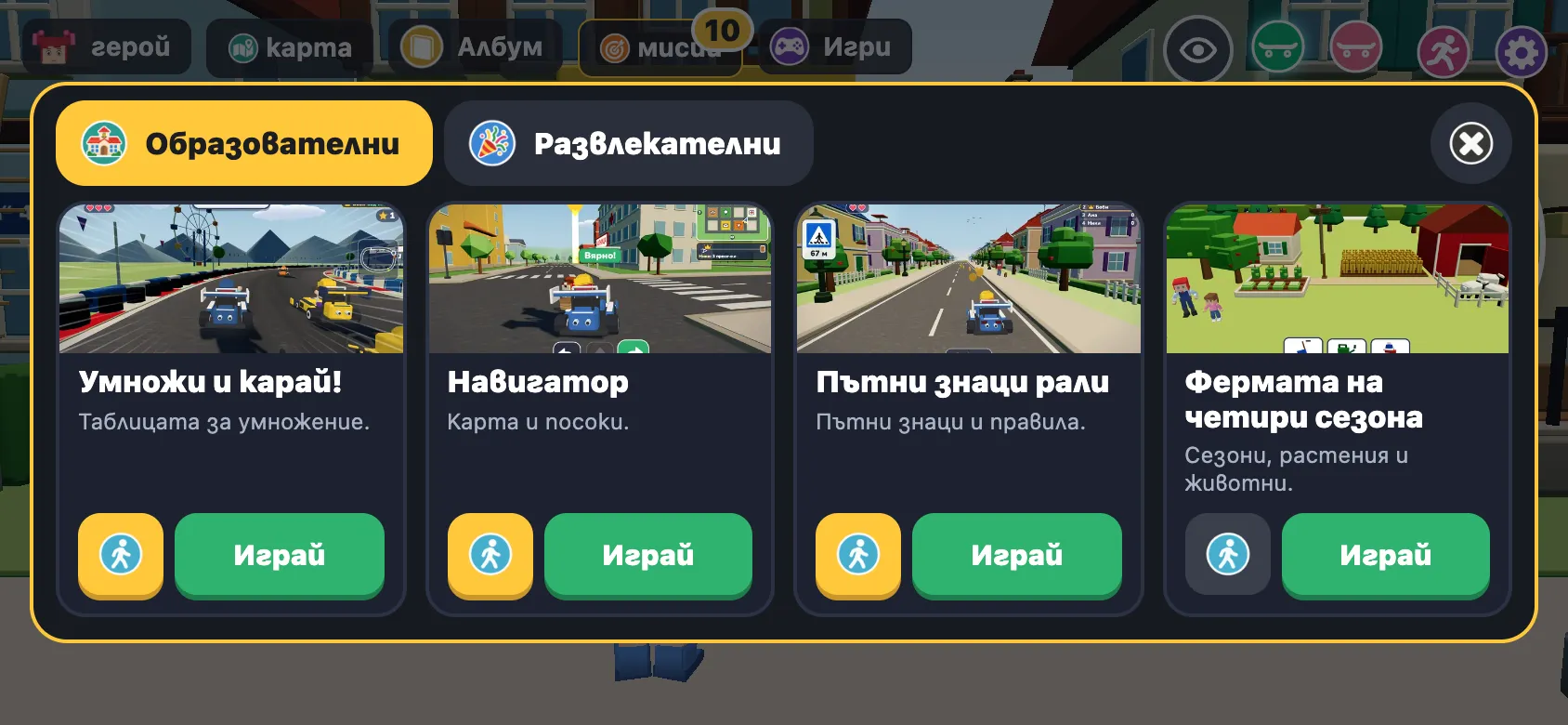
All the games in the city, in one place.
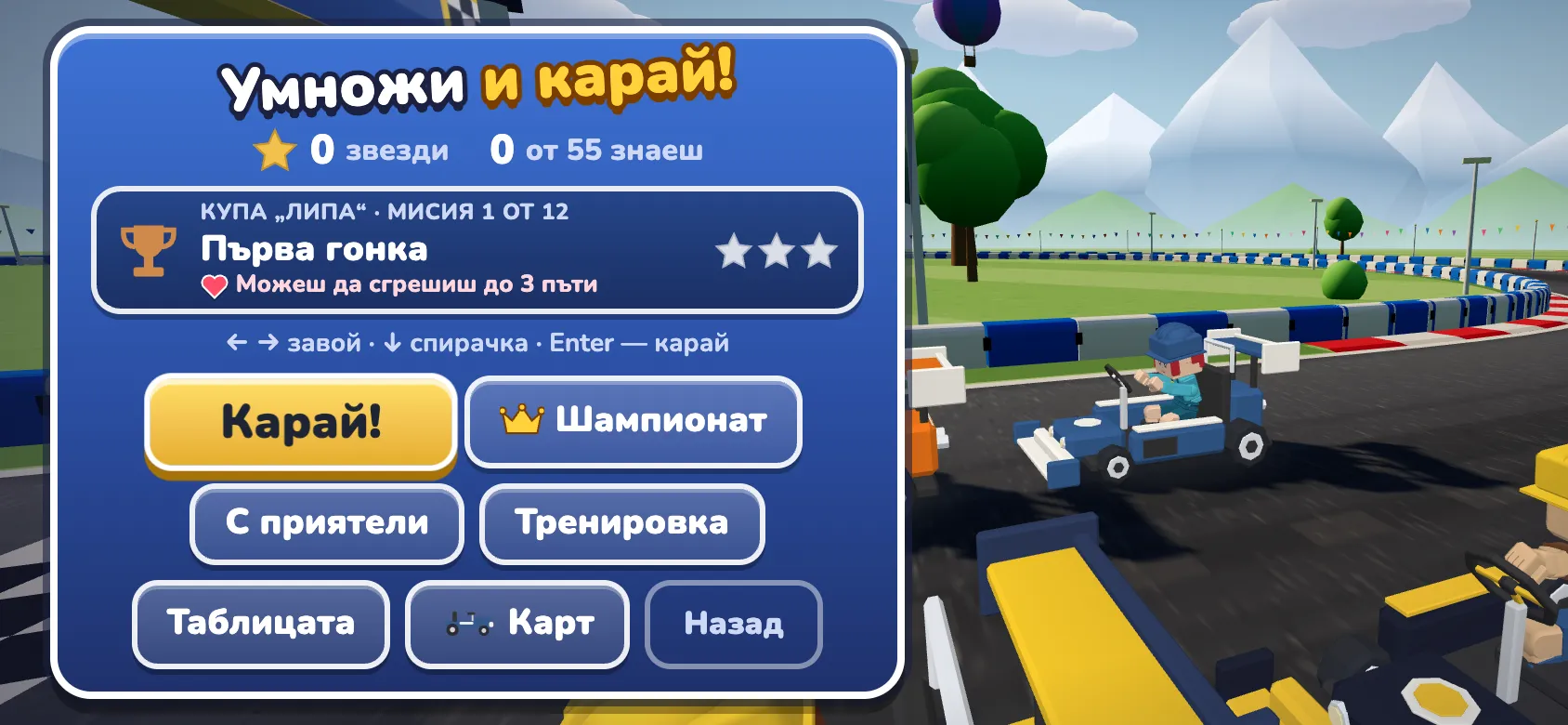
"Multiply and Drive!": practice, a championship with cups, or a race with friends.
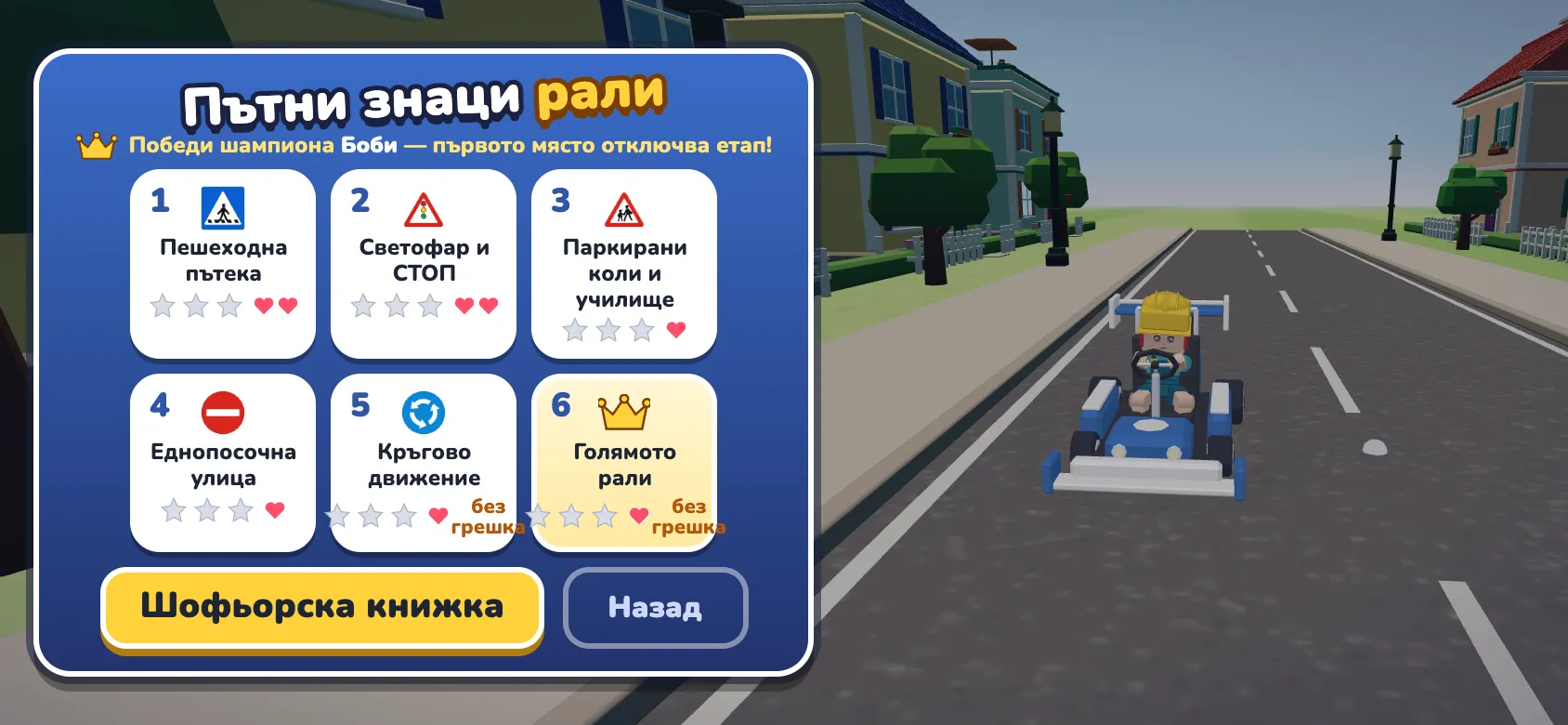
"Road Sign Rally": six stages, from the zebra crossing to the grand rally.
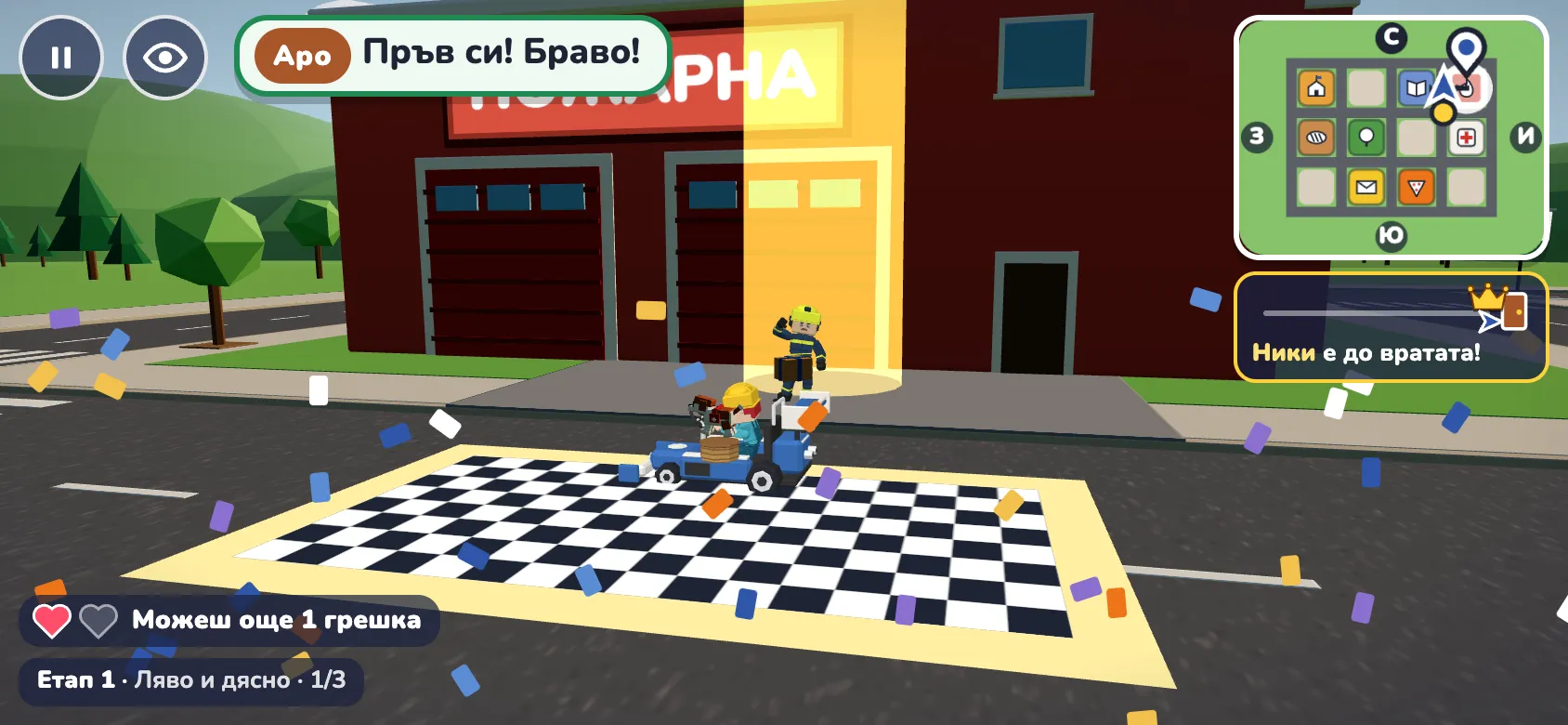
"Navigator": first past the finish line outside the fire station.
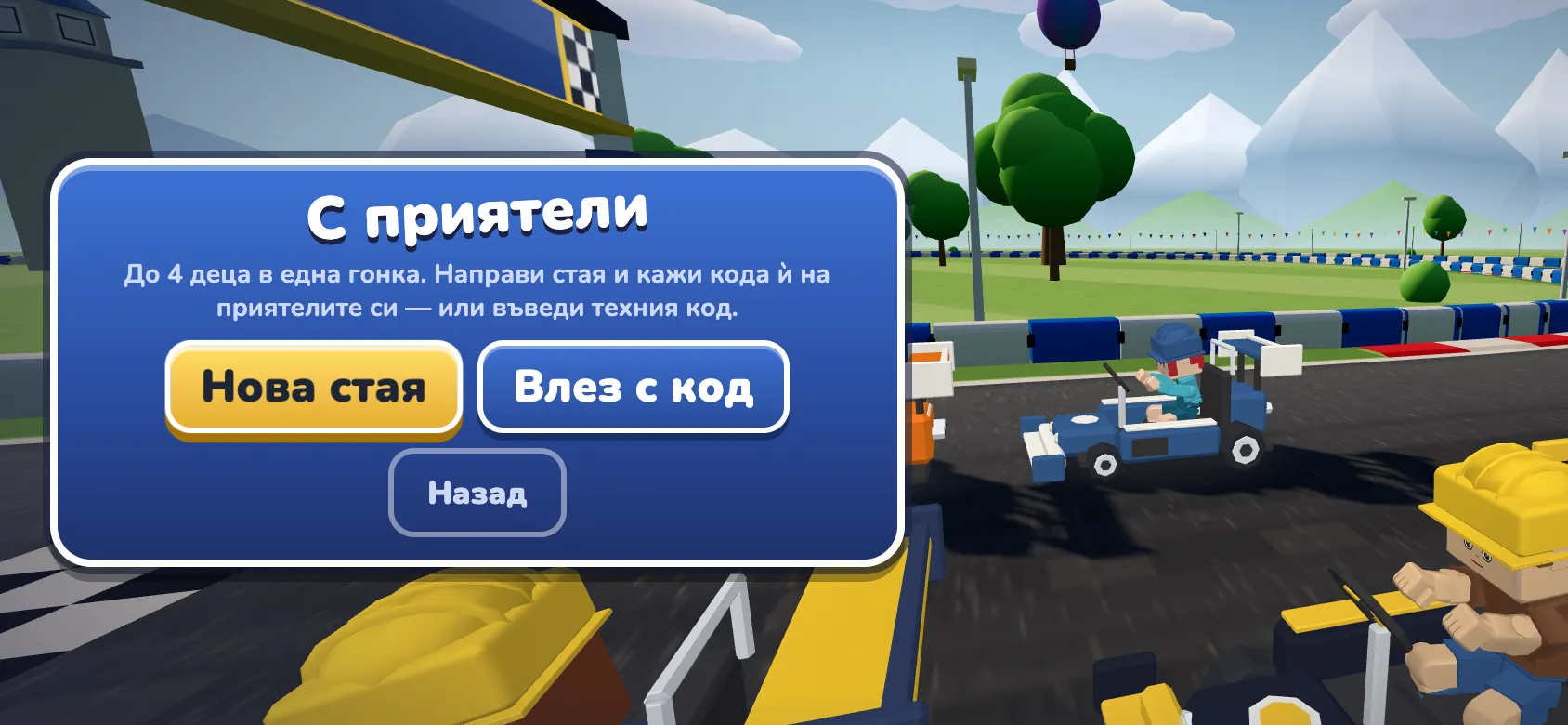
With friends: up to four children in one race.
What it practises
Behind the city are 18,413 ready-made open and closed questions with pictures, built on the primary curriculum and its content. The games and missions are grouped here by subject, as in the curriculum. The teacher can see which skill each one practises in the dashboard →
Safety and health
Children call 112 for help, deal with a small injury, move away from a fire and know which adults they can trust.
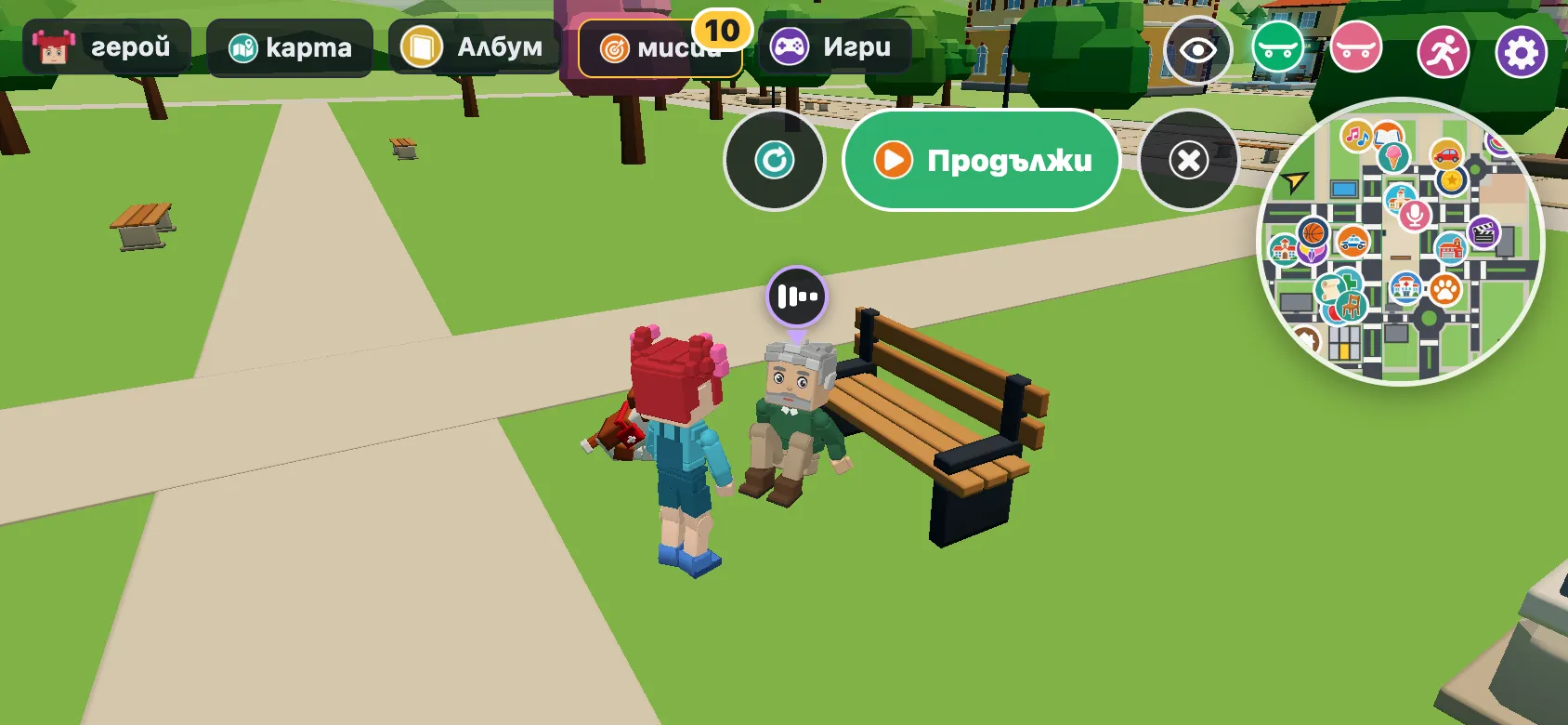
The Grandad on the Bench
The Grandad on the Bench
The child calls 112, the European emergency number, and answers the operator clearly: who, what, where.
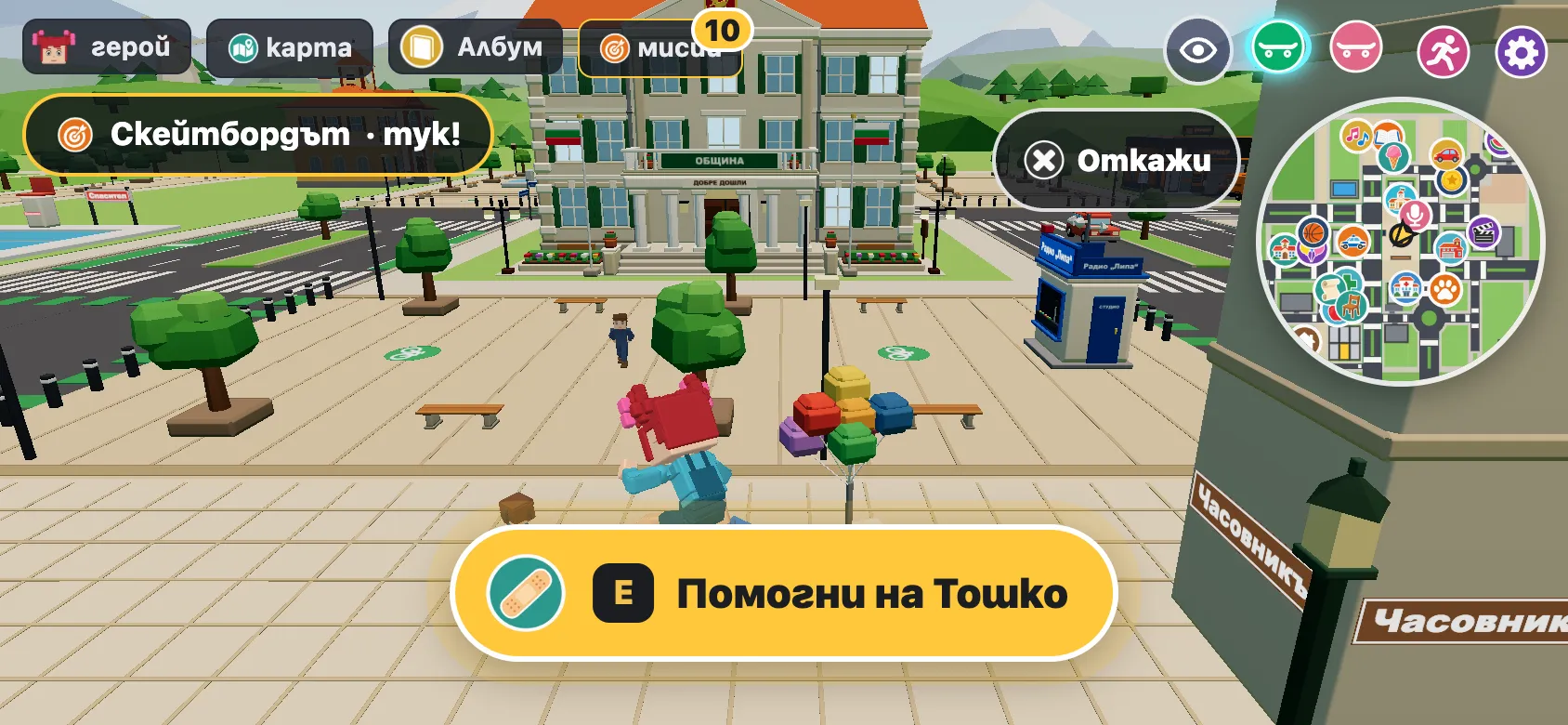
The Skateboard
The Skateboard
A small injury: water, a tissue, a plaster, and you tell an adult; a helmet protects you.
Grades 1, 3–4Play „The Skateboard“: enter the city
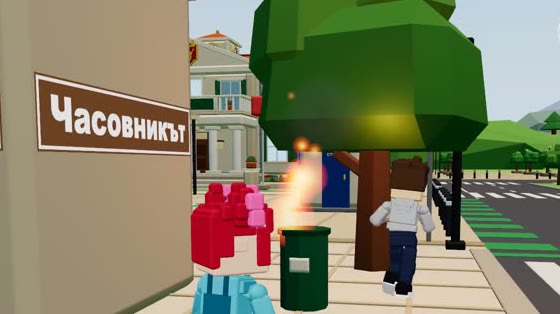
Fire in the Bin
Fire in the Bin
In a fire, you move away, take the other person with you and call 112.
Grades 1–4Play „Fire in the Bin“: enter the city
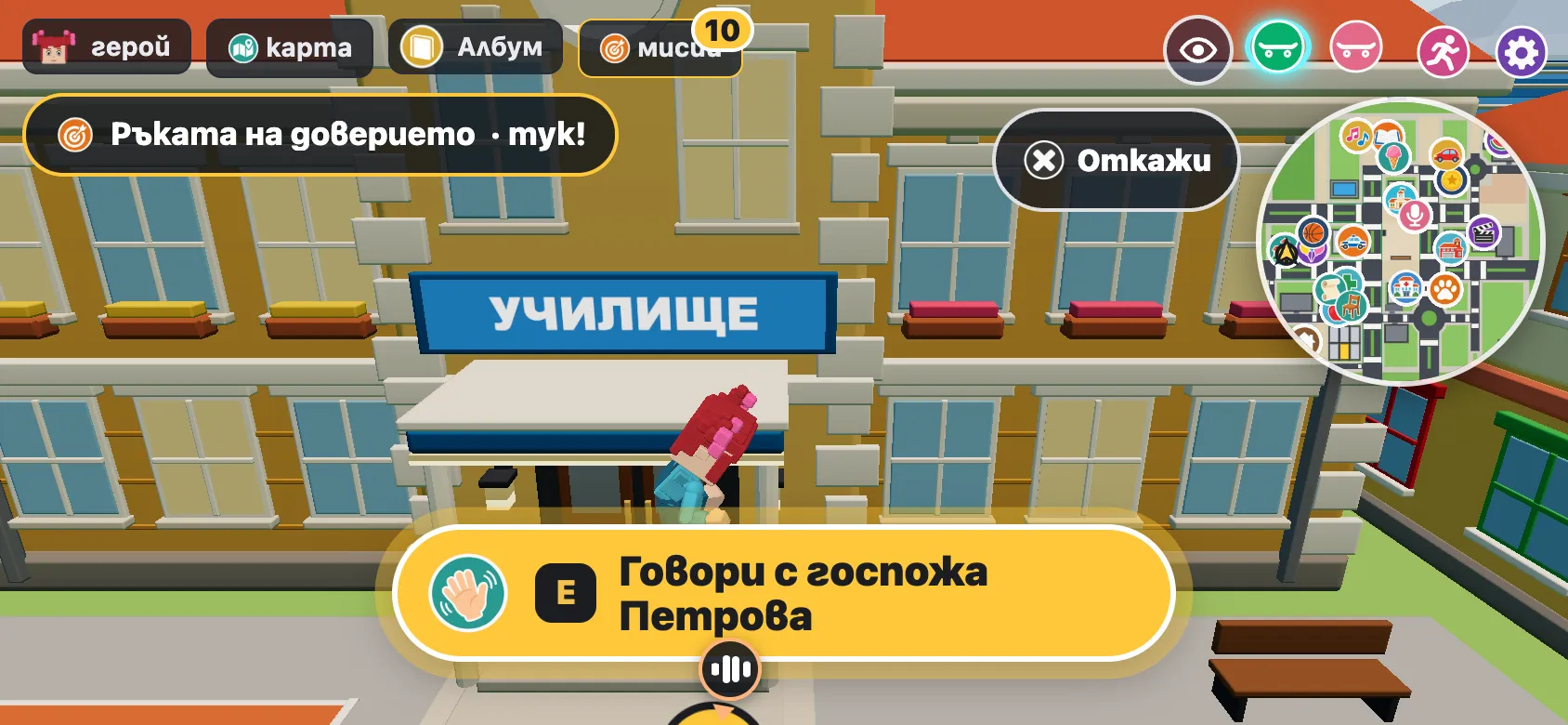
The Hand of Trust
The Hand of Trust
Five adults I can tell when something is wrong.
Grades 1–2Play „The Hand of Trust“: enter the city
Road safety and finding the way
Children cross at the zebra crossing, read road signs, turn by the directions on a map and plan a safe route for a robot.
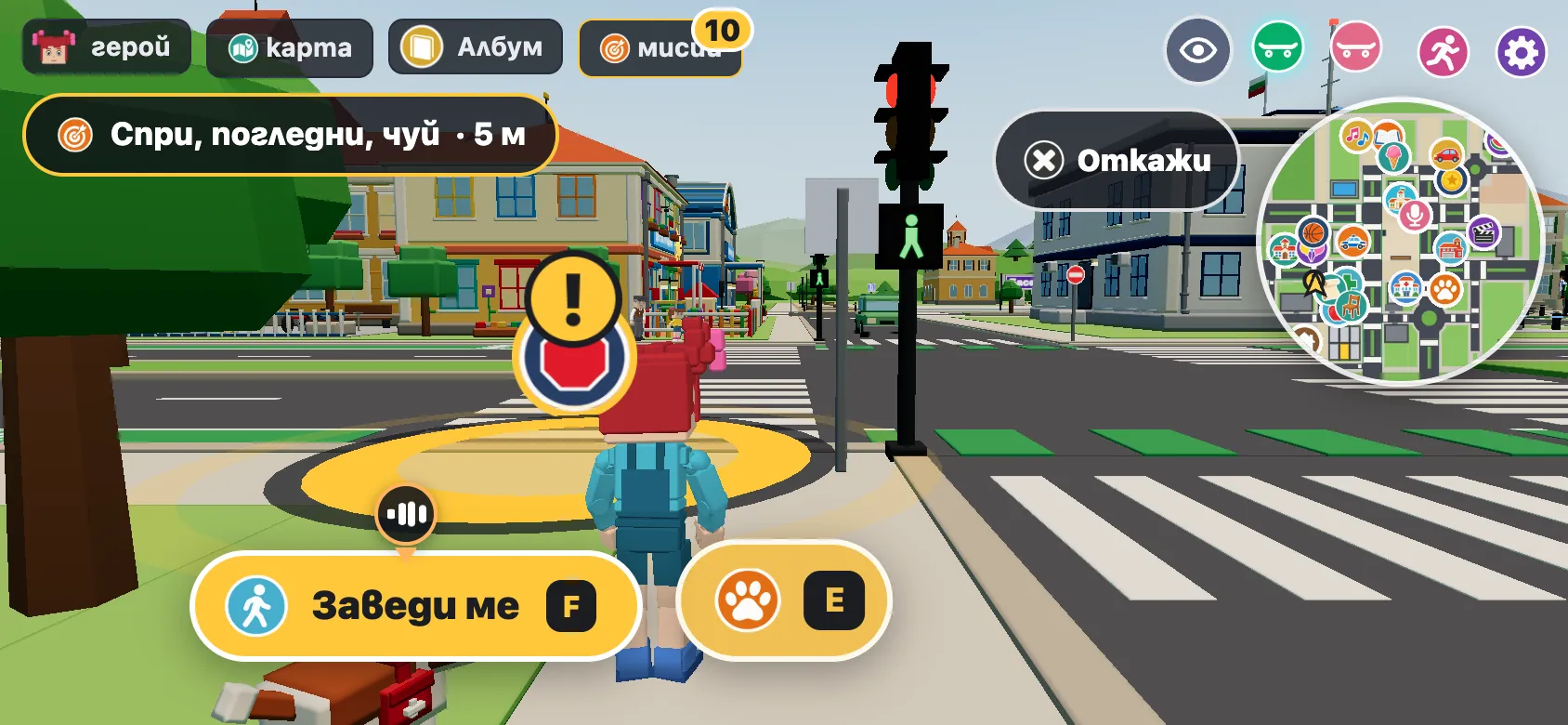
Stop, Look, Listen
Stop, Look, Listen
You cross at the zebra crossing: you stop, look left, right and left again, and listen.
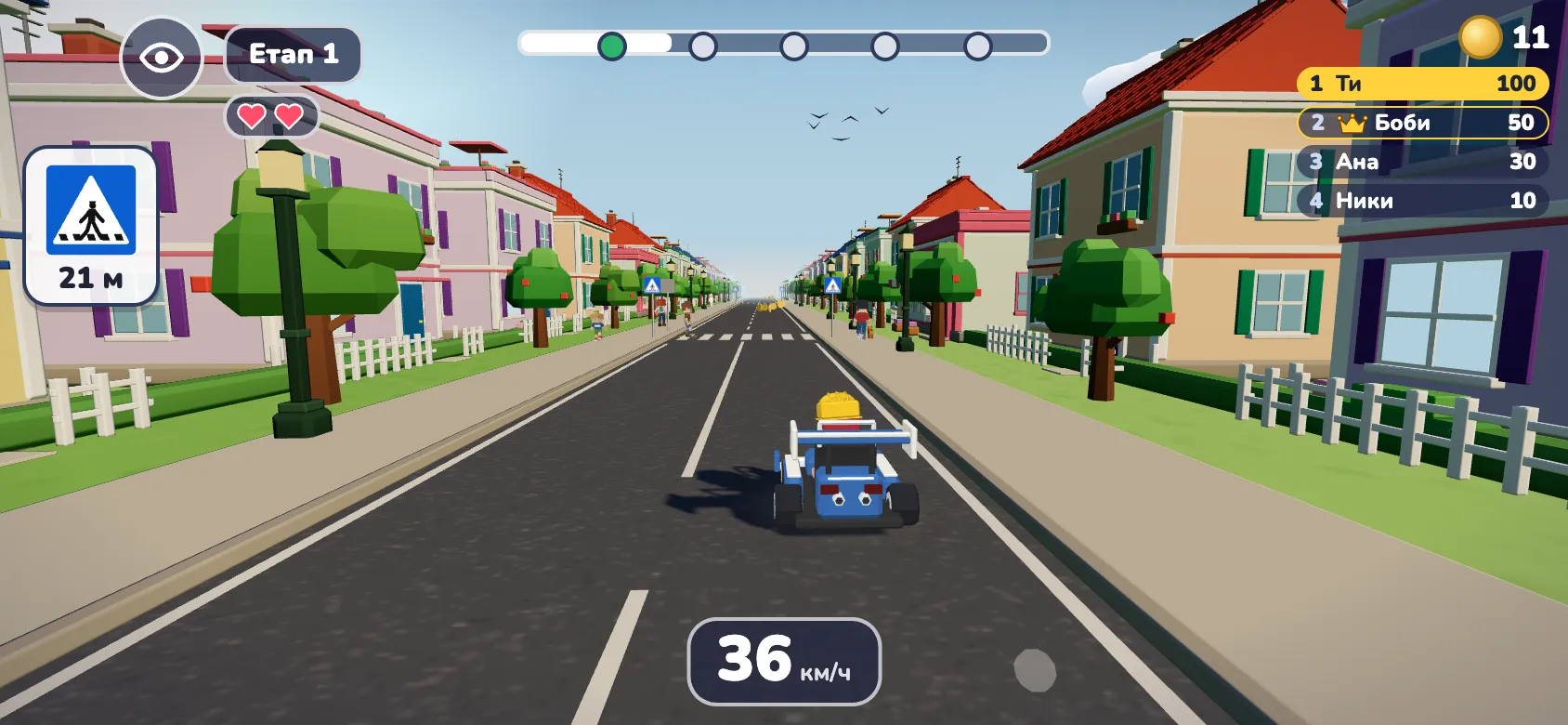
Road Sign Rally
Road Sign Rally
You stop, give way and drive by the signs and the traffic lights.
Grades 1–4Play „Road Sign Rally“: enter the city
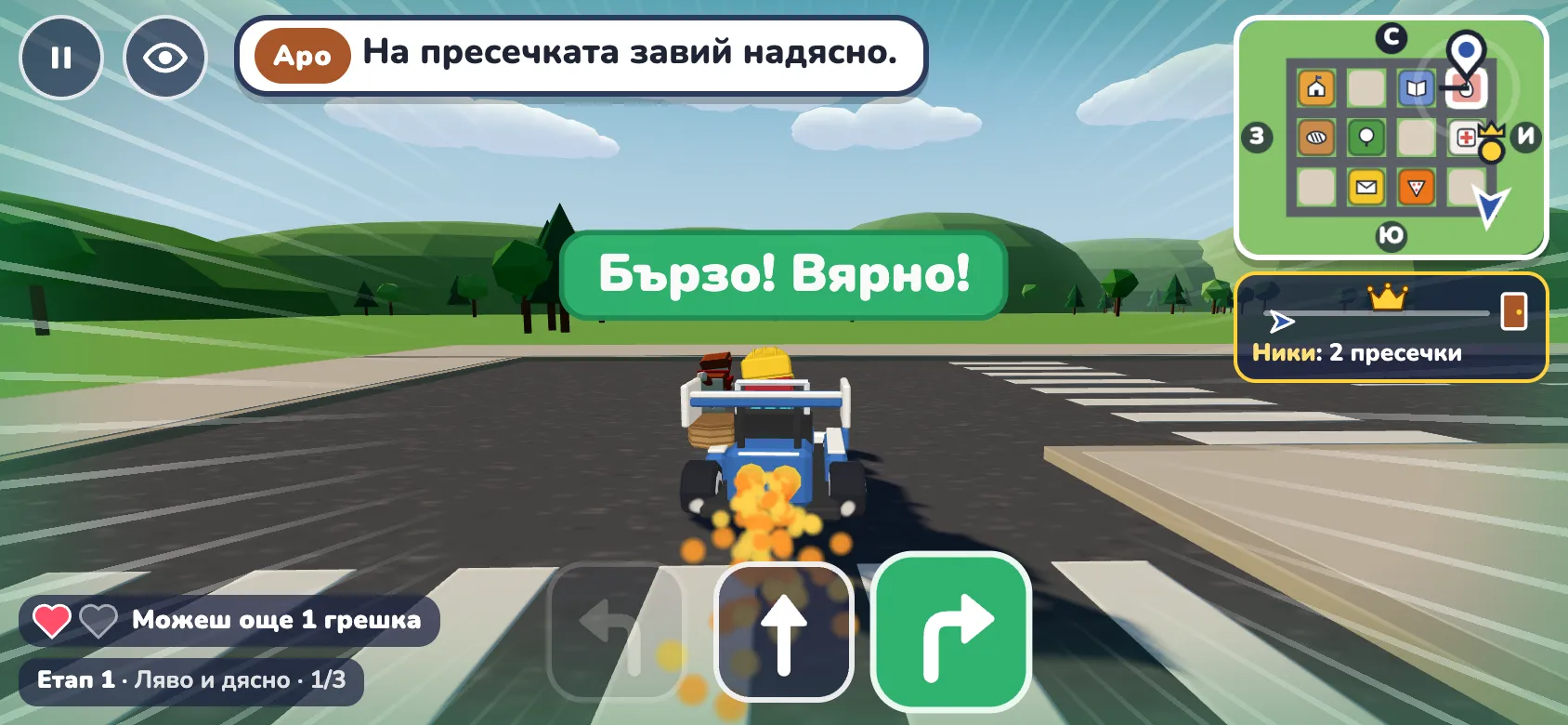
Navigator
Navigator
Left and right, the points of the compass, a map and landmarks.
Grades 1–3Play „Navigator“: enter the city
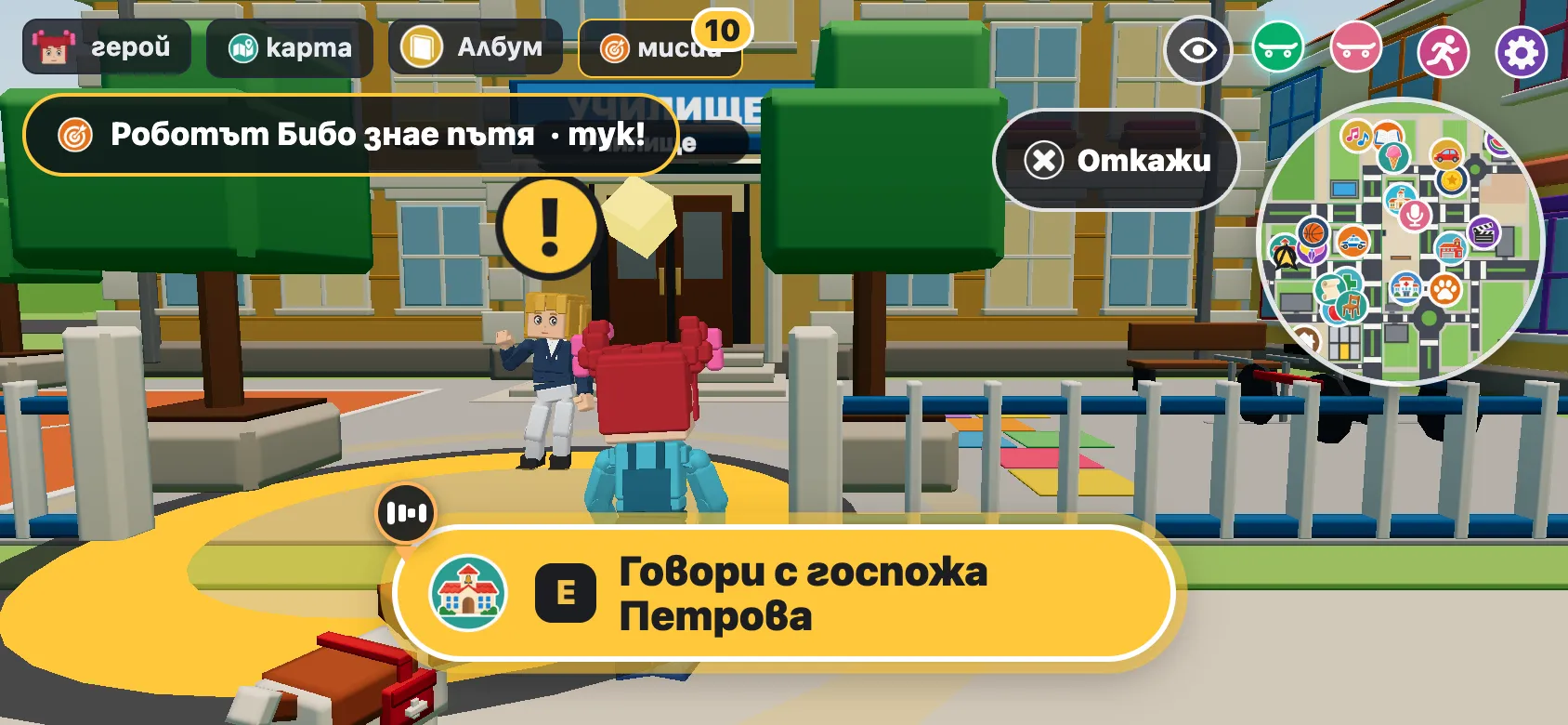
Bibo the Robot Knows the Way
Bibo the Robot Knows the Way
You put together a program (an algorithm) for a safe route and then walk it.
Grades 1–3Play „Bibo the Robot Knows the Way“: enter the city
Maths
Children use a balance scale, split things into halves, tell the time and race through the times tables.
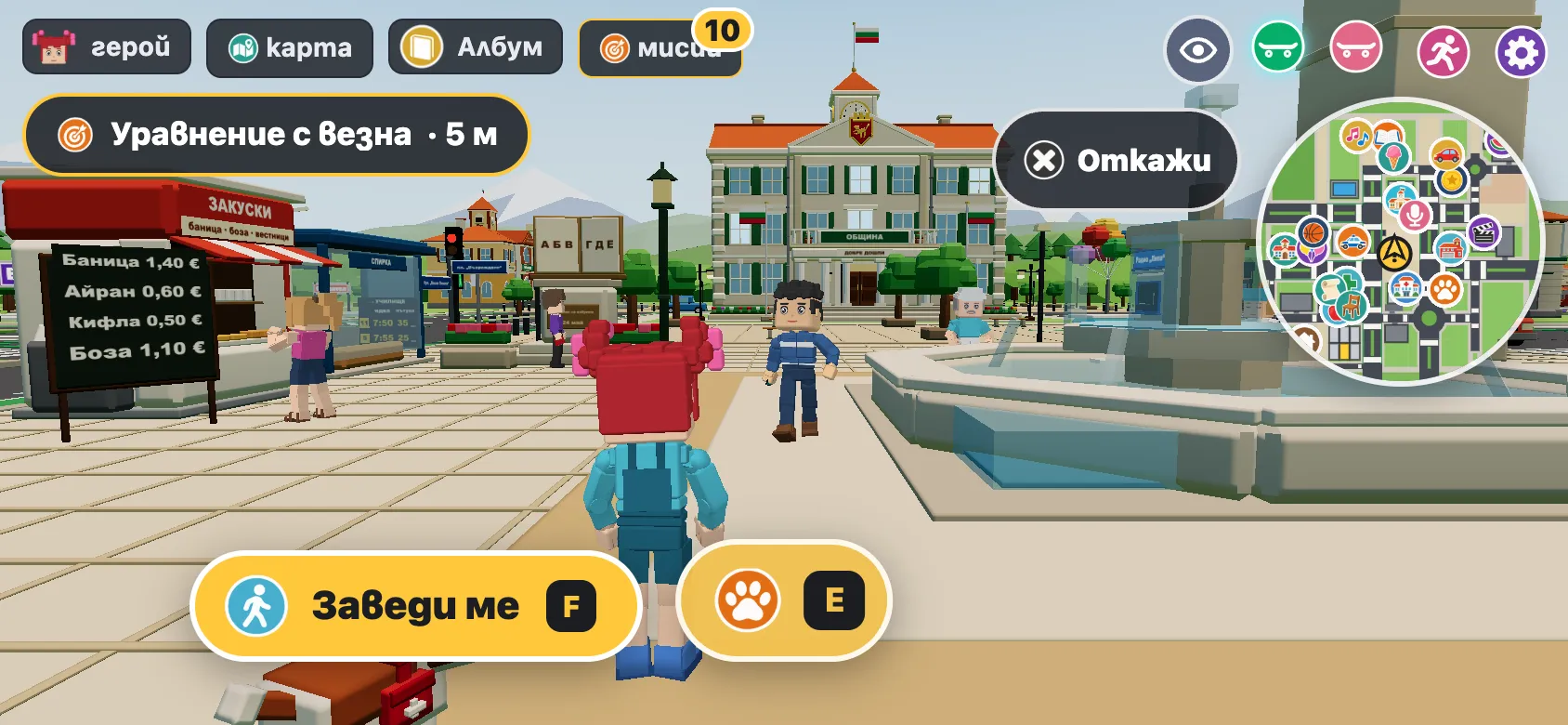
The Balance Equation
The Balance Equation
Balance the scales: how many kilograms are needed on the other side.
The Two Melons
Half a kilogram: two halves make a whole.
Grades 1, 3Play „The Two Melons“: enter the city
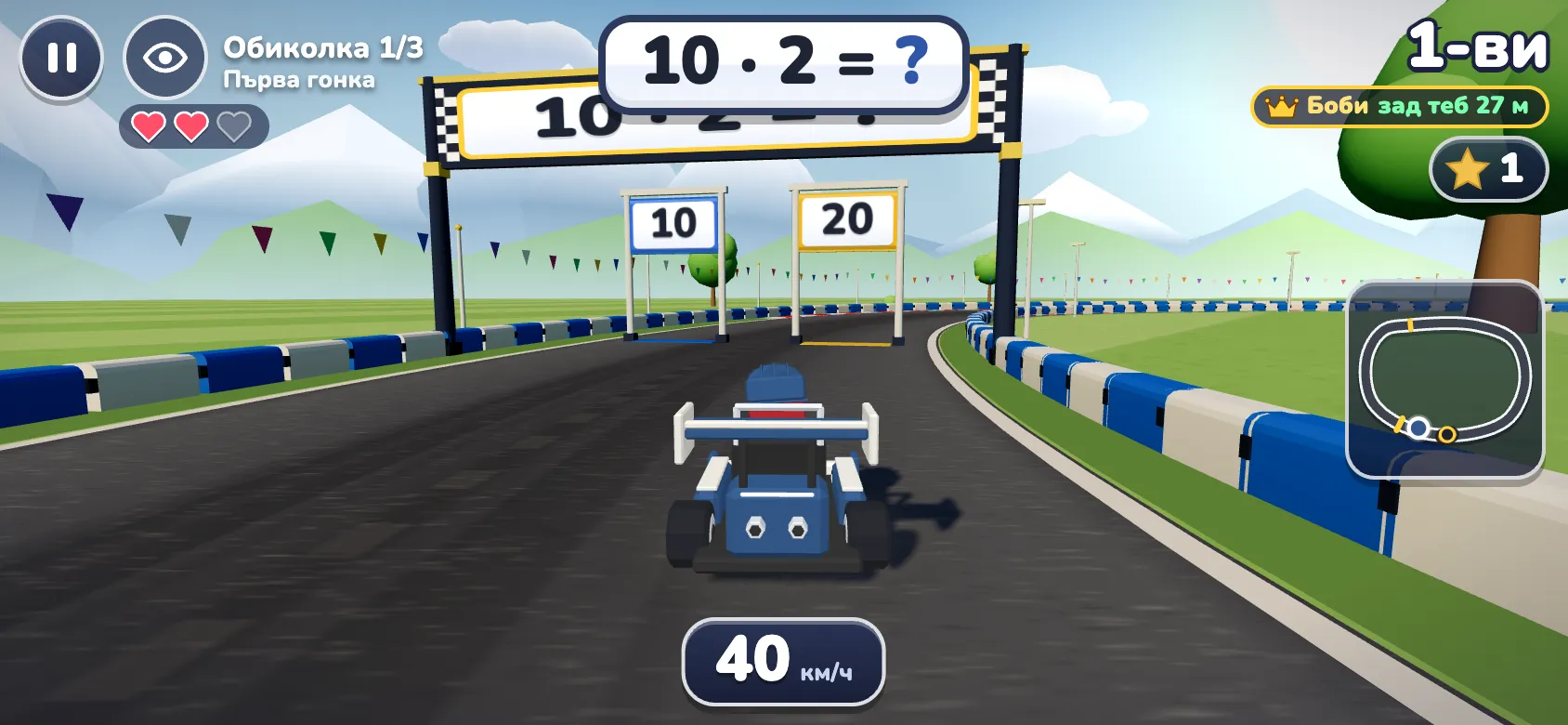
Multiply and Drive!
Multiply and Drive!
Quick, correct multiplication; the hard facts come back for more practice.
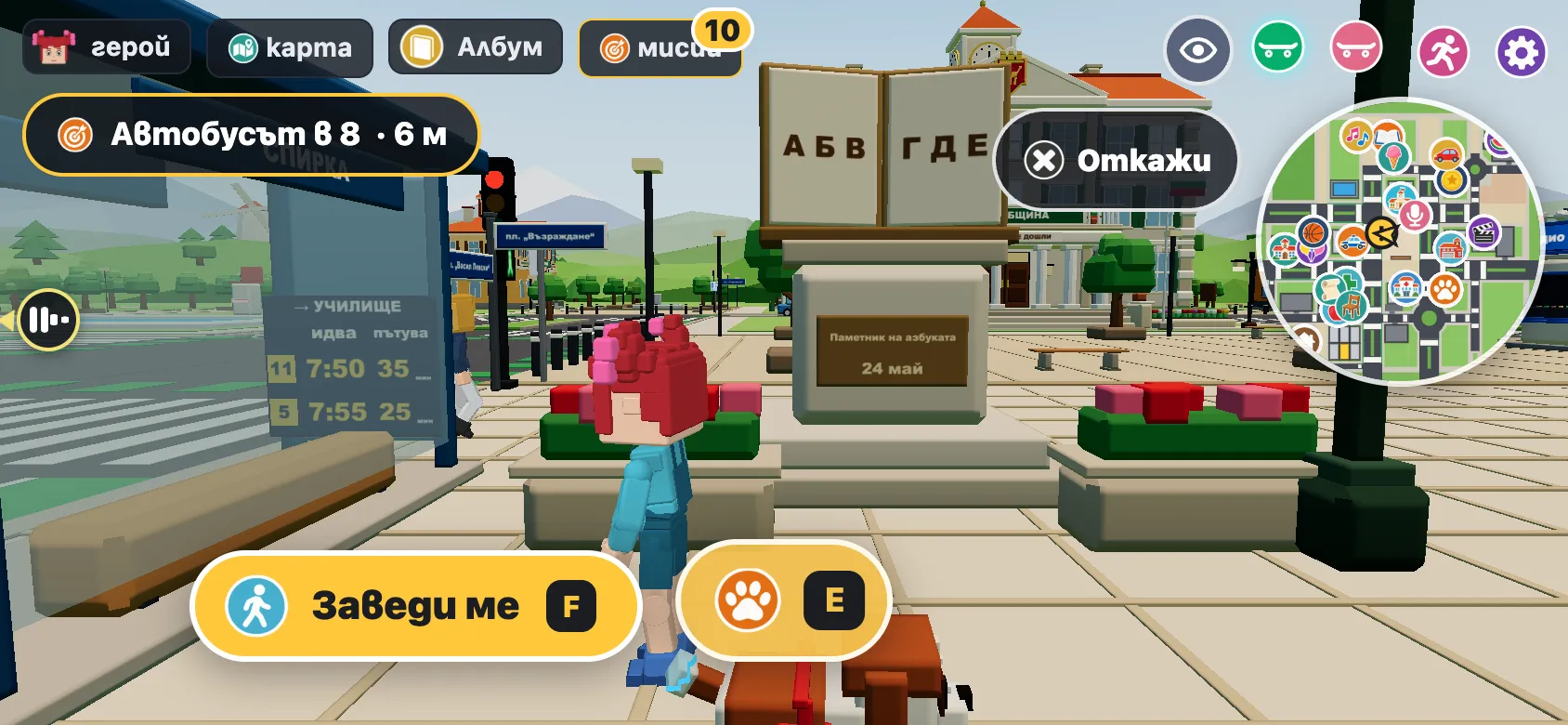
The 8 o'Clock Bus
The 8 o'Clock Bus
You read the clock on the tower in hours and minutes, add minutes across the hour and work out whether you will get there on time.
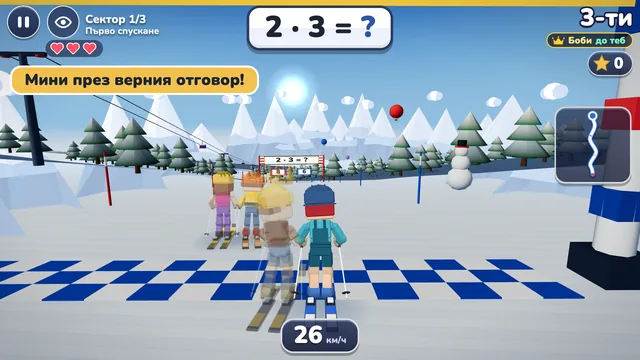
Divide and Ski!
Divide and Ski!
Divides quickly and correctly, checks with multiplication; the hard facts come back for more practice.
Grades 2–3Play „Divide and Ski!“: enter the city
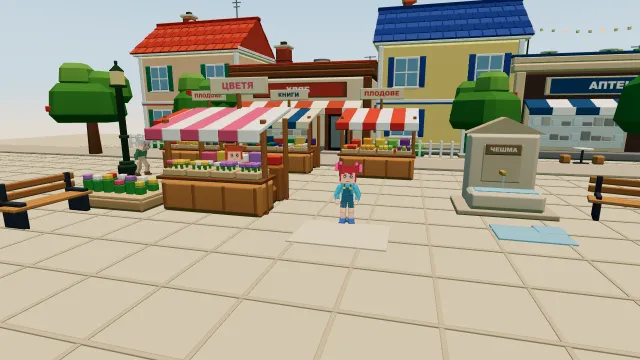
My Market Stall
My Market Stall
Prices in coins, change, income and costs, profit; the seller's decisions.
Grades 1–4Play „My Market Stall“: enter the city
Bulgarian language
Children pick the right letter while they drive, tell a story from picture cards, decide whether words are written together or apart, find related words by their root, choose the long or short form of the definite article, and match gender and number.
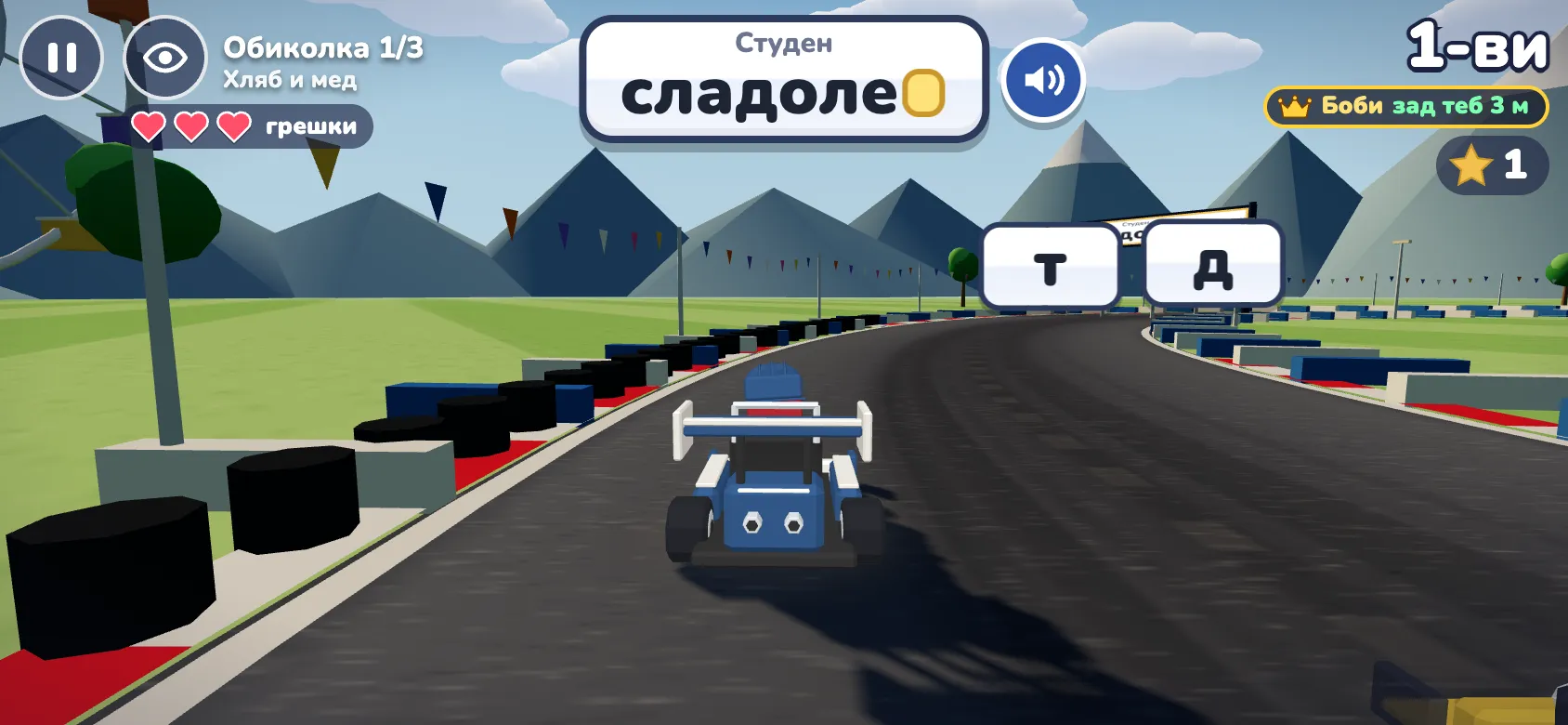
Drive and Spell!
Drive and Spell!
Voiced and voiceless consonants; the letters for yu, ya and yo in words.
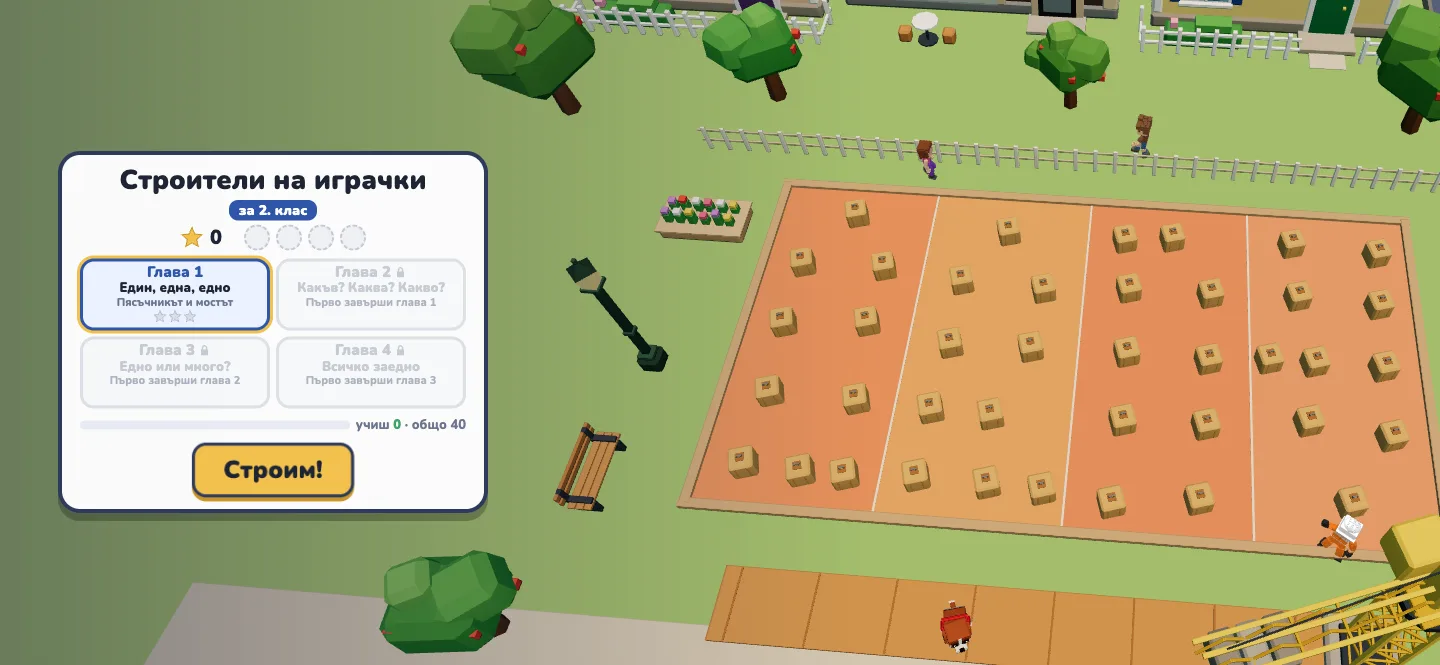
Toy Builders
Toy Builders
Gender and number of nouns (one, in its three genders, and many) and making the adjective agree with the noun. The child drives a toy crane and builds a playground.
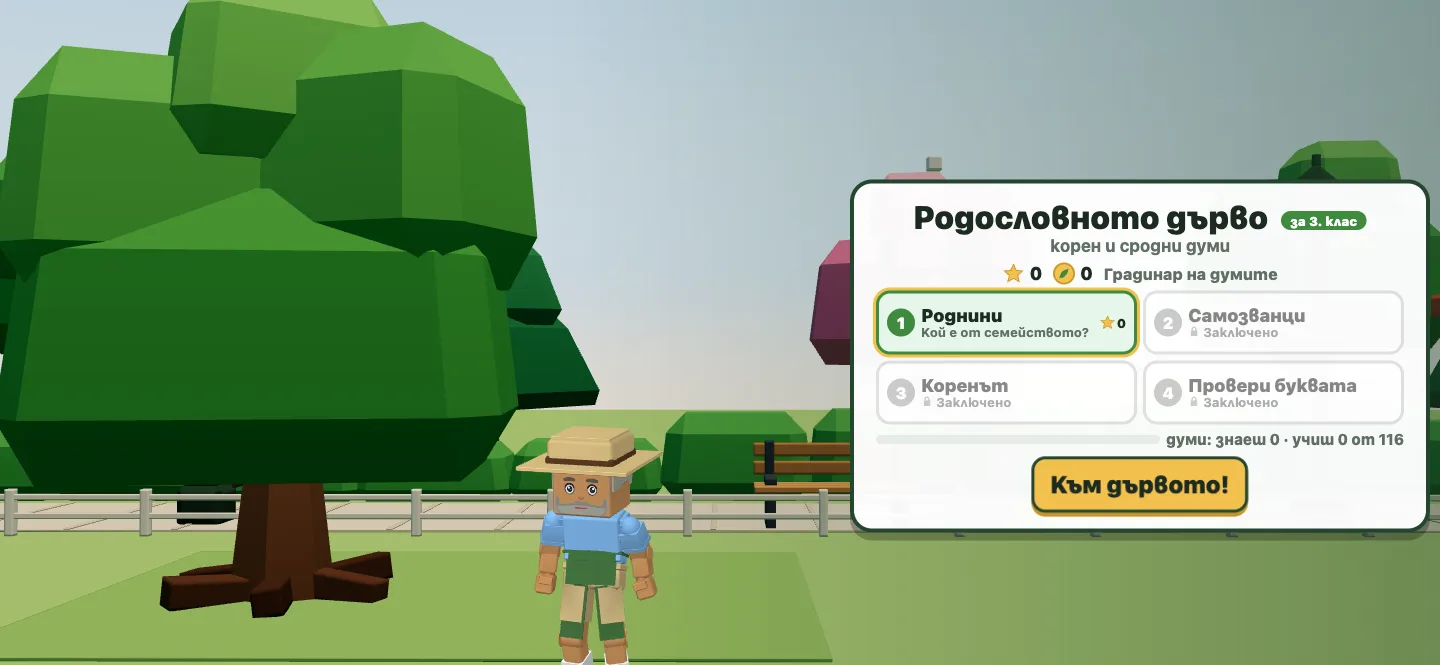
The Family Tree
The Family Tree
Related words share a root and a meaning; impostors only look alike; check an unstressed vowel with a related word.
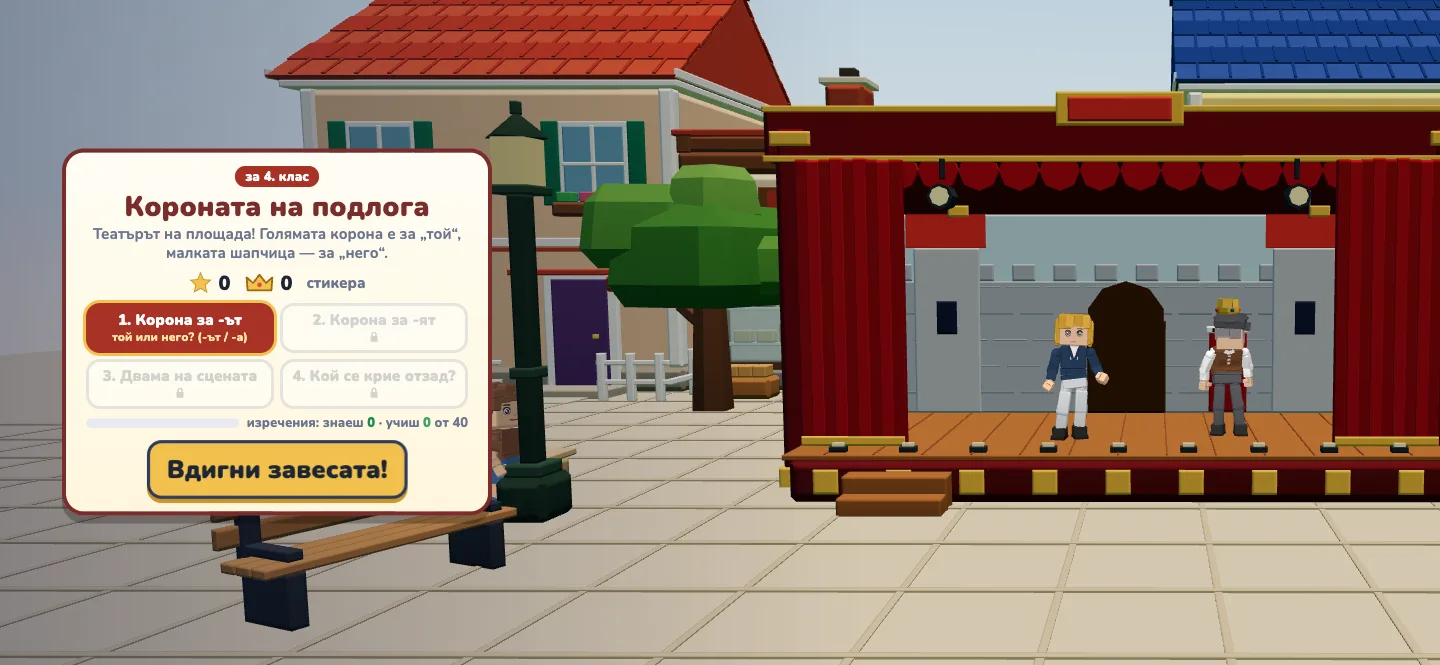
The Subject's Crown
The Subject's Crown
The long definite article (-at/-yat) for "he" (the subject) and the short one (-a/-ya) for "him", with masculine nouns.
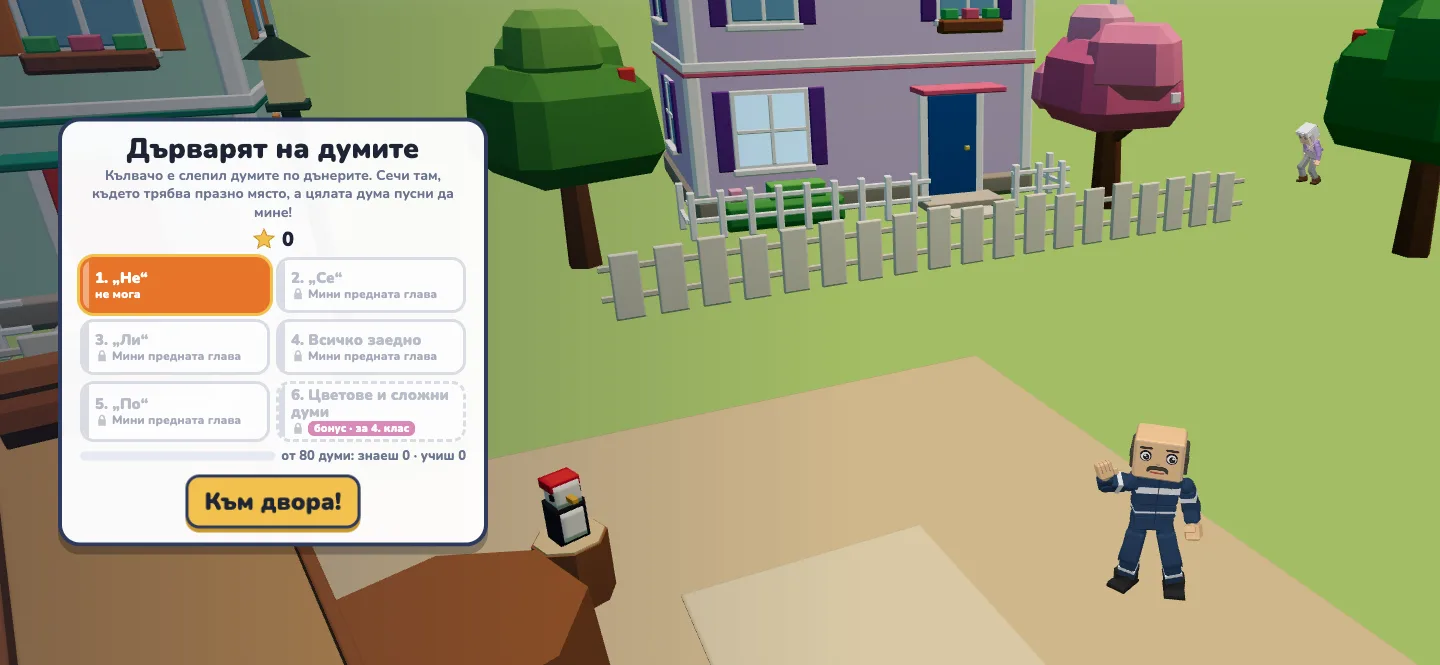
The Word Woodcutter
The Word Woodcutter
Together, apart or with a hyphen: the particles ne, se and li and prepositions are written apart; po- and nay- (more, most) take a hyphen; compound words and two-colour words (light blue / black-and-white).
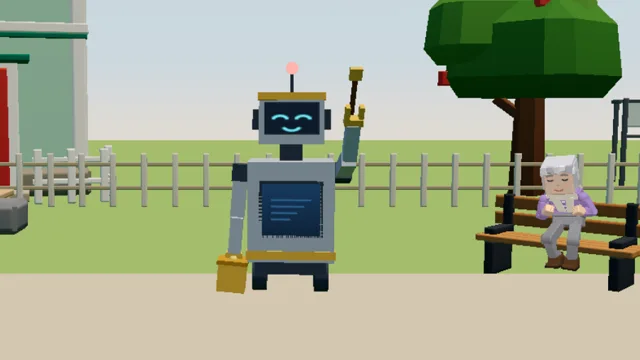
The Literal Robot
The Literal Robot
Literal and figurative meanings of words. The child teaches Bipko the robot, who takes everything literally, what Granny Mara really means (bonus: one word, two meanings).
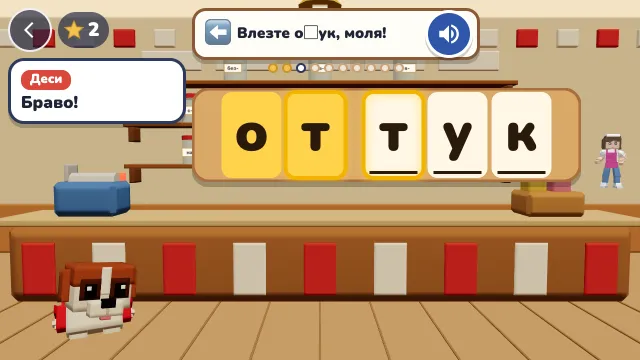
The Prefix Shop
The Prefix Shop
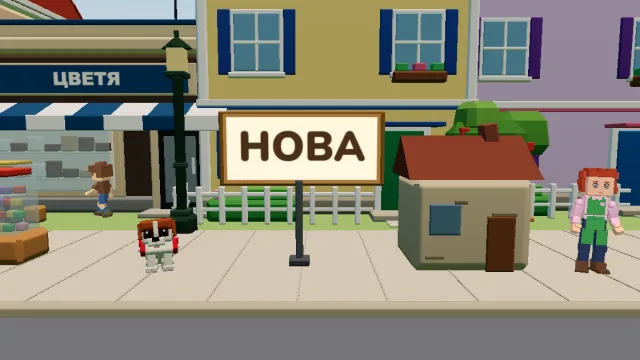
Mirror Street
Mirror Street
Opposites and near meanings: antonyms (directions, places, adjectives), synonym or antonym, antonyms with the prefixes ne- and bez- (un-, -less), and synonyms to avoid repetition in a text. The child fixes the signs on a mirror-image street.
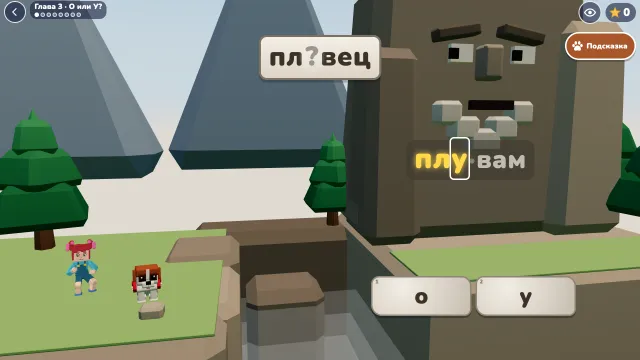
The Echo
The Echo
A doubtful sound is checked with a word where it sits in a strong position: a vowel under stress, a consonant with a vowel after it; the tricky ones come from the dictionary; in chapter 8 you choose the check yourself (grade 3).
Grades 2–3Play „The Echo“: enter the city
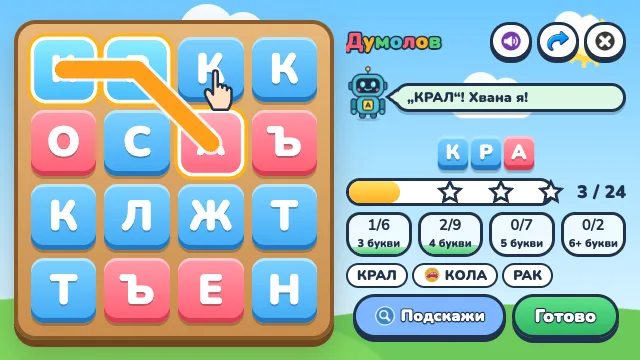
Word Catcher
Word Catcher
The child catches words with a finger in a grid of letters (a path through neighbouring tiles, never using a tile twice), in Bulgarian and in English.
Grades 1–4Play „Word Catcher“: enter the city
Story Cards
You tell a story in one word or one sentence and guess the other players' cards (a game for 3 or more).
Grades 1–4Play „Story Cards“: enter the city
English
Children understand an order in English, count to 20 and give change in euros.
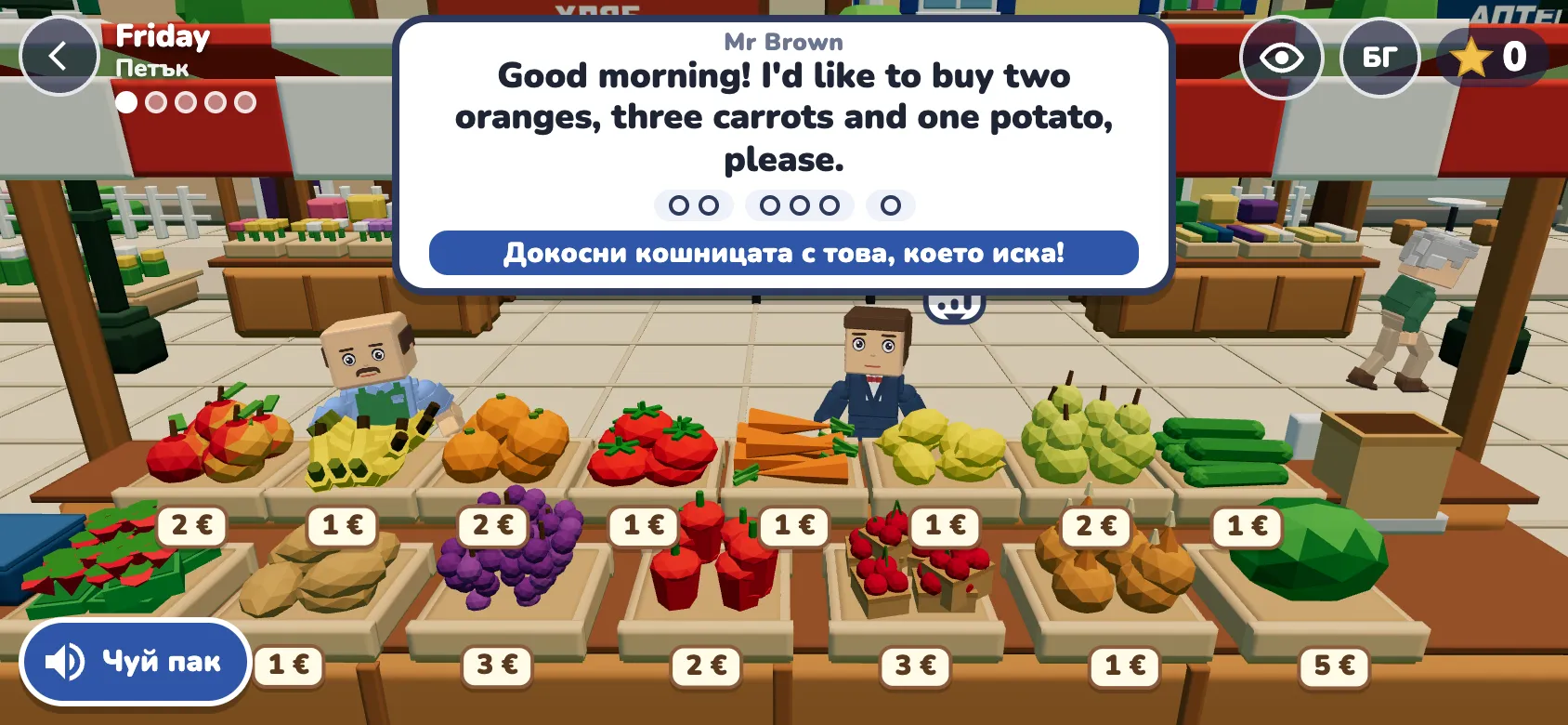
Uncle Gosho's Stall
Uncle Gosho's Stall
An English sentence that carries the sum: each, for each friend, how many, half / a quarter, boxes of, shopping list, some / any; prices and change in euros (grades 3–4).
Nature
Children sort rubbish into five bins, follow the seasons on the farm and test ideas with experiments in the lab.
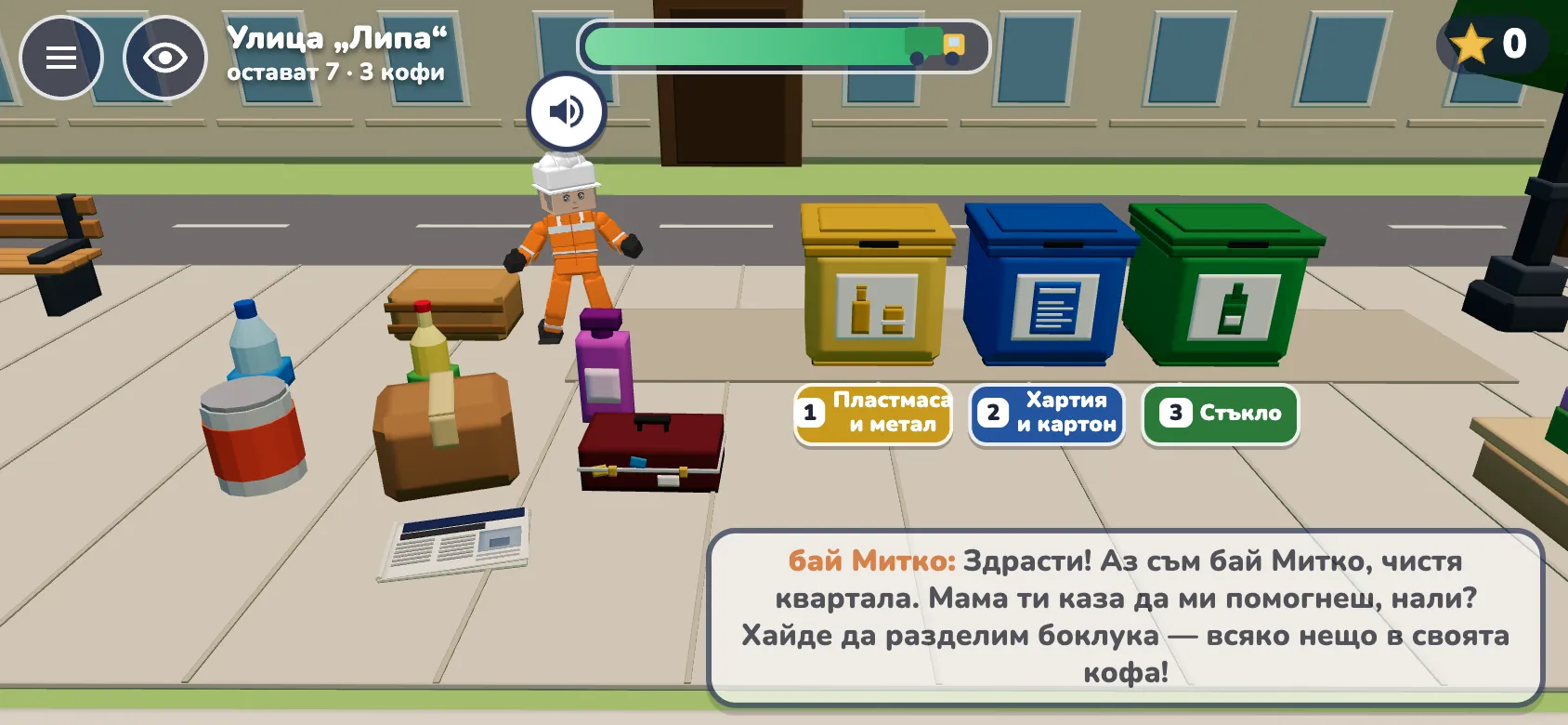
Sorting Waste
Sorting Waste
Which rubbish goes in which bin, and why; telling instruments apart by their sound.
Grades 1–4Play „Sorting Waste“: enter the city
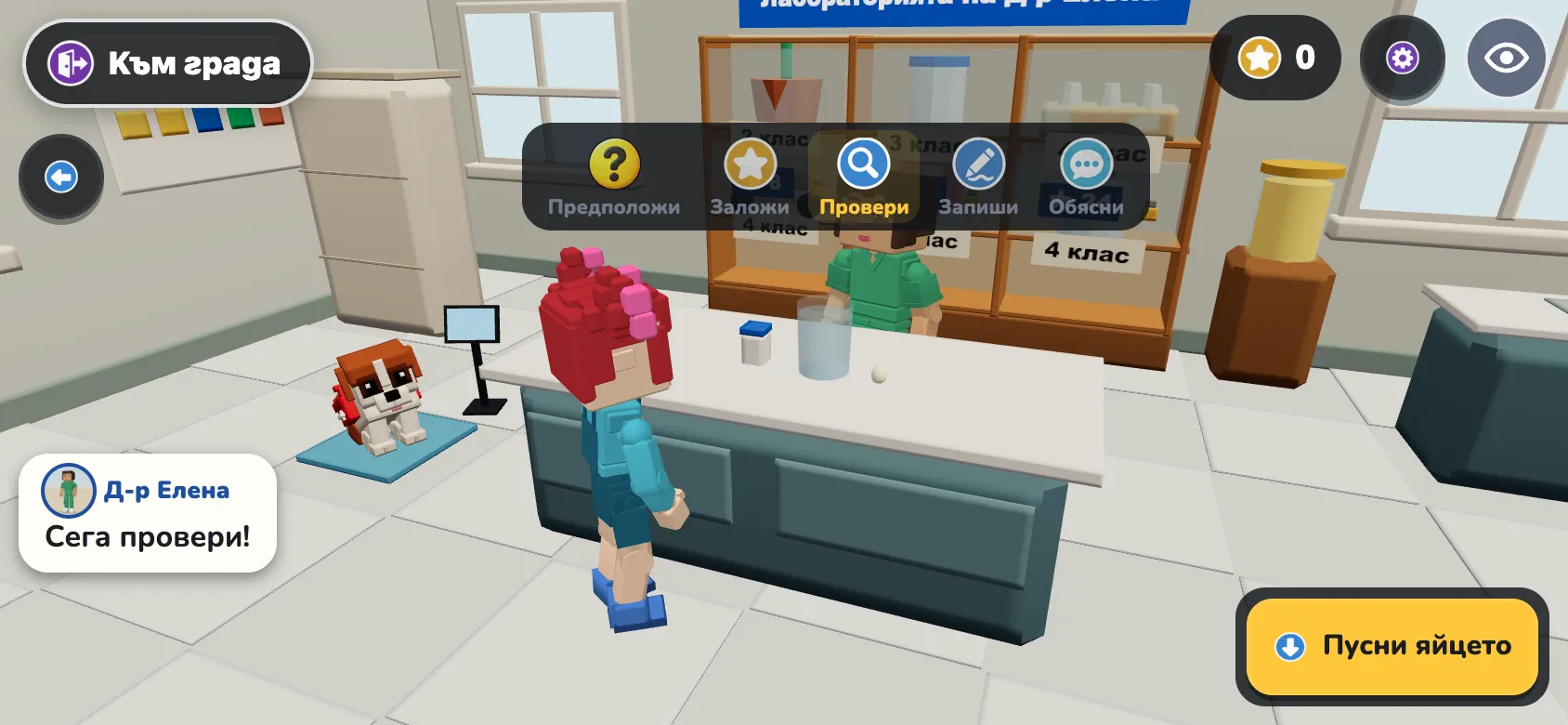
Dr Elena's Lab
Dr Elena's Lab
You make a guess, test it with an experiment and explain what you saw.
Grades 2–4Play „Dr Elena's Lab“: enter the city
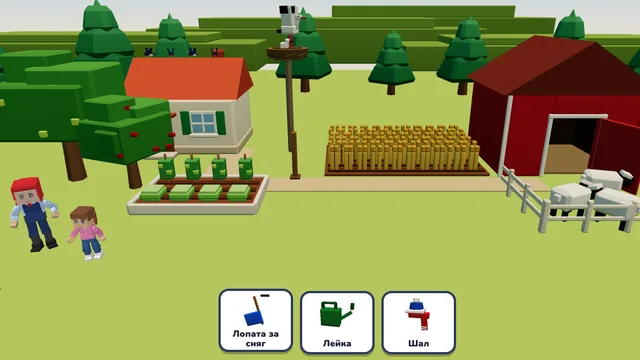
The Four Seasons Farm
The Four Seasons Farm
A whole year on the farm: the seasons through the weather and nature, the animals and the work, the life of a bean plant.
Grades 1–2, 4Play „The Four Seasons Farm“: enter the city
Citizenship and media literacy
The child becomes mayor: reads the residents' letters, shares out the park budget and checks the news on the radio before it goes out.
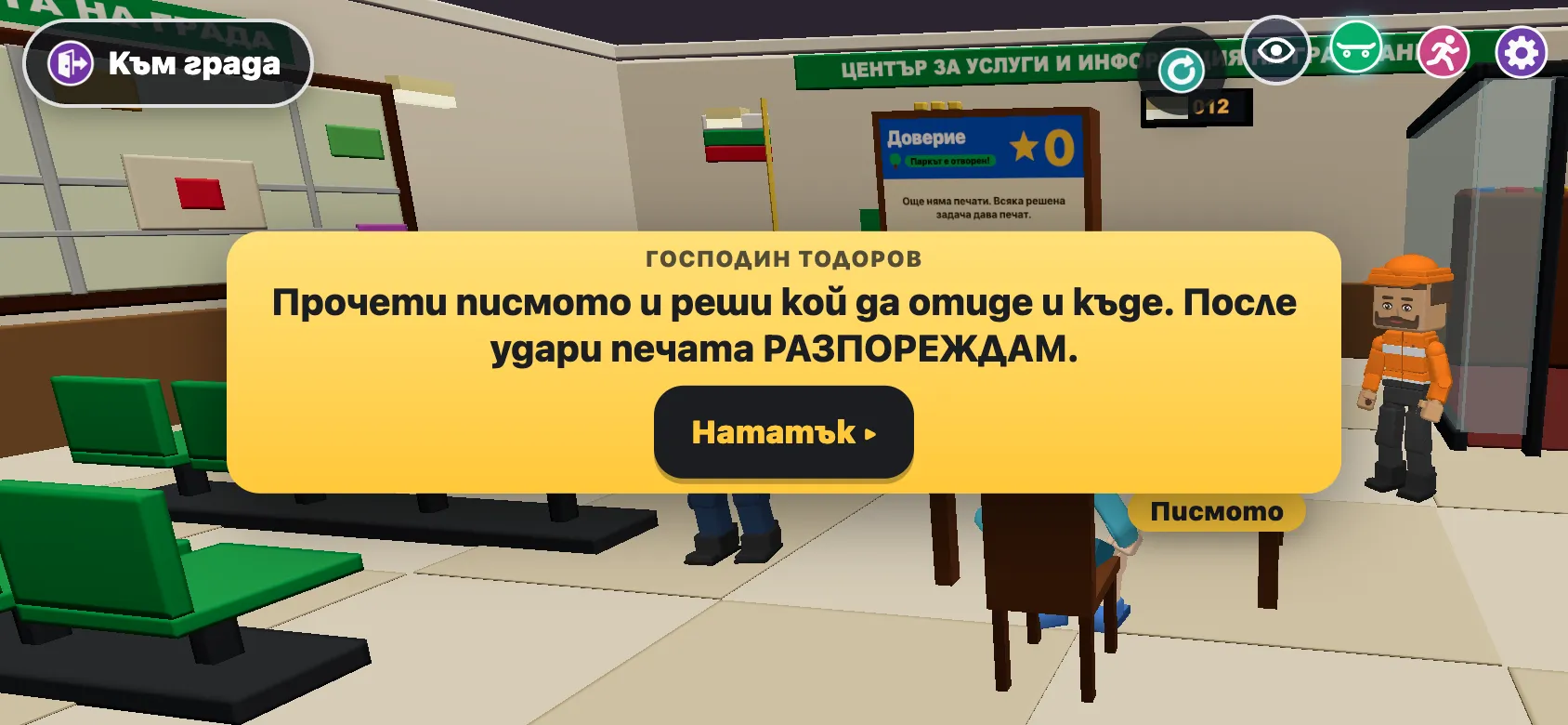
The Mayor's First Term
The Mayor's First Term
You read the residents' letters, decide with trust and a budget in mind, and build a park.
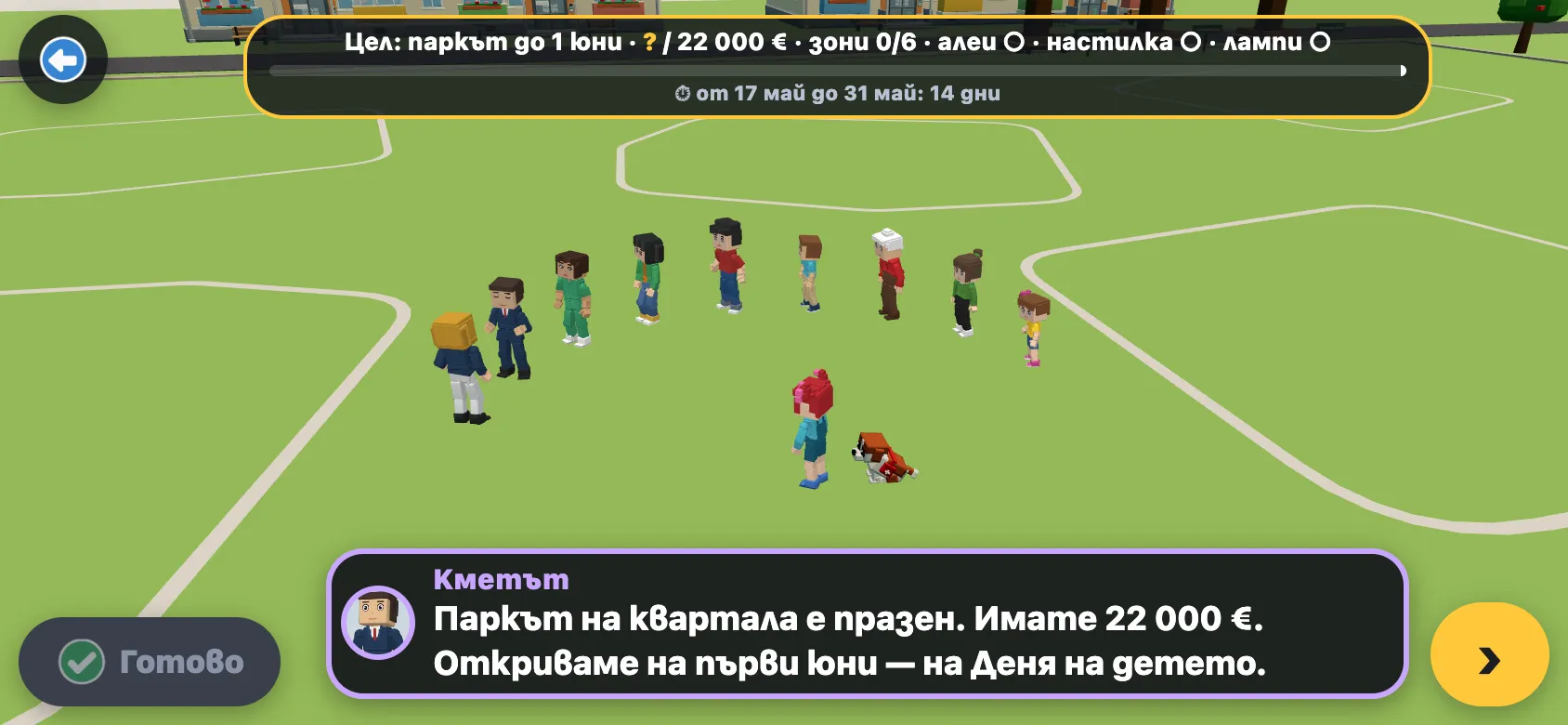
The Mayor's Park
The Mayor's Park
You lay out the park with the budget the council approved.
Grades 2–4Play „The Mayor's Park“: enter the city
Radio Lipa
The reporter follows the clues to check a rumour before putting it on air.
Grades 2–4Play „Radio Lipa“: enter the city
Knowing your homeland: "My City"
Children visit 20 buildings in the city, from the hospital and the post office to the library and the city hall, and collect the people they meet in the "People in My City" album.
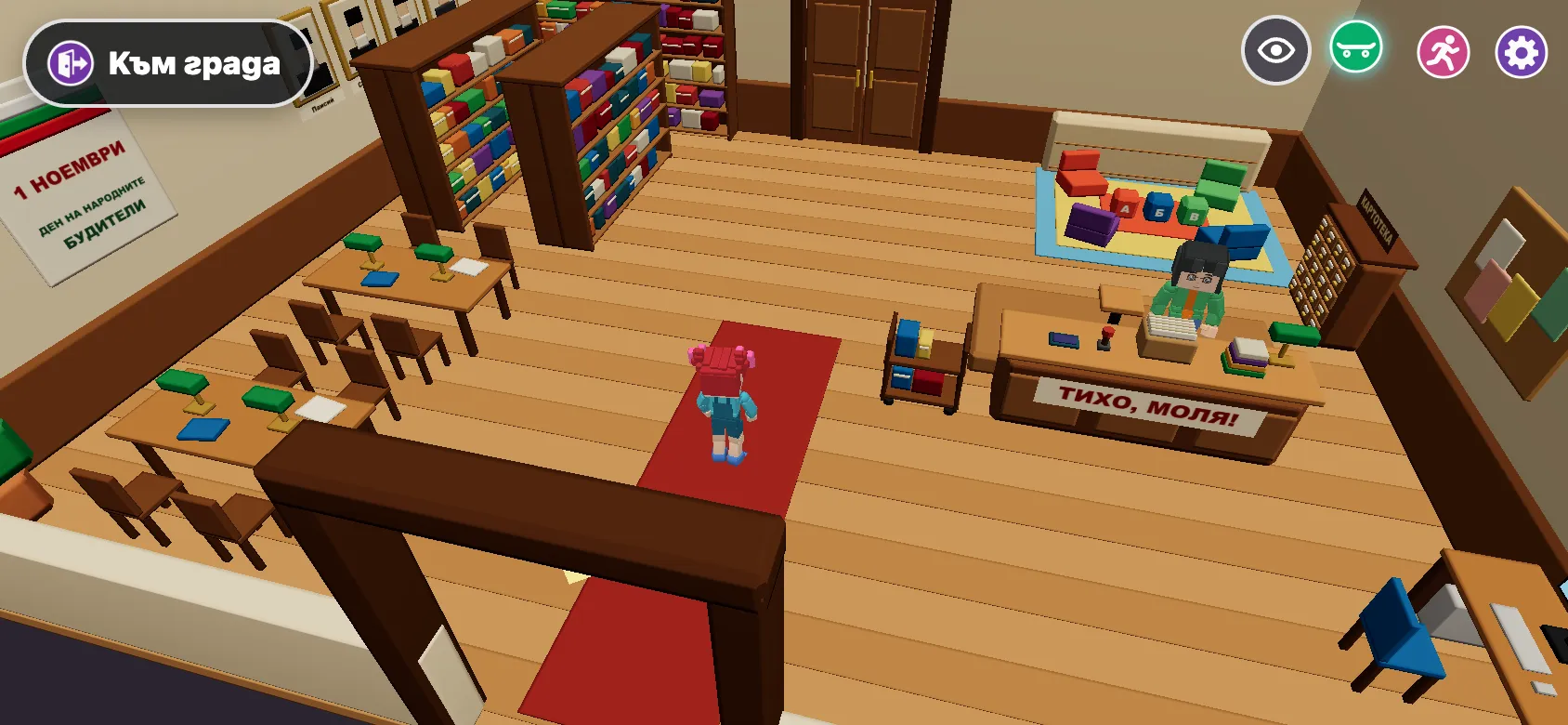
My City
My City
Grades 1–2Play „My City“: enter the city
Together
Up to eight children in one game: they look for the matching picture, or one draws while the others guess.
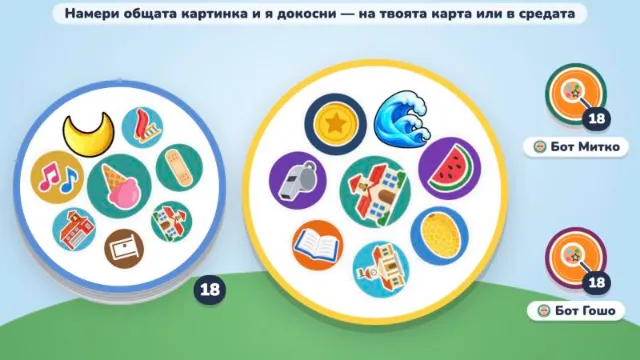
Find It!
Find It!
You find the picture your card shares with the card in the middle, faster than the others.
Grades 1–4Play „Find It!“: enter the city
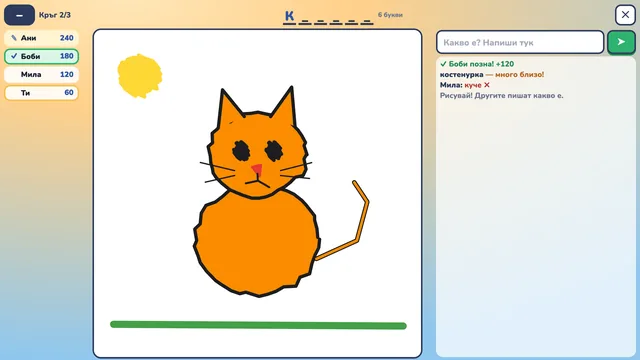
Draw and Guess
Draw and Guess
One child draws a word; the others guess it and spell it correctly.
Grades 2–4Play „Draw and Guess“: enter the city
Pop-Pop
A mini-game at the balloon cart: you pop the bouncing balloons with a harpoon without letting them touch you. 20 levels.
Grades 1–4Play „Pop-Pop“: enter the city
Basketball
The ball on the school court: you shoot at the hoop. Further away is harder, but it scores 3 points.
Grades 1–4Play „Basketball“: enter the city
All of this is set out in a road map of 251 points, by subject and grade. It is in the teacher dashboard.
The games practise individual topics, not the whole curriculum.
For the teacher
A teacher cannot sit next to every child. But they can see how each one is getting on: which missions and games they have done and how far they have got. Not for marks, but to see where a child needs help.
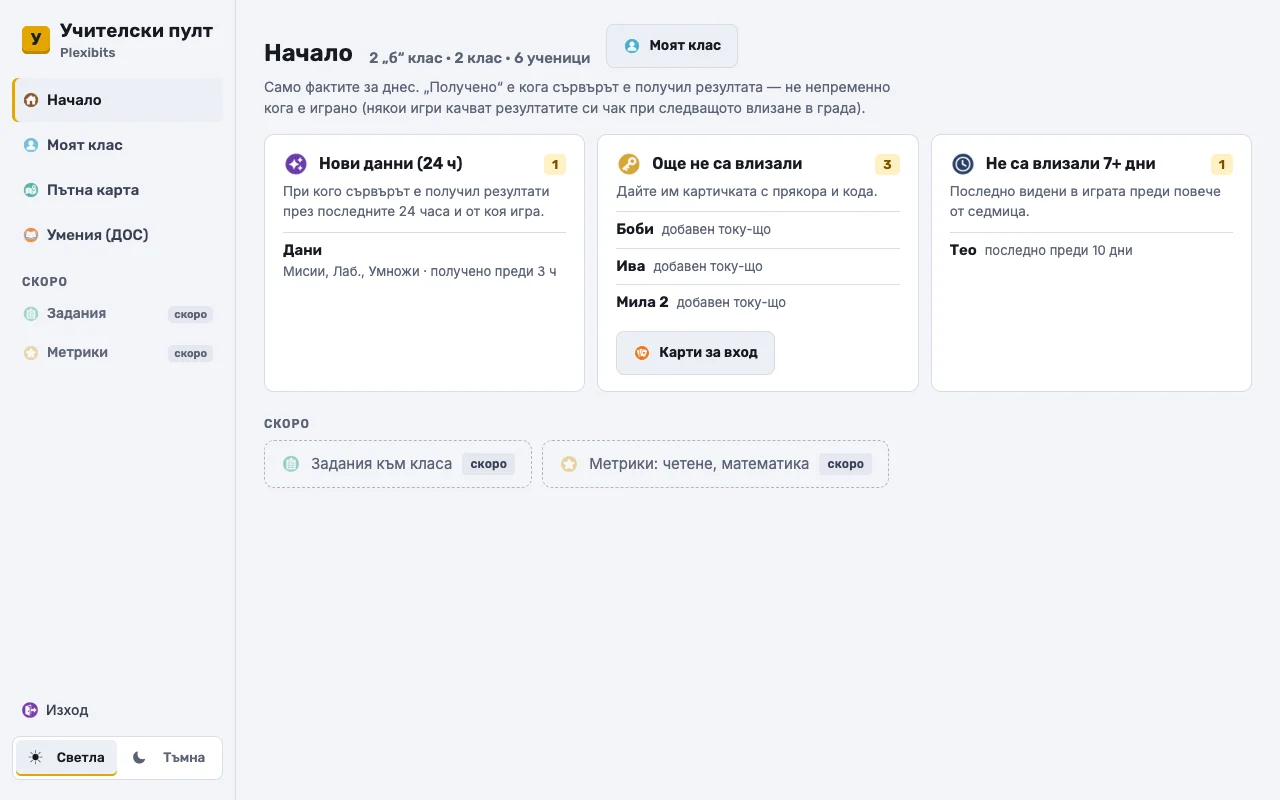
"Home" in the dashboard: who has new results from the last day, who has not signed in yet and who has been away for more than a week. The class and the children in the picture are made up.
The dashboard holds everything in the city: a road map of 251 points, by subject and grade, and a map of the skills in the curricula and the state educational standards for grades 1–4. For 204 games, places and missions, the dashboard shows which skills they practise.
- 607
- skills in the curriculum map for grades 1–4; 316 of them checked line by line against the Ministry of Education (MES) curricula
- 212
- of them children already practise in the city
- 50 of 66
- curriculum topics with at least one skill practised
- 12
- functional literacy competences; every one of them comes up in the games and missions
The map covers the whole curriculum, not just what is covered so far: today there is a game or mission for 212 of the 607 skills.
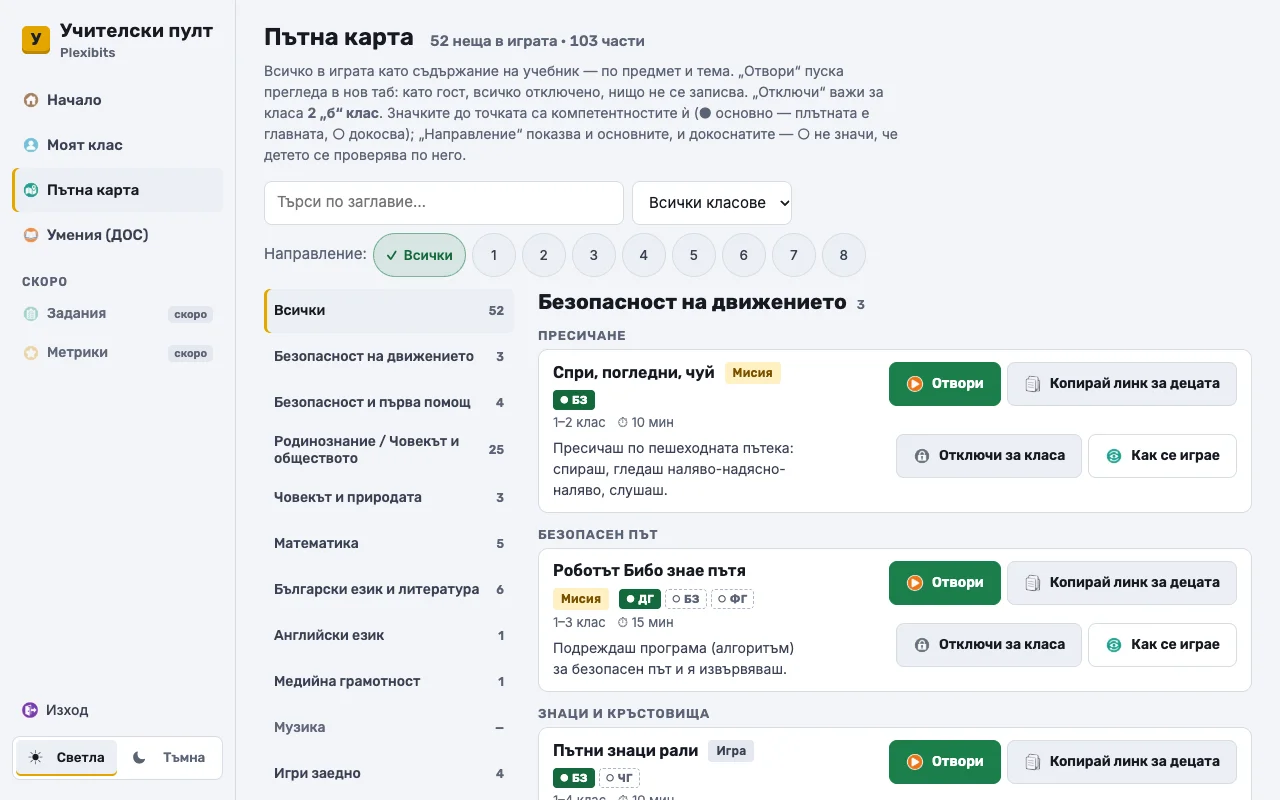
The road map: every game and mission by subject and topic, with "Open" to preview it and "Unlock for the class". The class in the picture is a sample.
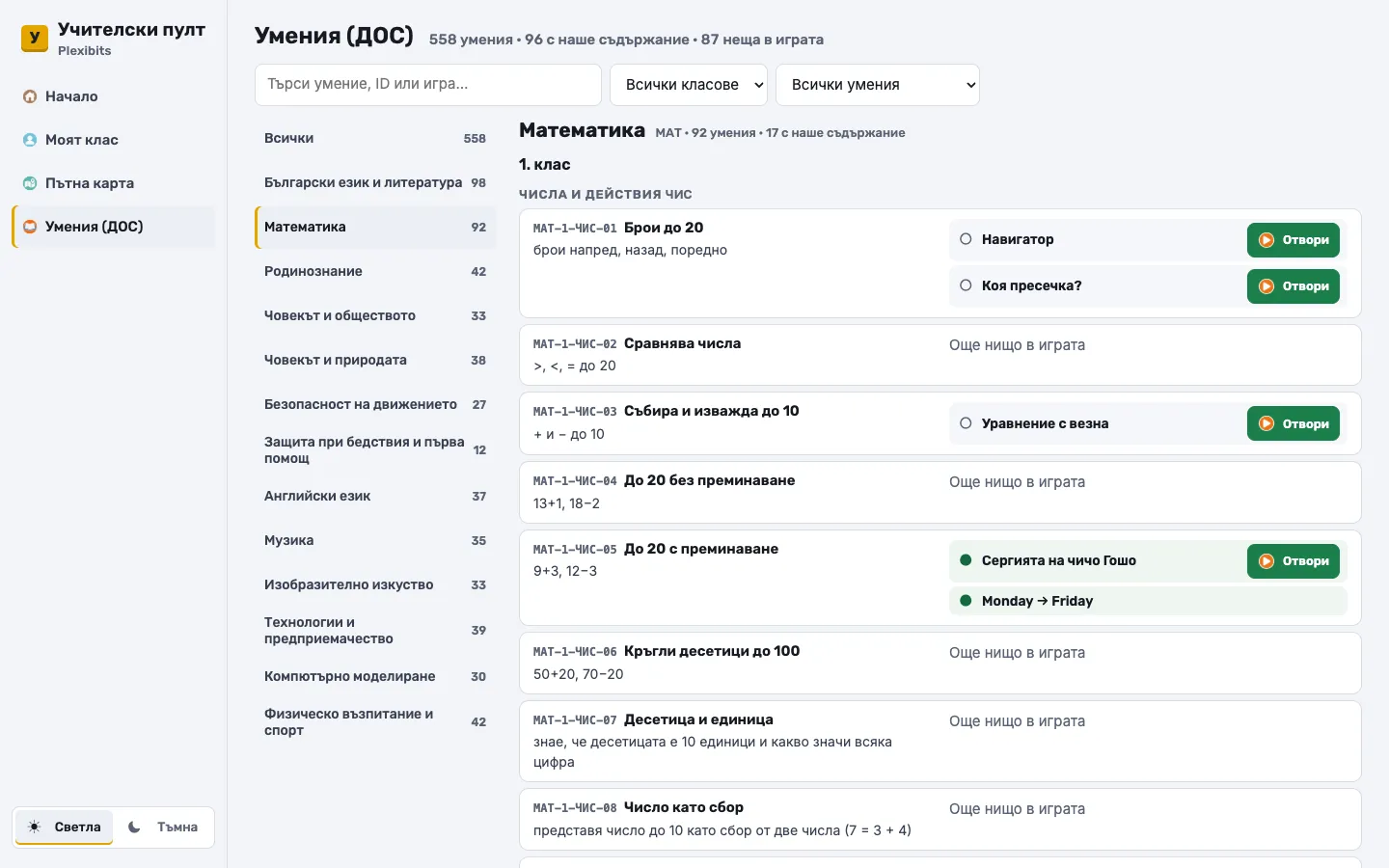
"Skills (standards)", Maths, grade 1: the expected outcomes from the curriculum, with the game next to each one that is practised.
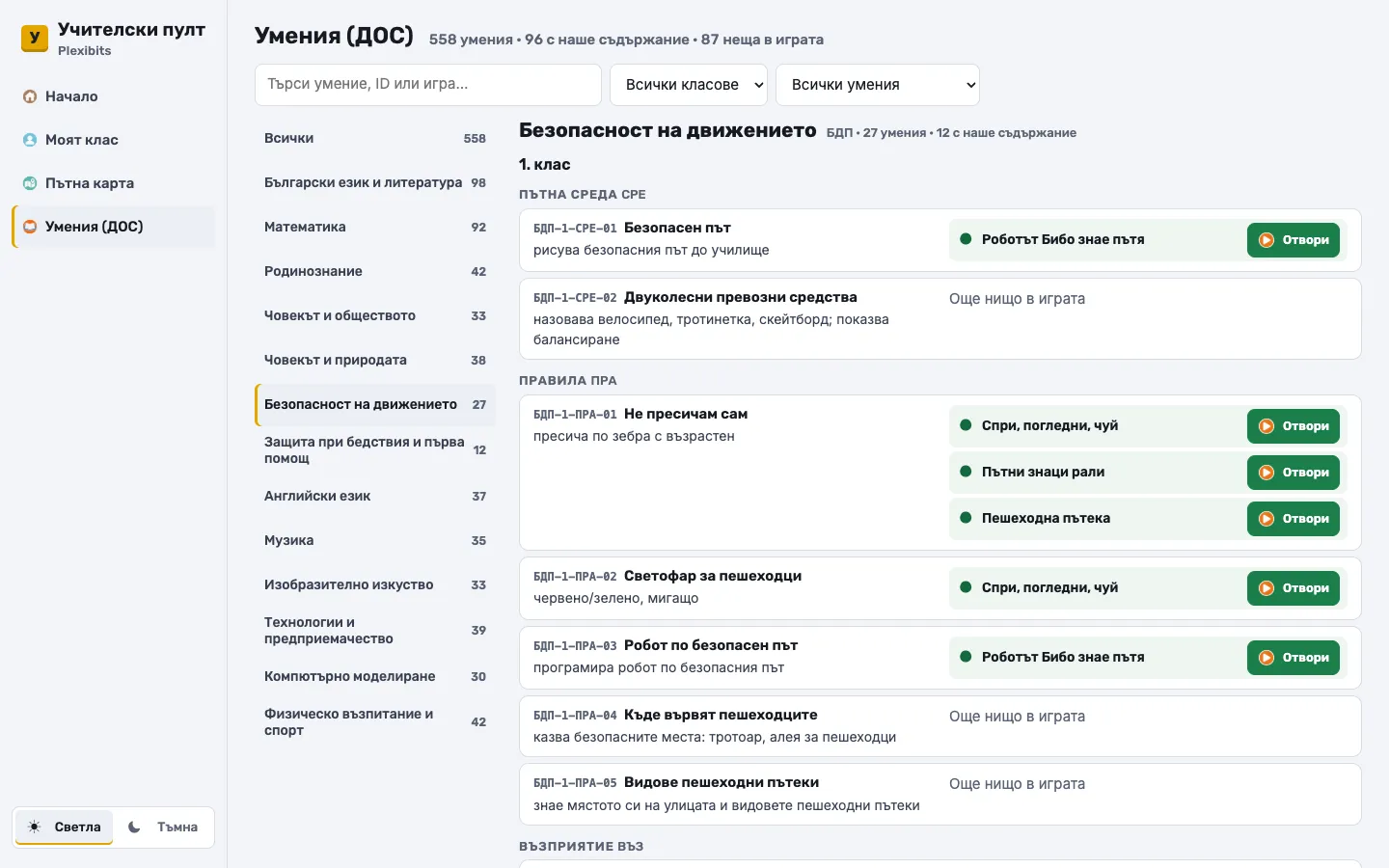
"Skills (standards)", Road safety: the skills and the games that practise them.
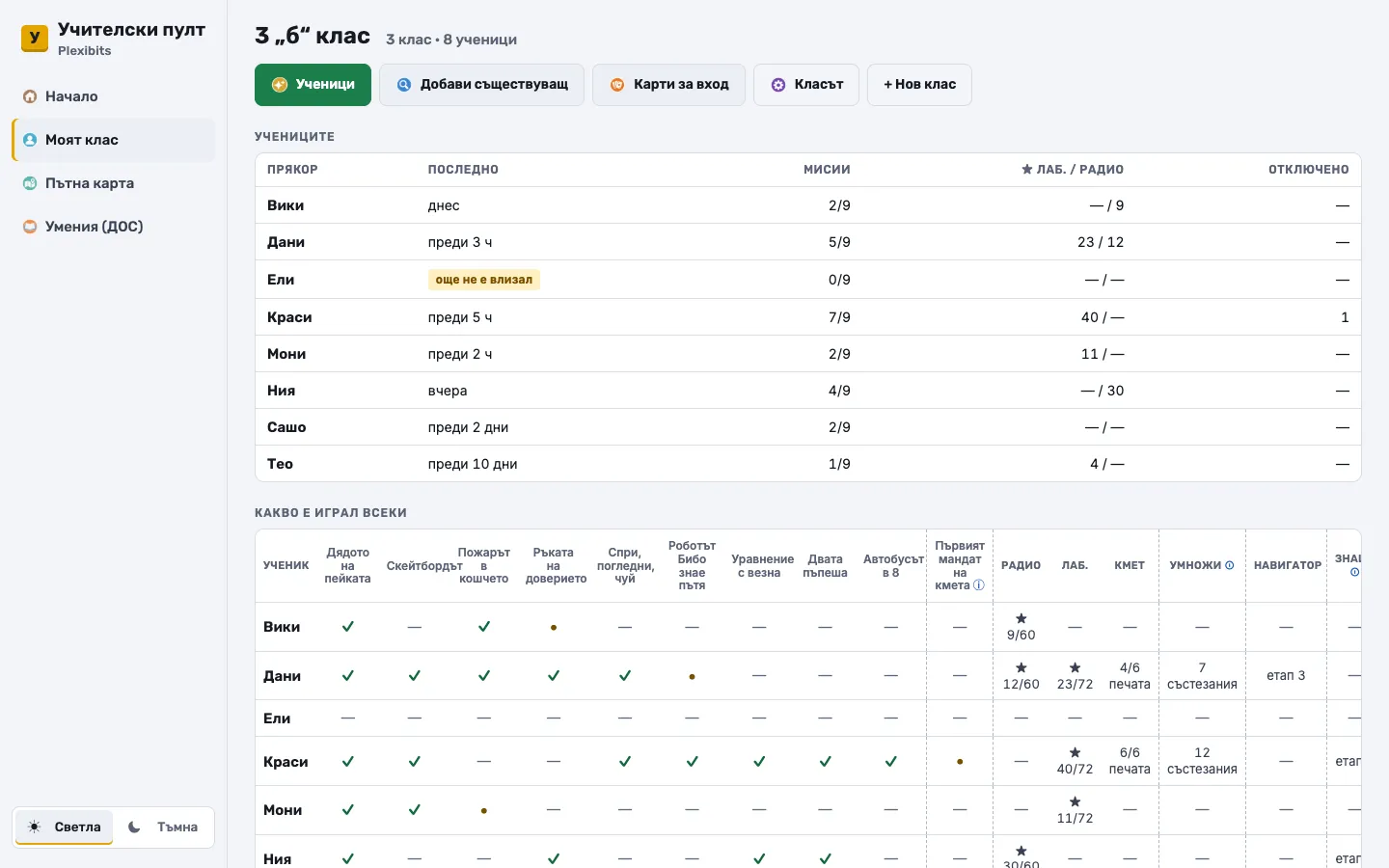
"My class": who signed in when and how far they have got. The class and the children in the picture are made up.
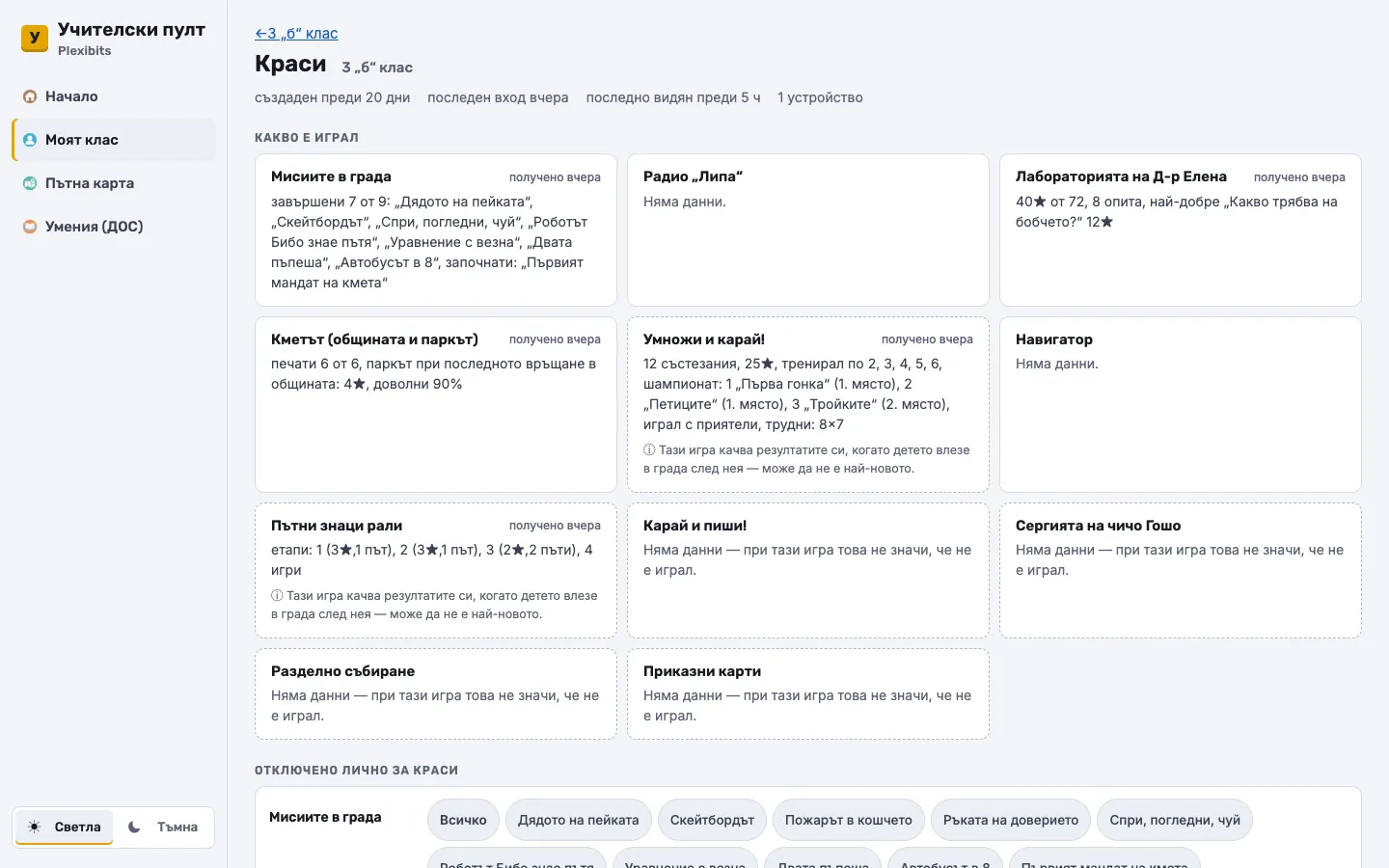
One child's page: what they have played and what has been unlocked just for them. The class and the children in the picture are made up.
The teacher adds the children in the class by nickname, unlocks games for the whole class or for one child, and locks what it is not yet time to play.
In the lesson: one mission on a curriculum topic, for example "Stop, Look, Listen" for crossing the road in grade 1 or 2.
Every class has children who find learning hard and children who want more. In the go-kart games every child can practise, and those who want more race in a championship with cups.
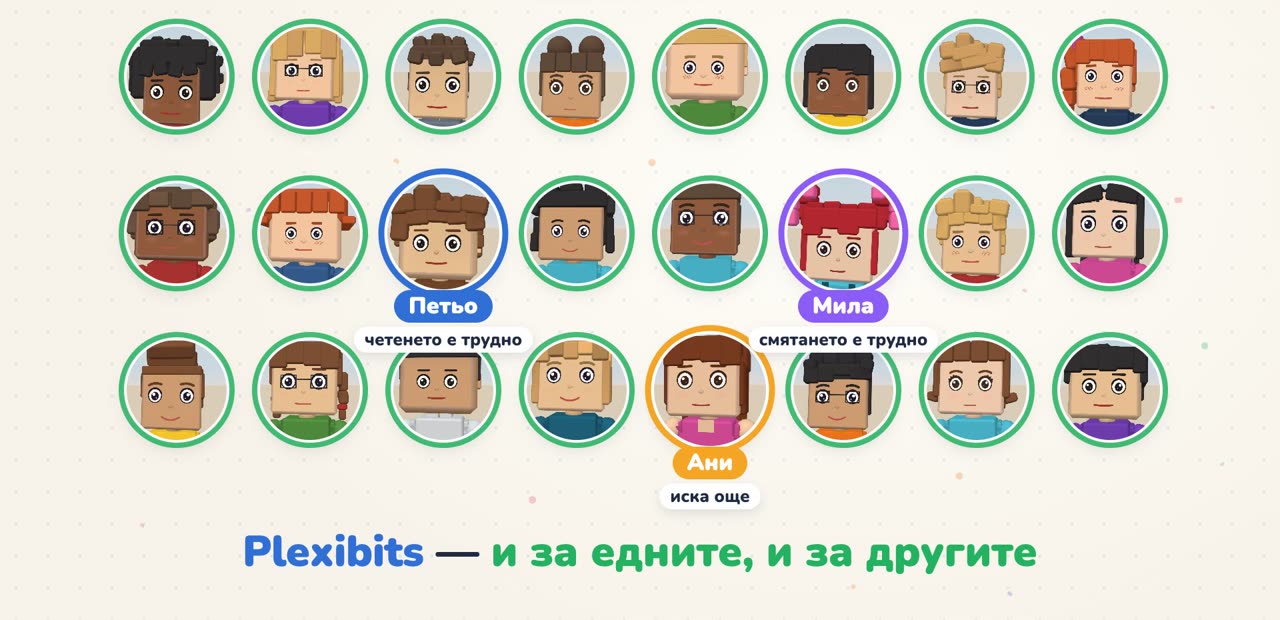
A still from the film for teachers: one class, different children.
How it is made
The texts are short because they are for children in grades 1 to 4. The people in the city speak with a voice. Nothing reaches a child without approval: the text, the source, the stress on each word and the picture all pass through a person, and a recording is redone only where something has changed. How we work →
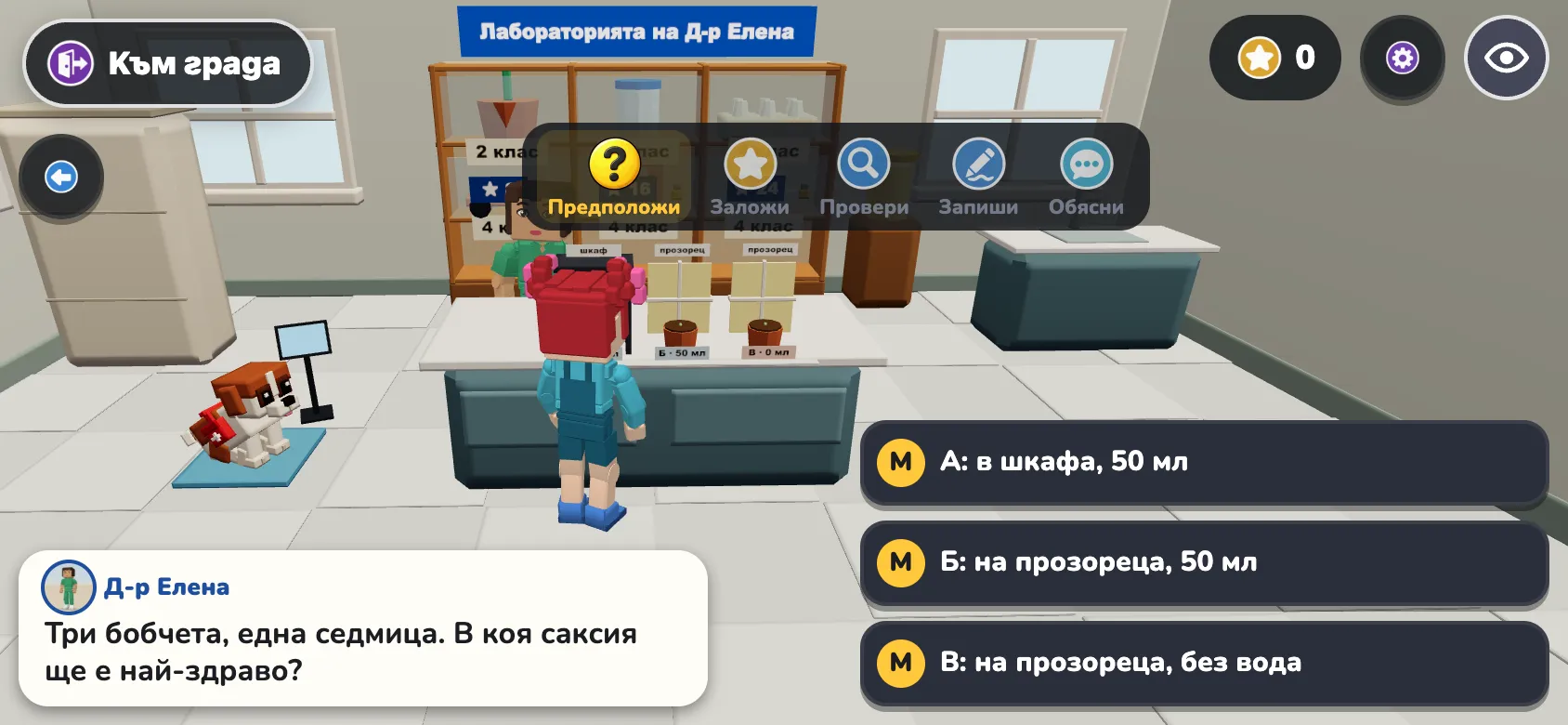
In the lab: Dr Elena's question and the three possible answers.
For parents and teachers
Children sign in with a nickname. We do not ask for a real name. Progress is saved so that nothing is lost when a child switches device.
Here the currency is knowledge. Every right answer earns crystals, and children use them to unlock new things. Nothing can be bought with money.
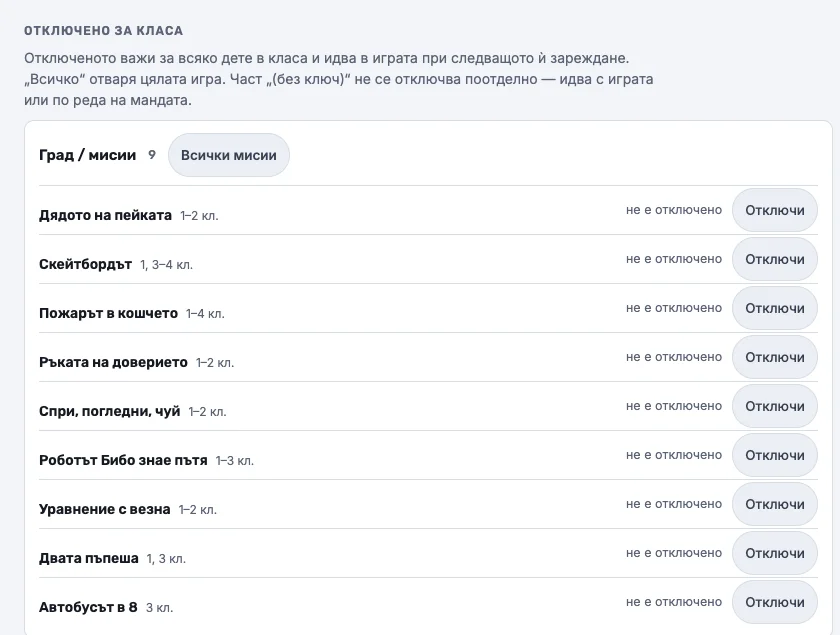
The teacher decides what is open to the class: in the dashboard every mission unlocks with one button. The class in the picture is a sample.
Enter the city. Have you played? Write to us about what you saw.