

 Plexibits · a virtual world for grades 1–4
From the textbook — to real life.
Plexibits is a city for children in grades 1–4. There they do with their own hands what they learned in class.
Meet Mila and Aro, her St Bernard puppy. In the city they don’t read about things — they do them.
Enter the citySign in with a nickname, no real name · in the browser, nothing to install · phone in landscape
Applying what you learn
A child reads the lesson, memorises the facts, gets a six, the top mark. But the six doesn’t mean “has learned it” — it means “remembered it until Thursday”.
Knowing matters. Understanding is better still. But what matters most is being able to apply what you have learned in real life.
That is why a mission in Plexibits is not a question with an answer. The child has to do something with what they have learned.
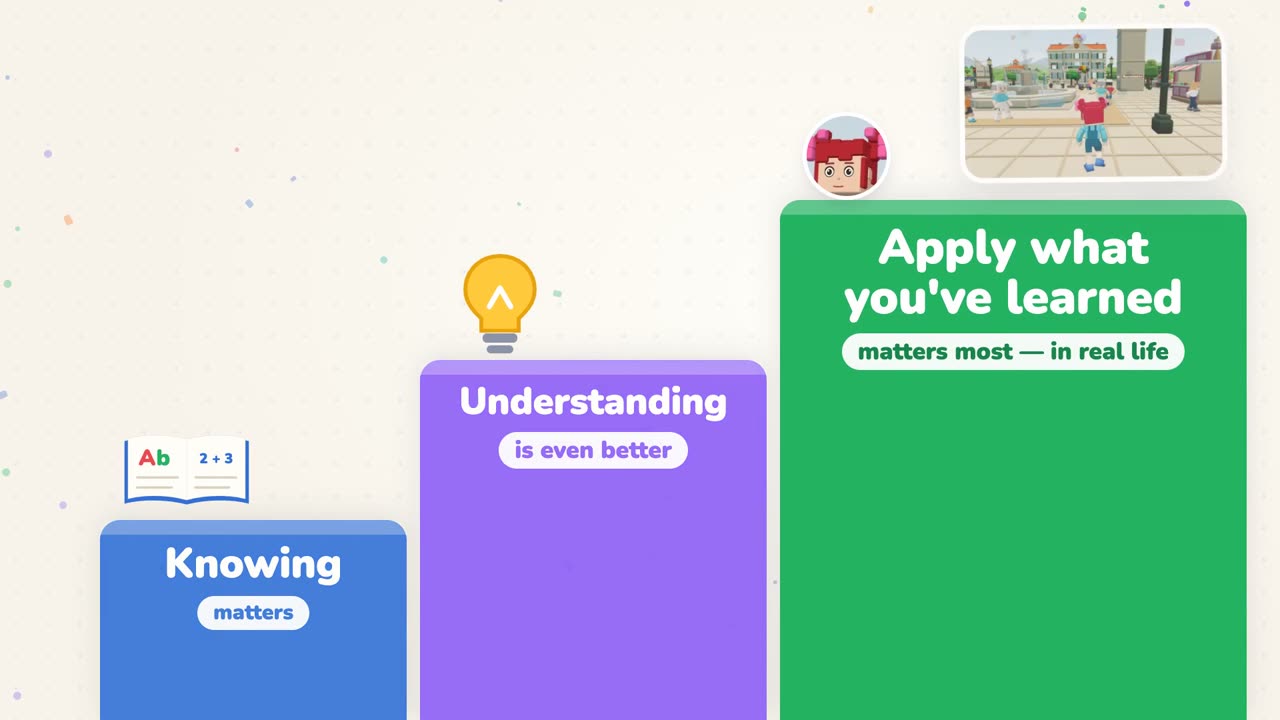
The ladder from the film for teachers.
The city today
A city with streets and traffic lights, shops, a school, a square with a fountain and a park — 26 buildings.
At Uncle Gosho’s stall the child works out the change. In Dr Elena’s laboratory they test an idea with an experiment. With the grandfather on the park bench they call 112. With Bibo the robot they put together their first algorithm.
Pilot in progressWhat it practises What Plexibits is
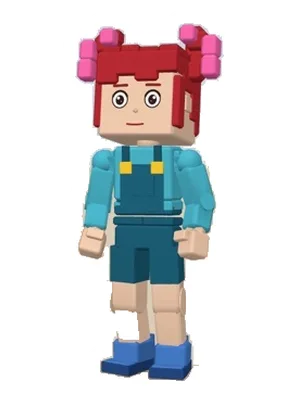
Mila 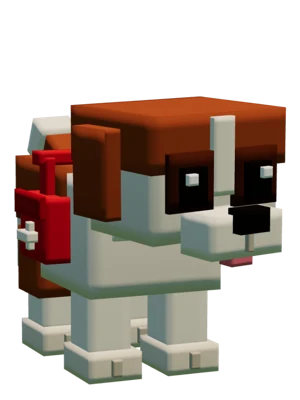
Aro
Behind the city
- 18,413
- ready-made open and closed questions with pictures, based on the primary-school material and curriculum
- 212
- curriculum skills that children already practise in the city, across 50 topics
In the dashboard the teacher sees every skill in the curriculum and which game practises it.
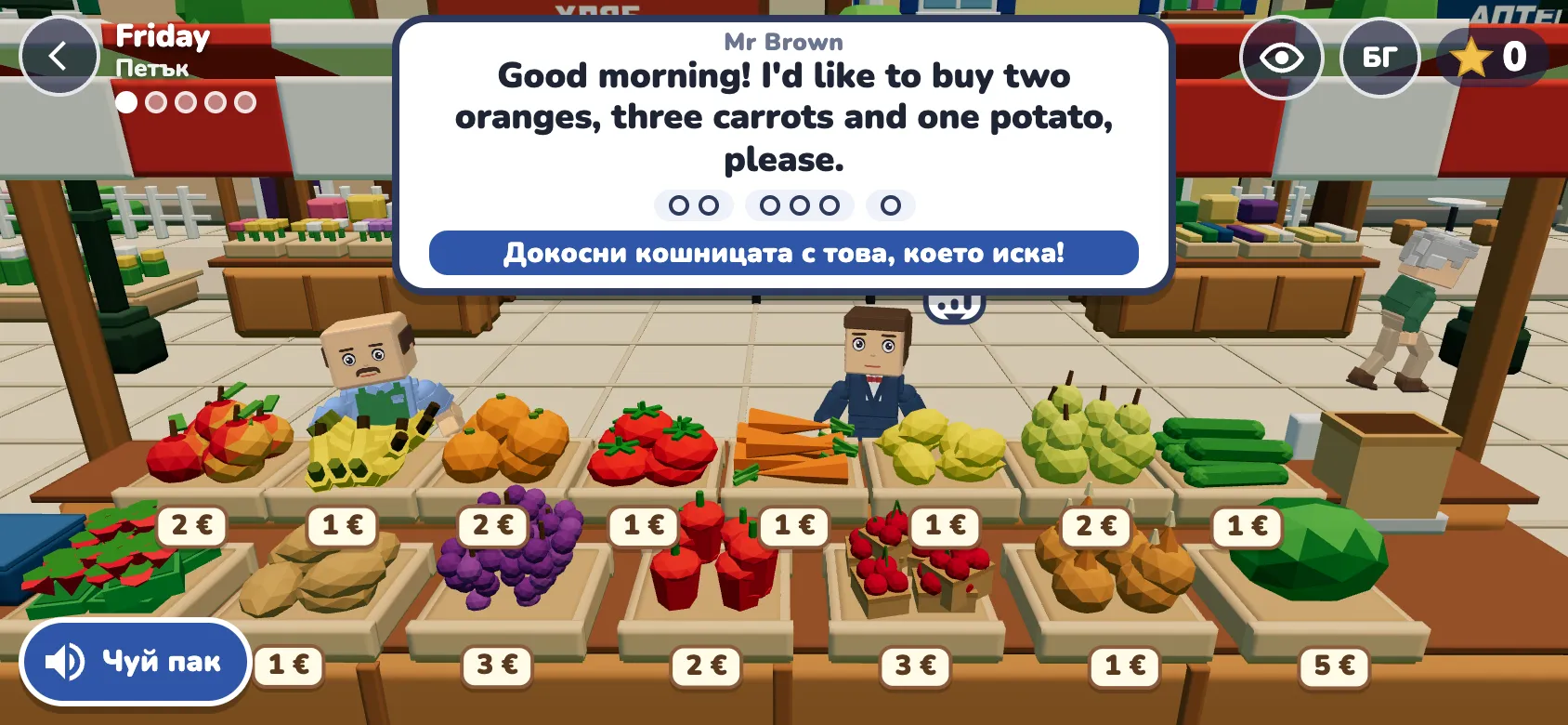
Uncle Gosho’s stall
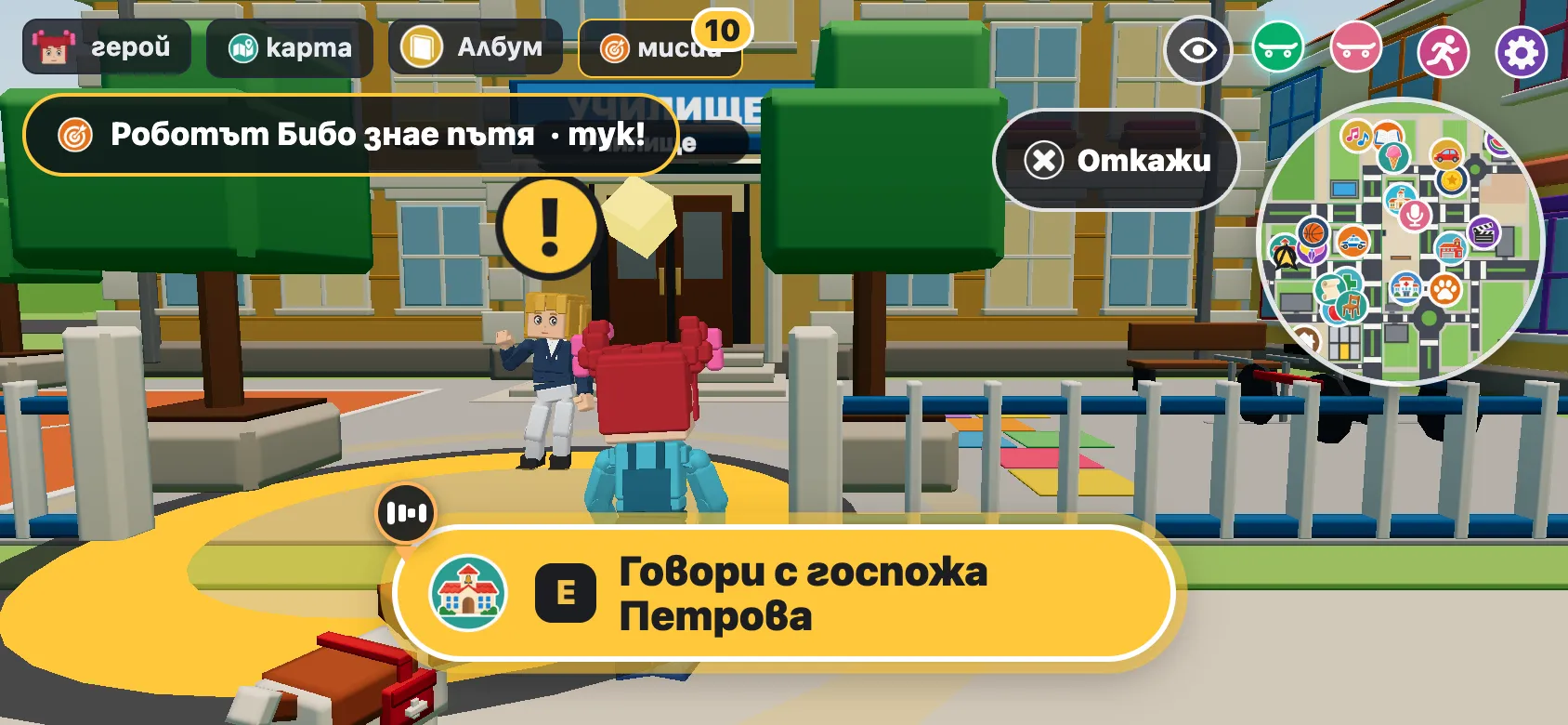
Bibo the robot knows the way
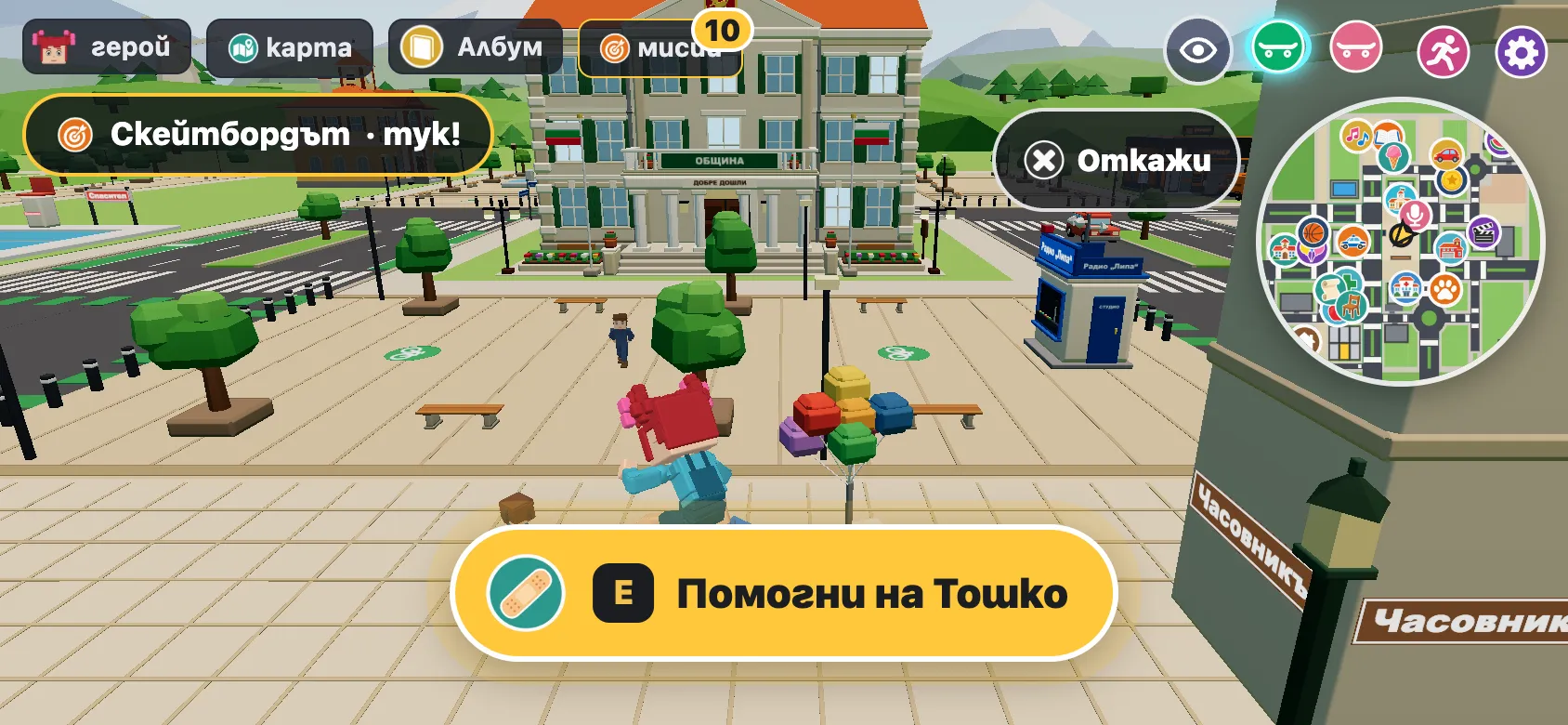
The skateboard
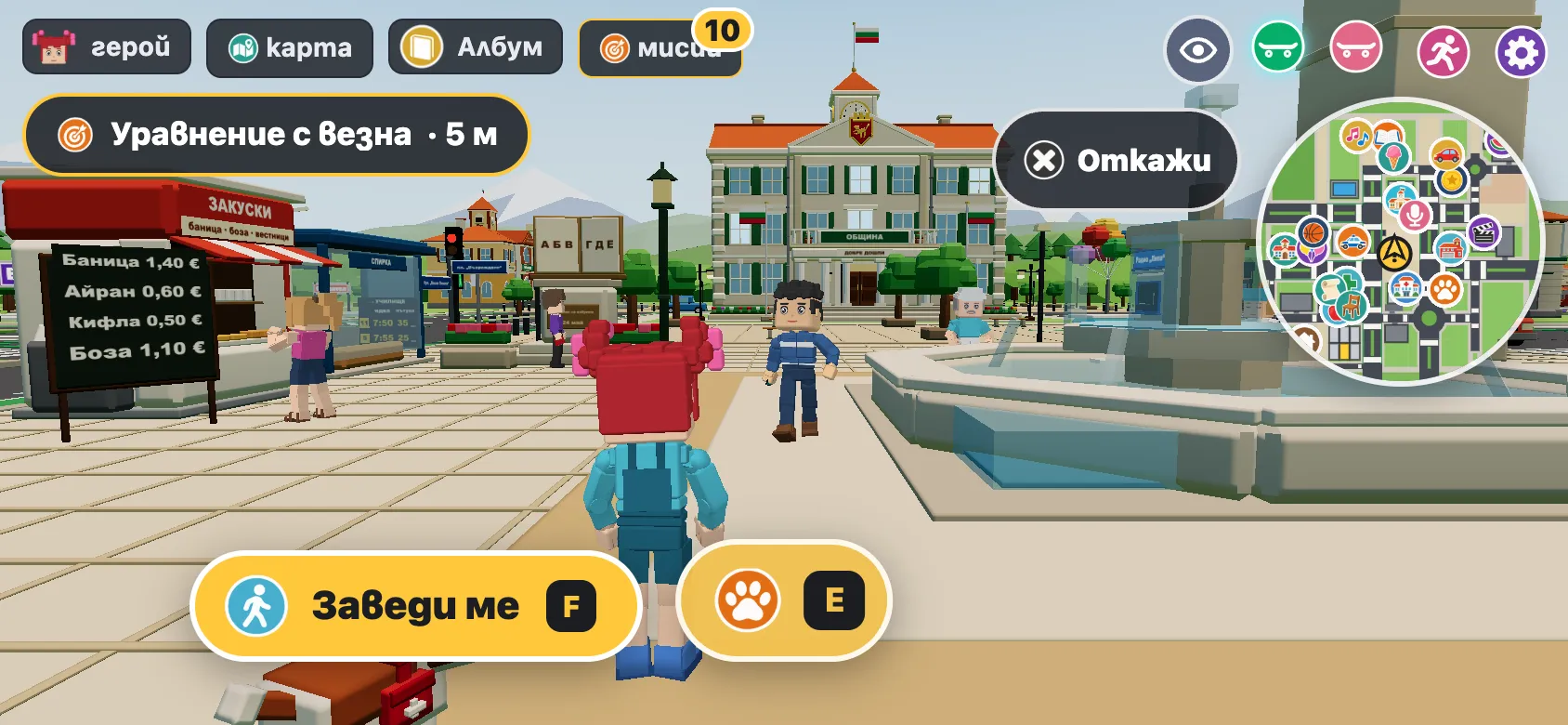
Equation on a balance
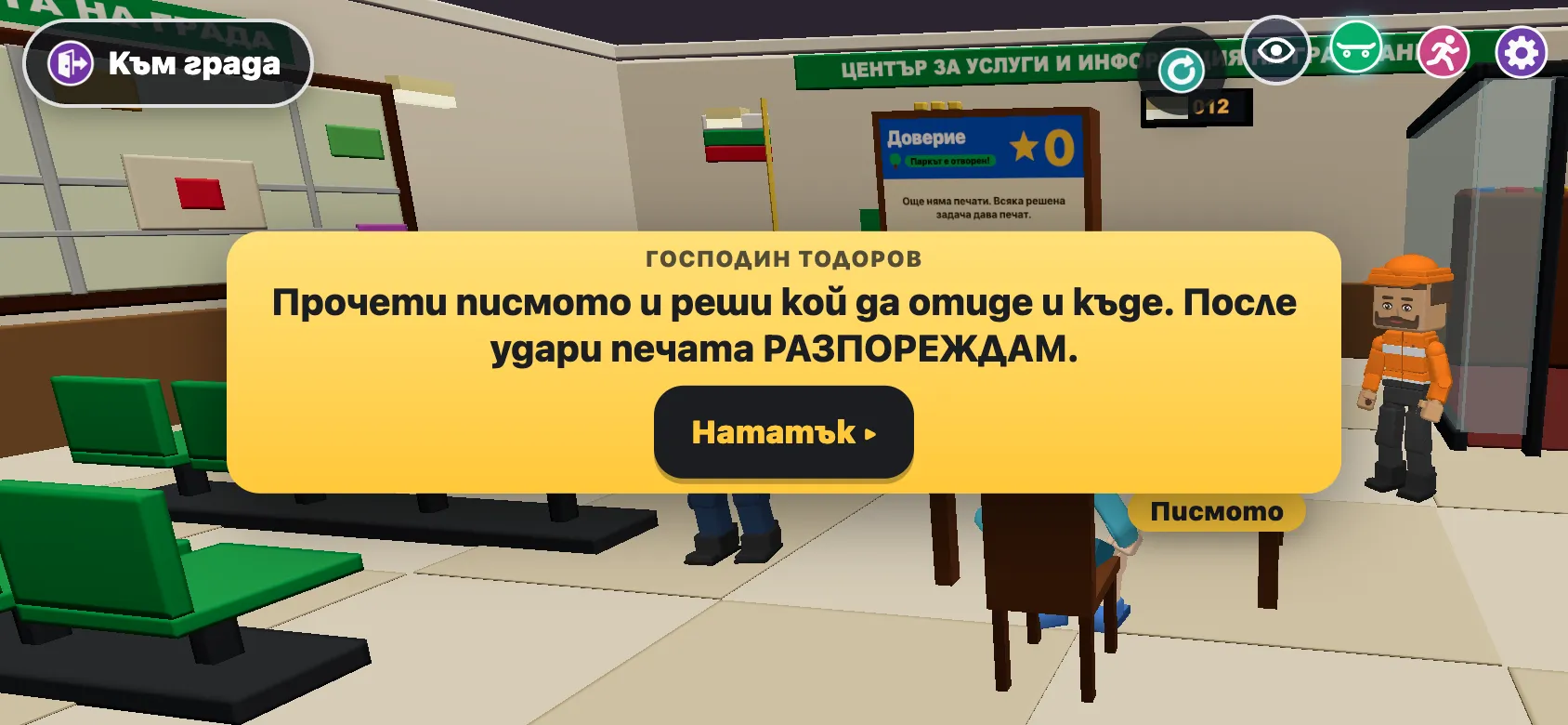
The mayor’s first term
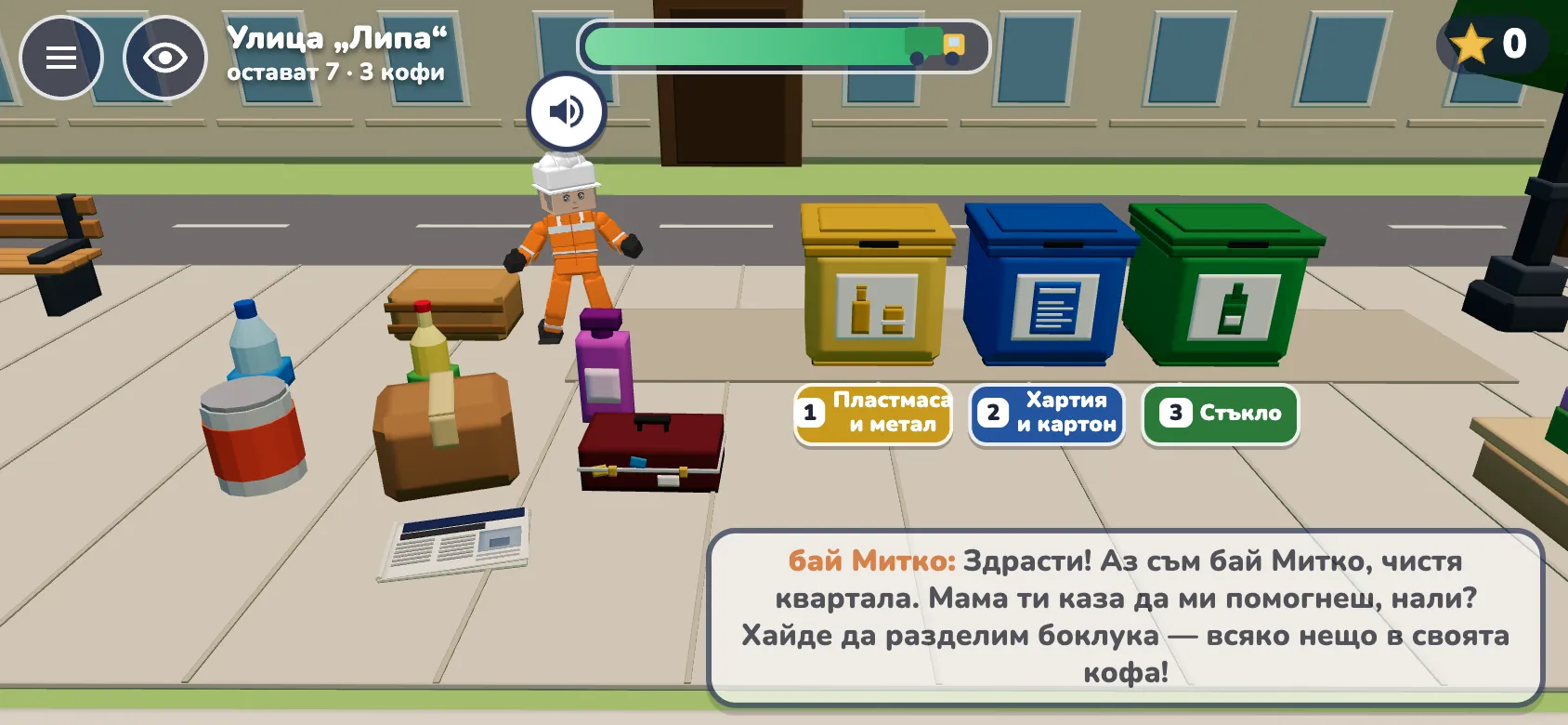
Sorting the rubbish
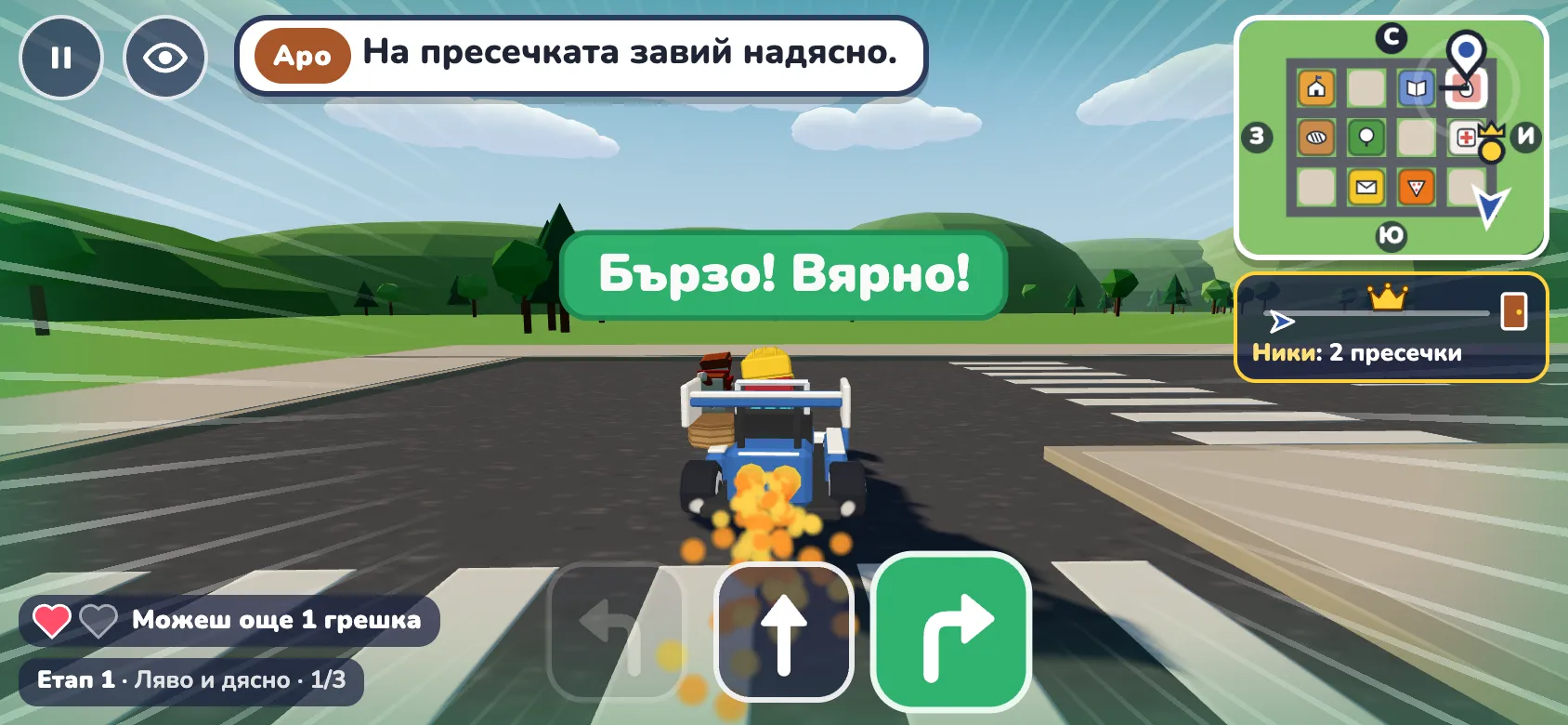
Navigator
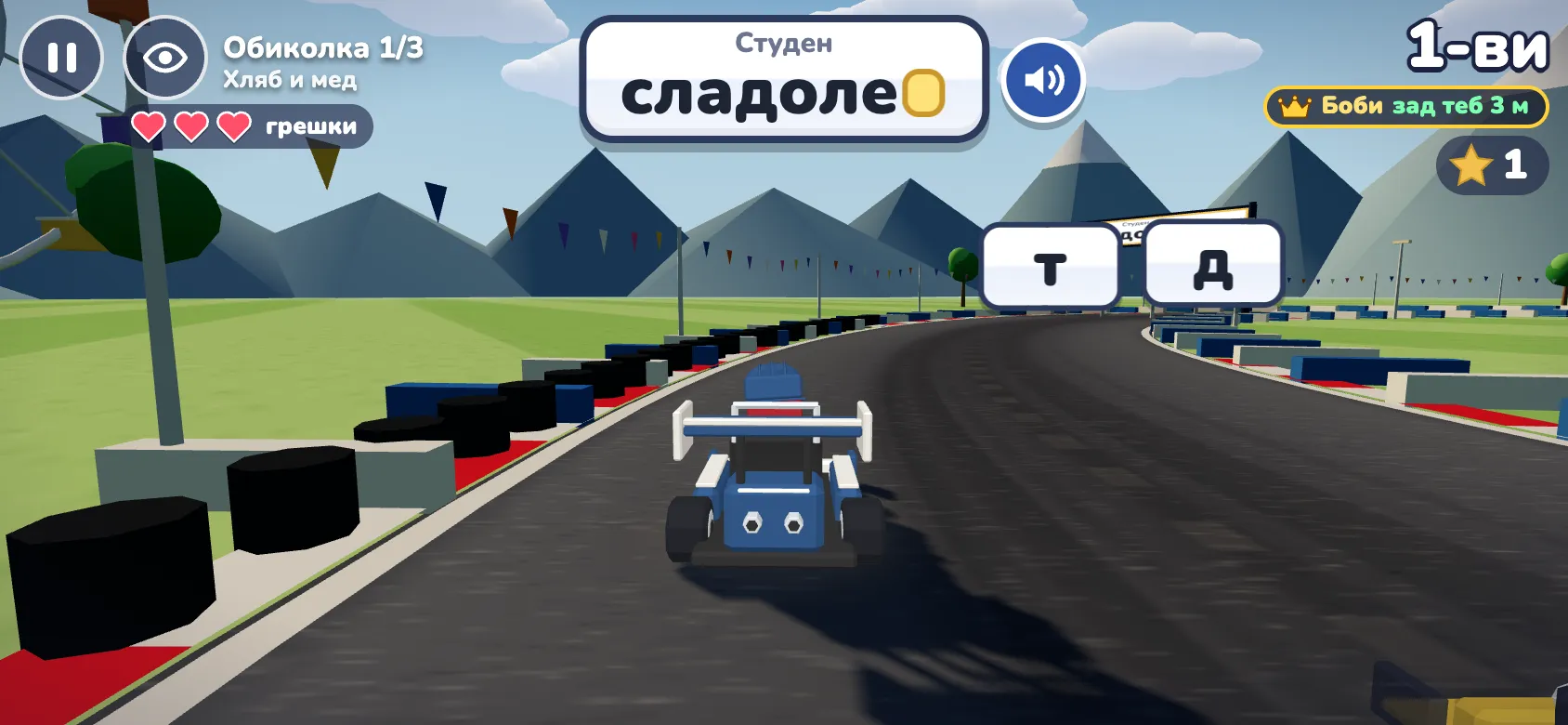
Drive and spell!
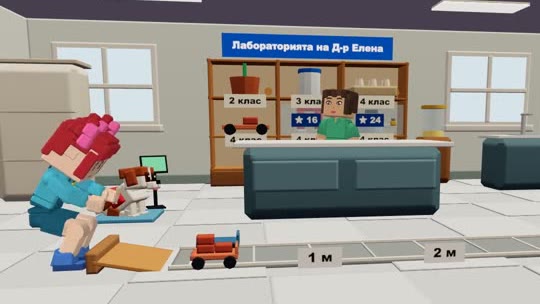
Dr Elena’s laboratory
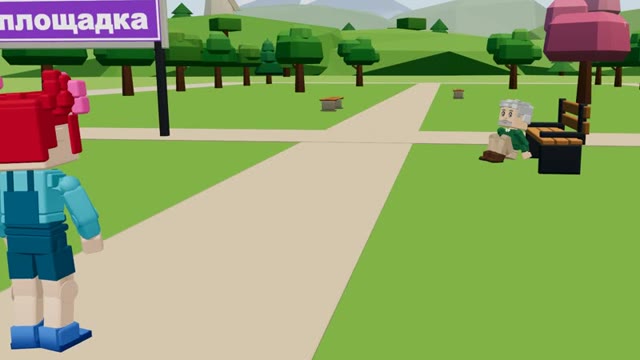
The grandfather on the bench
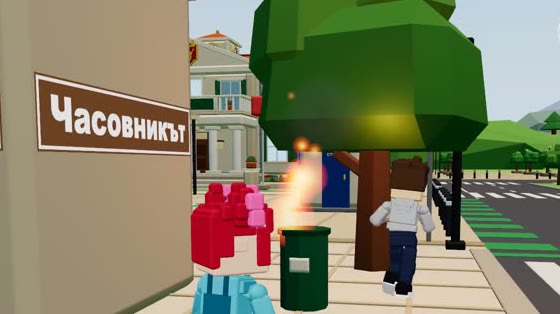
The bin caught fire
Already working
Plexibits is not the first thing we have built. Before it, we put together tasks for the national external assessment (NVO) based on children’s typical mistakes, and made an app for our own children. Each began as research and reached people who still work with it today.
- 3,207
- validated maths tasks in our live NVO system
- 2,558
- questions generated for the children who use the app
- 1,670
- student booklets — reading literacy questionnaires and tests, read and scored
- What They Can Do
- A portfolio for every student, in every subject.
Nothing educational reaches a child without passing through a person.
A revolution is under way in how software is made, and almost no one is playing by the new rules yet. We are.
With AI we produce tasks, scenes, voices and checks in volumes that until recently took whole teams. Speed is not the goal: everything educational then passes through us. We check it, send it back for correction, change and arrange it until it is accurate and right for the child it is meant for.
That is why, everywhere we work, the machine proposes and a person decides.
Three things guide us — in this order.
Quality
Every fact in the city comes with a textbook, a page and a second source. Word stress is settled before recording: a dictionary of more than 800,000 words, with a person deciding the disputed cases. We check the content against the curriculum, send it back until it is accurate, and release nothing we are not satisfied with and proud of. That is why it comes first.
Research spirit
We also take on tasks with no quick payoff: we read manuscripts, measure which approach works and which only seems to work, and we love hard software problems.
Speed
Last, on purpose. It is what AI gives us once quality is under control.
Joanna Seymenarova on working with AI
On my own I now handle the volume and quality that used to take me 3–4 teams working in parallel — and on timelines incompatible with the classic development process.Joanna Seymenarova
There are five of us.
We think of ourselves as hardcore AI evangelists, and with good reason: we care as much about the technology as about the products it makes possible.

Moni Dochev
Co-founder. A serial entrepreneur with more than 25 years in IT and roots in the games industry: co-founder of Imperia Online, Upnetix and IT Talents. At Mentorano he leads the technology — and he built the first version of the app to help his son.

Dr Aleksandar Angelov
Managing director. He also runs the Center for Creative Training, which gives us our links to schools and institutions. A Google Certified Innovator and a member of the committee for innovative schools at the Ministry of Education (MES).

Joanna Seymenarova
Comes from software product management: 18 years in software development, 15 of them building virtual worlds. Today she builds and delivers on her own systems that until recently took whole teams.

Nedyalko Tanev
Comes from testing and quality control: 14 years in QA, 12 of them on Imperia Online’s games and related products. Today he ships production systems on his own, from idea through development to delivery.

Ivan Dachev
An architect with more than 25 years of experience: VMware, DataStork, and until recently chief architect at Ship.Cars. He recently left his corporate career to join us full time. He believes in the technology as a pioneer, and in our educational mission as a father of four.
The partners beside us
Mentorano is an independent company working on its own products and on joint projects with CCT and Erida.

Center for Creative Training (CCT) — in Bulgarian education since 2008: technology in the classroom, original training courses for teachers, work with institutions. They are an official Google for Education partner, and their certificates carry qualification credits that count towards a teacher’s career progression.

Erida — maintenance, compliance, deployment environment. The answer to the question “who will be there a year from now?”
Have you played? Tell us what you saw.
Write to us: [email protected]
Or straight to the person you need: